Before you treat an existing commercial roof warranty as part of a building’s value, get the actual warranty document and ask the issuer—in writing—what must happen for the new owner to receive coverage. A sale alone does not prove that a warranty transfers. The answer depends on the warranty type, manufacturer, roof system, current condition, and transfer procedure.
That distinction matters in McAllen and across the Rio Grande Valley because a commercial property can change hands while rooftop equipment, penetrations, repairs, and maintenance records remain with the building. A buyer should know what the warranty covers, whether it can transfer, and what conditions must be completed before closing.
First, identify what the seller is calling a “roof warranty”
Do not stop at a proposal, invoice, or contractor letter. Ask for the complete warranty or guarantee certificate and every amendment. The certificate should identify the issuing company, building address, original owner, roof system, effective date, term, and warranty or guarantee number.
- Material warranty: may address manufacturing defects in specified products and may not include labor or leaks.
- Manufacturer system warranty or guarantee: may cover a defined roof assembly and may require an approved contractor, inspections, maintenance, and notice of alterations.
- Contractor workmanship warranty: comes from the contractor and can have separate transfer terms, exclusions, and notice requirements.
These documents are not interchangeable. GAF’s current commercial comparison guide, for example, lists certain system guarantees as transferable while its limited material warranties are not. That is why the exact document controls.
Ask the issuer about transfer requirements before closing
Contact the manufacturer or other issuer using contact information from its official website. Provide the warranty number or building address and ask for the current transfer procedure. Do this early enough to resolve an inspection or repair requirement before the sale date.
- Is this specific warranty transferable to the proposed buyer?
- Must the seller, buyer, or both submit a transfer request?
- Is there a deadline tied to the sale or change of ownership?
- Is there an administrative fee, and when is it due?
- Will the issuer require a roof inspection?
- Must any open leaks, claims, unauthorized repairs, or maintenance items be resolved first?
- When will the new owner receive written confirmation?
Manufacturer processes differ. GAF provides a commercial transfer request that asks for the guarantee number or building address, seller, buyer, sale date, and whether current leaks exist. Carlisle’s published transfer FAQ says a request may be submitted before or after the sale, but work orders are not issued to the new owner until the transfer is completed. Elevate’s owner manual says most of its warranties are transferable and describes a request, administrative fee, and payment process. Those examples show why a buyer should confirm the rules for the actual certificate instead of assuming an industry-wide process.
Build a roof record for the due-diligence file
Ask the seller for the installation contract, approved roof assembly, inspection reports, maintenance logs, leak reports, claim history, repair invoices, photographs, and correspondence with the issuer. Compare the documents to the roof that is actually present.
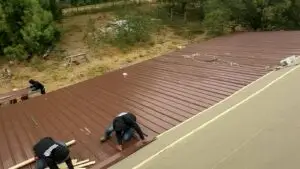
Pay special attention to rooftop HVAC replacements, solar work, signs, antennas, pipes, drains, and other penetrations. A manufacturer may require notice, approved details, or an authorized contractor when the warranted roof is altered. A clean invoice folder cannot show whether every penetration was installed correctly, so a current commercial roof inspection should document visible conditions and inspection limits.
Separate roof condition from warranty status
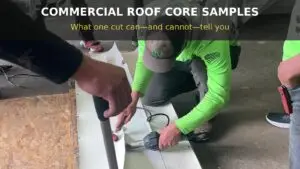
A transferable warranty is useful, but it is not a condition report. It does not prove that the roof is dry, that insulation is sound, or that every repair will be covered. A visual inspection can identify visible concerns, while moisture scans, core samples, or other testing may be appropriate when the roof history or proposed work requires more evidence. Read our guide to what a commercial roof core sample can and cannot tell you.
Likewise, a roof problem does not automatically mean the warranty will pay for the repair. Coverage decisions belong to the issuer under the written warranty. The buyer should budget for known maintenance and excluded work separately from any expected warranty benefit.
Put the transfer steps into the purchase timeline
Assign responsibility in writing. Identify who will request the transfer, who will pay any fee, who will provide roof access, who will complete required repairs, and what written proof must be delivered before or after closing. If the roof needs work, ask for a clear scope and priority list rather than a vague allowance. Our commercial roof repair priority guide explains how to separate immediate water-entry risks from maintenance and planning items.
Buyer checkpoint: Do not value the warranty until the issuer confirms that the specific document can transfer, the required steps are known, and the roof record matches the building.
Questions to bring to the roof review
- Can the inspector match the visible roof system to the warranty documents?
- Are there visible repairs, penetrations, or equipment changes missing from the record?
- Are current leaks or open claims documented?
- Which areas were inaccessible or outside the inspection scope?
- What maintenance or corrective work should be priced before closing?
- What must the issuer confirm directly?
Commercial roof due diligence in McAllen and the RGV
Marva Roofing helps commercial property owners and buyers document visible roof conditions, repair history, and practical next steps. We do not decide manufacturer coverage, but we can help you build the roof information the issuer, seller, and buyer need to evaluate the property. For a commercial roof inspection in McAllen or elsewhere in the Rio Grande Valley, call (956) 217-9989 to schedule a review.
This article is general educational information. Warranty language and transfer procedures vary. The written warranty and the issuer’s current confirmation control.