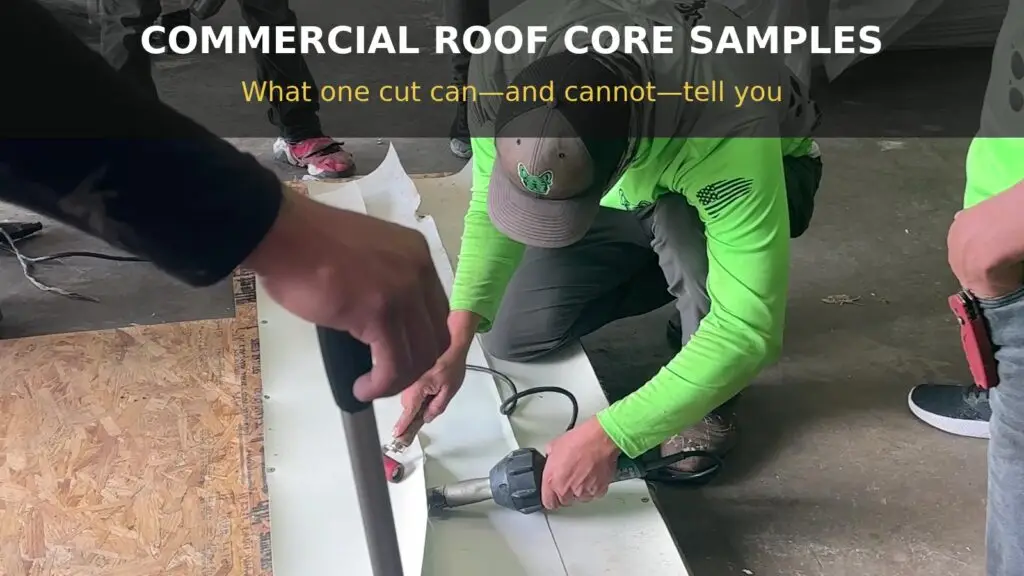
A commercial roof core sample is a small opening a roofing professional makes to see the layers under the surface. It can help confirm what the roof is built from and whether the materials are wet or deteriorated at that spot. It can’t tell you, on its own, whether the whole roof is dry or needs to be replaced.
If you’re comparing quotes, the useful question is: What did the sample change about the recommendation? You shouldn’t have to guess whether a contractor is pricing work over a sound roof or leaving an expensive unknown for later.
What the sample can show
- The layers. It can reveal the membrane, cover board or insulation present at that spot. When the evaluation exposes the deck, it can also help identify the deck material and show the condition of its top surface there.
- Moisture at that location. Damp or deteriorated insulation is evidence about the area sampled. A dry sample is not proof that the roof is dry everywhere.
- Differences between roof areas. An addition or an area reroofed at a different time may have different layers. Ask whether the sample locations represent the areas included in your proposal.
The GAF adhered TPO/PVC application manual calls for representative test cuts in its evaluation of existing roofs for recover. Johns Manville’s reroofing guide discusses using roof cuts to confirm construction and moisture at the sample point, alongside a broader evaluation. The type, location and scope of testing should fit the roof and the proposed system; this is not a rule that every roof needs a cut.
What a core sample can’t prove
It doesn’t identify every leak path, map all the wet insulation or certify that the whole deck can support the proposed work. If the extent of moisture matters to the bid, ask whether a broader moisture survey, verification samples or a different kind of assessment is warranted. Our guide to wet roof insulation before commercial repair explains why that distinction matters.
What to ask before approving the inspection
- What decision are you trying to make, and why are these sample locations representative?
- Will I get photos, marked locations and a short summary of which layers or conditions you found?
- Who will restore each opening, and should the existing warranty provider be consulted before testing?
- What is included in the bid if material needs to come out, and how will you document and price anything you couldn’t verify?
If one bid recommends work over the existing roof and another recommends removal, ask both contractors to explain the evidence behind their scope. Use our commercial roofing quote comparison checklist to see what else should be in writing.
Do you need a core sample for every commercial roof leak?
No. Start with an inspection and the building’s roof history. A test cut may make sense when the hidden layers or their condition could change the proposed work. Have a qualified roofing professional decide whether it’s appropriate and restore any opening.
If you manage a commercial property in McAllen or the Rio Grande Valley, request a roof inspection. Start by asking what can be verified and what needs more investigation before you choose a scope.