Gutters, fascia, soffit, siding, framing, and fence help for homeowners
Protect the outside of your home, not just the roof
Your roof is only one part of what protects your home. When gutters overflow, trim boards soften, soffit sags, siding loosens, or a fence starts leaning, the damage can spread fast. Marva Roofing helps homeowners in McAllen and the Valley fix exterior problems the right way, with clear inspections, honest guidance, and repairs built for South Texas weather.
- Gutters & Drainage
- Fascia & Soffit
- Siding
- Framing
- Cedar & Treated Fences
One exterior problem usually affects more than one part of the home
Overflowing gutters can rot fascia. Weak soffits can affect attic airflow. Loose siding can let moisture keep working its way in. A leaning fence may be the sign of storm movement, rot, drainage trouble, or aging posts.
- Stop water from running where it should not.
- Fix soft or damaged trim before the damage spreads.
- Keep attic airflow working through healthy soffits and vents.
- Repair siding before stains, heat, and moisture get worse.
- Rebuild weak framing or fence sections the right way.
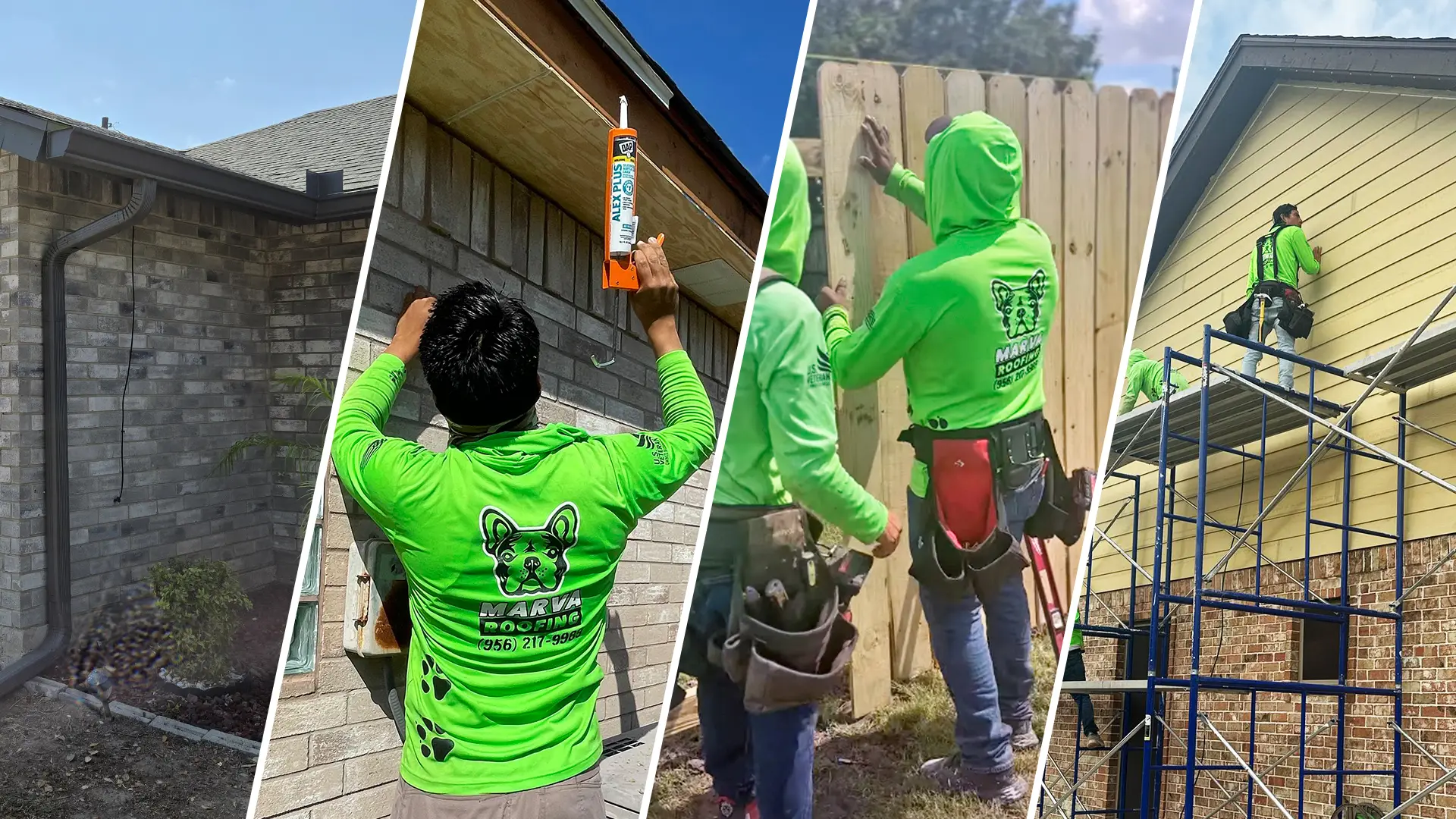
Straight answers, real photos, and repairs that fit the home instead of guesswork.
Start with what the house is telling you
If one exterior detail is failing, we look at what it is affecting nearby
A gutter issue can turn into fascia damage. A roof-edge leak can show up in soffit, siding, or framing. We look at the outside of the home as a connected system so you get a better answer from the start.
For homeowners in McAllen and the Valley
This page is here to make the outside of the home easier to understand
Most homeowners do not wake up searching for fascia, soffit, or framing. They notice overflow during rain, peeling paint near the roof edge, siding that looks loose, a soft spot under the eaves, or a fence that no longer feels solid. This page is written around those real problems.
You will see when a repair may be enough, when replacement is smarter, which problems often connect to the roof edge, and which Marva pages are worth opening next.
If the problem started after a storm, also visit storm-damaged gutters, fascia, and soffit or storm damage help. If the roof itself may be part of the problem, start with roof inspection.
Choose what fits your situation
Start with the problem you can see right now
You do not need to sort out every exterior detail at once. Start with the part that sounds most like what is happening at your home.
Water pours over the gutters when it rains
This is the right start if you are seeing overflow, sagging sections, stained walls, downspout trouble, or water collecting too close to the house.
See Gutter HelpThe trim near the roof edge looks soft, stained, or damaged
Use this if paint is peeling, wood feels weak, soffit panels are sagging, or something looks off under the eaves.
See Fascia & Soffit HelpThe siding looks loose, cracked, warped, or weather-beaten
This is the right place if you are dealing with stains, loose panels, cracks, fading, impact damage, or you are trying to decide between repair and replacement.
See Siding HelpThe damage may be deeper than the surface
Start here if a roof edge sags, wood feels soft, storm movement opened things up, or you are worried the structure beneath the surface may be part of the problem.
See Framing HelpThe fence is leaning, rotting, or no longer closing right
If your yard needs a stronger boundary, privacy upgrade, or fence repair after heat, moisture, wind, or storm wear, start here.
See Fence HelpA storm hit the roof edge, gutters, or siding
This is the right path when hail, wind, flying debris, or heavy rain damaged more than one exterior part at the same time.
See Storm Exterior HelpGutters and drainage
Good gutters do more than catch rain
Your gutter system should move roof runoff away from the home in a controlled way. When it does not, you may see overflow, stained siding, damaged fascia, puddles near the foundation, or water problems that keep coming back every time it rains.
A repair may be enough when
The system is mostly solid and the problem is limited to a loose section, small leak, clogged run, damaged elbow, or downspout issue.
A new gutter setup may be smarter when
Sections are pulling away, joints leak over and over, overflow keeps happening, or the drainage layout never worked well for the home to begin with.
Gutter guards make sense when
You want less debris buildup and easier maintenance, especially if leaves, roof grit, or nearby landscaping keep the troughs filling up.
Roof-edge trim and airflow
Fascia and soffit are easy to overlook until they start failing
In plain English, fascia is the board along the roof edge that supports the gutter line. Soffit is the finished underside under the eaves. Together, they help the roof edge look clean, help keep weather out, and, when vented correctly, support attic airflow.
Signs you may need repair
- Peeling paint or stained trim near the roof edge
- Soft or rotted wood
- Sagging or loose soffit panels
- Pests or birds getting into the eaves
- Gutters pulling away from the house
Why soffit ventilation matters
- It helps air move where it needs to
- It can help with attic heat and trapped moisture
- It supports the larger roof system, not just the trim
- Blocked or damaged soffits can hide bigger roof-edge issues
When storm damage changes the job
- Wind can pull gutters and trim loose together
- Heavy rain can expose weak roof edges fast
- Flying debris can crack panels and open small leak paths
- Sometimes the right answer includes both trim and roof work
Walls that weather the outside
Siding should protect the home and still look cared for
Siding is not just about appearance. It helps protect the wall system from weather, sun, and moisture while giving the home a finished look. When siding starts failing, the problem can show up as loose pieces, cracking, warping, stains, fading, impact damage, or moisture that keeps finding its way into the same area.
Repair makes sense when
The damage is limited and the surrounding siding is still in solid shape. This is common with a few broken pieces, storm impact in one area, or trim-related moisture that has not spread far.
Replacement makes sense when
The damage is widespread, matching is no longer realistic, the wall has repeated trouble, or the current siding no longer fits the level of protection you want for the home.
What to think through first
Think about looks, upkeep, storm exposure, nearby gutter issues, and whether this siding project is really standing alone or should be solved alongside fascia, soffit, or roof-edge work.
When the issue may be deeper
Sometimes surface damage points to framing or hidden wood trouble
If the roof edge sags, something feels soft underfoot, a storm shifted part of the structure, or repeated water exposure has weakened wood beneath the surface, the problem may be bigger than trim or siding alone. This is where a careful inspection matters most.
Signs the issue may be structural
- Roof edge or overhang sagging
- Soft wood behind fascia or siding
- Repeated water damage in the same area
- Storm movement, shifting, or separation
- Visible framing damage in an attic, porch, or open area
Why this should be checked early
- It changes whether repair or replacement makes sense
- It affects how new exterior materials should be installed
- It can turn a small-looking problem into a bigger project later
- It is better to know before new work covers it up
Privacy, boundary, and yard protection
A strong fence should hold up to heat, moisture, and wind
Fences take a beating in South Texas too. Sun, rain, soil moisture, storm gusts, and daily use all wear on posts, gates, rails, and boards. Whether you want a new privacy fence or want to bring an older one back into shape, the best choice depends on how you use the yard, how much upkeep you want, and what is happening at ground level around the fence line.
When cedar makes sense
Cedar is a good fit when you want a natural look, strong curb appeal, and a fence that feels more finished from day one.
When treated wood makes sense
Treated wood is often the practical choice when durability, budget, and day-to-day toughness matter most.
Repair or replace?
If damage is limited and the posts are still solid, repair may be enough. When leaning, rot, or storm movement shows up across the fence line, replacement is usually the smarter move.
Why local weather changes the work
Exterior work in South Texas has to hold up to more than normal wear
Sudden heavy rain
Fast downpours test gutter size, downspout layout, splash control, and whether water is being pushed where it should go.
Heat and sun
Long periods of heat and UV exposure wear on trim, paint, sealants, and exposed materials faster than many homeowners expect.
Wind-driven weather
Storm gusts can loosen gutters, open roof edges, shake siding, and shift weak fence sections or gates.
Airflow and moisture
Healthy soffits and the right ventilation details help the roof system do its job better, especially in a hot climate where trapped heat and moisture can add up.
Storm damage changes the priorities fast
If wind or hail hit more than one exterior detail, start with the parts that keep water out
After a storm, roof-edge trim, gutters, siding, and fences may all need attention. Start by protecting the home, then get a clear inspection so the right repairs happen in the right order.
How we work
Clear inspections and plain-language recommendations
We look at the outside of the home carefully
We check the problem area and the parts next to it, because the cause is not always where the damage first shows up.
We take photos and organize what we find
You should be able to see what we are talking about, not just hear a list of contractor terms.
We explain the problem in plain language
We show you what looks minor, what looks more serious, and whether the issue overlaps with drainage, ventilation, roof edge, or structural support.
We recommend the right level of work
Sometimes the right answer is repair. Sometimes it is replacement. Sometimes it is fixing the nearby issue that keeps causing the same damage.
We help you choose the next step
You get a clear path instead of pressure, so you can move forward with more confidence.
More help for your home
Open the page that matches what you need next
Exterior pages
Storm and roof-edge support
Planning and cost pages
Trust and local proof
Questions homeowners ask all the time
Exterior service questions in plain language
Do gutters really matter that much if the roof is in good shape?
Yes. A good roof still needs water to leave the house correctly. Bad gutters or poor runoff can stain walls, rot trim, and keep dumping water where you do not want it.
What are fascia and soffit in plain English?
Fascia is the board along the roof edge behind the gutter line. Soffit is the underside under the eaves. These pieces help protect the roof edge, and soffit often helps with airflow too.
Can bad gutters cause fascia or siding problems?
Yes. When water spills where it should not, it can keep wetting the roof edge, trim, and wall surfaces again and again.
Should siding be repaired or replaced?
That depends on how widespread the damage is, how well new pieces can match, and whether the underlying wall and trim are still sound. Sometimes a focused repair is enough. Sometimes it is smarter to replace larger sections.
When does exterior damage become a framing problem?
If water has been getting in for a while, wood feels soft, the roof edge sags, or storm movement affected the structure, the problem may be deeper than the surface materials.
Do you only work on roofs, or can you also help with fences?
Marva Roofing also helps homeowners with cedar and treated wood fences, along with gutters, fascia, soffit, siding, and framing-related exterior work.
Can you check the roof and exterior details during the same visit?
Yes. That is often the smartest way to do it, especially when the problem may connect back to the roof edge, drainage, soffit ventilation, or storm damage.
Your next step
Let us inspect the outside of the home and tell you what makes sense next
If you are seeing overflow, soft trim, loose siding, hidden wood trouble, or a fence that is wearing out, start with a clear inspection. We will show you what we see, explain it in plain language, and help you decide on the right next step for your home.
Marva Roofing | info@marvaroofing.com | Serving McAllen, Mission, Edinburg, Pharr, Weslaco, Donna, San Juan, Harlingen, Brownsville, and nearby Rio Grande Valley communities.