
The Valley’s Trusted Roofer
Underlayment Replacement
in McAllen, TX
Find the leak path. Review the layers beneath.
Roof underlayment replacement in McAllen starts with understanding the roof and its leak history. Marva Roofing reviews accessible conditions and helps homeowners compare a localized repair, section replacement or broader roof work.
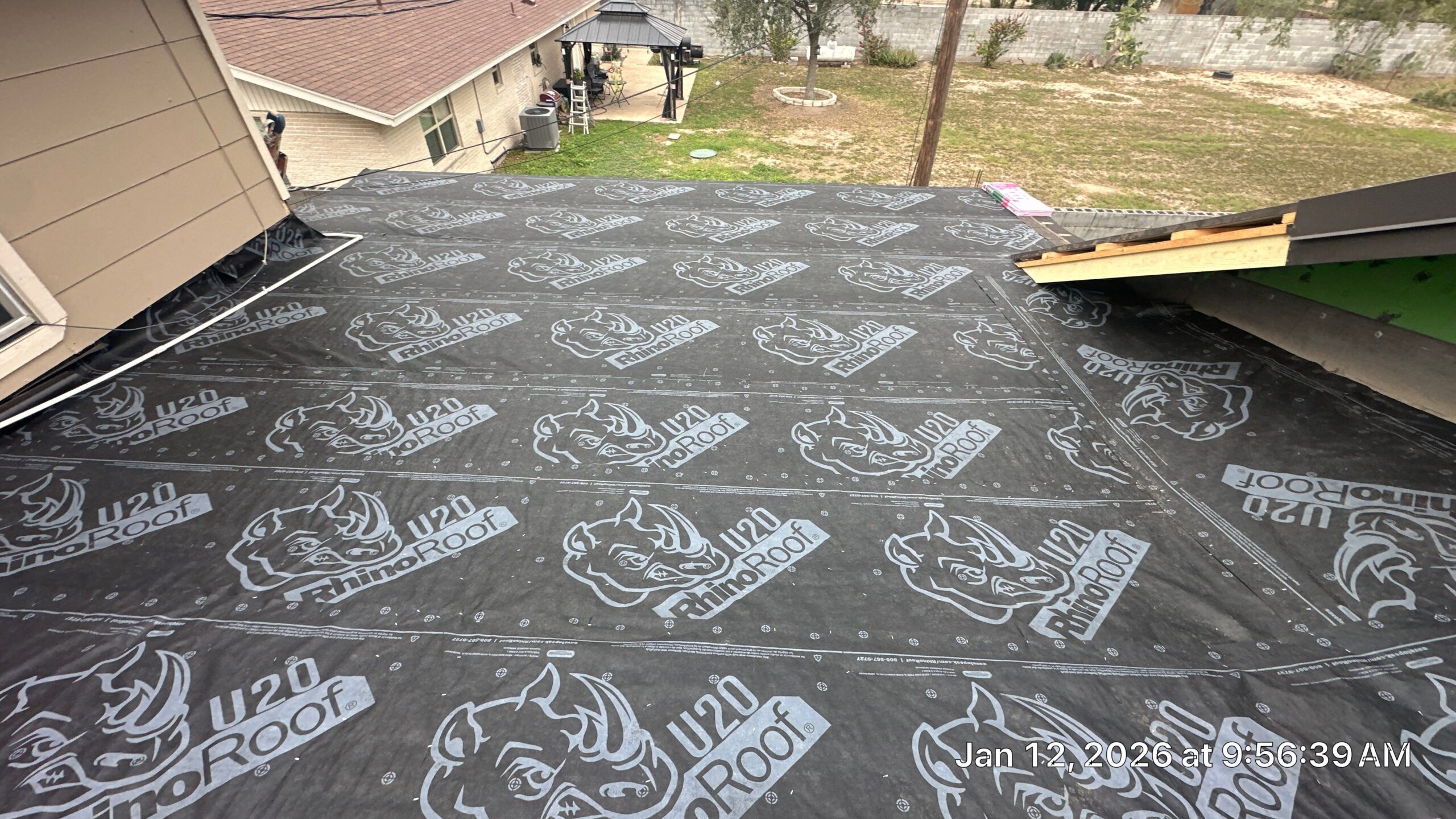
A layer you usually cannot see
A recurring leak needs more than a surface assumption
Share the affected room or roof location, when water appears, weather conditions and earlier repairs. Dated photos help compare changes; stains alone do not identify the entry point or failed layer.
The selected underlayment helps manage water beneath the covering, with different functions and limits for different products. A water-shedding sheet and a self-adhered water barrier are not interchangeable. Specify the product and its connections to flashing, valleys and edges; replacing a layer alone does not establish or correct every leak source.
Tile can look serviceable while layers beneath need attention. Compare tile roofing, tile inspection and tile repair before assuming every tile leak needs full replacement.
Review the leak, the details and the access limits
Connect interior observations with the roof assembly. Identify confirmed findings, areas not assessed and further investigation needed before deciding which layer or detail requires work.
Leak history
Record stain locations, rain or equipment-use timing and earlier repairs. These clues guide investigation; they do not establish that the underlayment is the source.
Covering and access
Agree on the opening area, covering removal or lifting, handling and restoration. Ask what can be reused, what must be replaced and how breakage or matching-material shortages affect the scope.
Connections and drainage
Review accessible valleys, walls, pipes, roof edges and runoff paths. Specify how laps, flashing and terminations connect to existing details; identify any separate drainage work.
Supporting deck
Check accessible or exposed supporting conditions and the selected product’s preparation requirements, including a dry, sound, compatible substrate. Record concealed deck or framing concerns before agreeing on additional work.
Keep the adjoining details in the scope
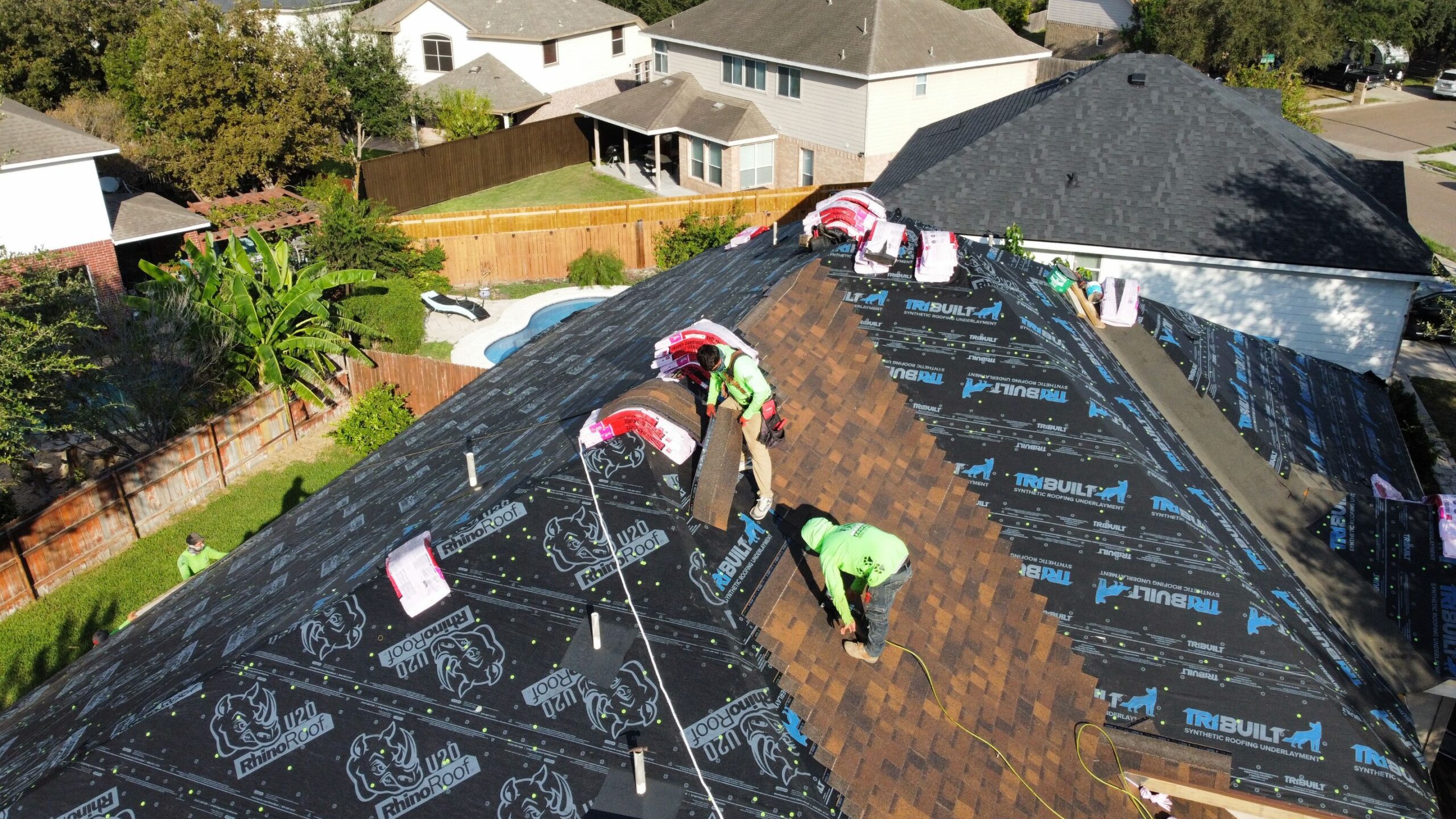
Specify the product for the covering, slope and roof configuration, following its installation requirements. Confirm preparation, attachment or adhesion, laps, flashing and terminations. If an existing adhered layer is present, ask how retention or removal will be evaluated and how any resulting deck work is approved.
If opening reveals a deck concern, document the location and condition before re-covering. Confirm any deck allowance, extra quantities and written approval. Framing or structural concerns may require separate professional evaluation and scope. Review decking repair, fascia and soffit and gutters where related findings justify work.
Define the opening and the rebuilding
From leak findings to a complete plan
Agree on the work and its boundaries before the covering is opened. Separate confirmed findings from assumptions and concealed conditions.
- Inspect and agree the area
Record the proposed area, findings and access limits. Confirm any further investigation and charges, covering handling, exclusions and approval contact before work proceeds.
- Open and review
Open only the agreed area and record exposed layers with location-linked photos and quantities. Confirm weather limits and proposed temporary-protection or closure arrangements. Obtain approval for scope changes; protection and scheduling depend on the conditions and agreed work.
- Rebuild the details
Use the specified material and preparation for the covering and substrate. Define connections at valleys, walls, penetrations and edges, plus any flashing replacement, supporting repairs or drainage work included.
- Re-cover and document
Restore the agreed covering and details, then review cleanup, completed-work photos and unresolved items. Keep product information, written product and workmanship terms, care instructions and records of areas left unopened.
Repair a detail, replace a section or plan broader work?
Define the concern before choosing a surface repair, section of underlayment work or broader replacement. Ask whether access and compatible connections allow the proposed area to be rebuilt; an underlayment-only scope is not an automatic fix for recurring leaks.
Defined, localized concerns
A defined section may be suitable when surrounding materials remain serviceable and sound details can be connected. For tile, review condition, fit, attachment, handling and replacement availability before assuming reuse. Include any new covering or accessory allowances in the proposal.
Wider deterioration
Multiple affected areas, deteriorated supporting materials or difficulty restoring compatible details may justify further evaluation. Request why a smaller repair is unsuitable and which findings support wider work. Explore roof replacement and tile replacement.
Water entering now needs prompt attention. Share the affected rooms and timing; see roof leak repair. Stay off the roof and clear of wet electrical areas or damaged ceilings.
Compare the work behind the price
Compare the measured work area, removal or retained layers, covering handling and restoration, preparation, flashing and drainage details. Confirm what the quoted quantity includes and how newly exposed work is measured and priced.
Compare equivalent scopes, including weather protection, deck or covering allowances, exclusions, cleanup and written terms. Require location-linked evidence and approval before extra work. Ask who handles any specialist assessment, framing or other excluded tasks. Review replacement cost factors, warranty information and financing information.
Clear findings from Marva Roofing
Marva Roofing is family-owned and veteran-owned: The Valley’s Trusted Roofer. Discuss documented findings, selected-product requirements, access limits and a written scope before agreeing on work. Read about our company, view the project gallery and read customer reviews.
McAllen and nearby communities
Ask about your McAllen property or a home in Mission, Edinburg, Pharr, Donna, San Benito or other RGV communities. Confirm the location, proposed service and current availability before a visit is arranged.
Helpful inspection and planning guides
Roof condition, materials and storm questions
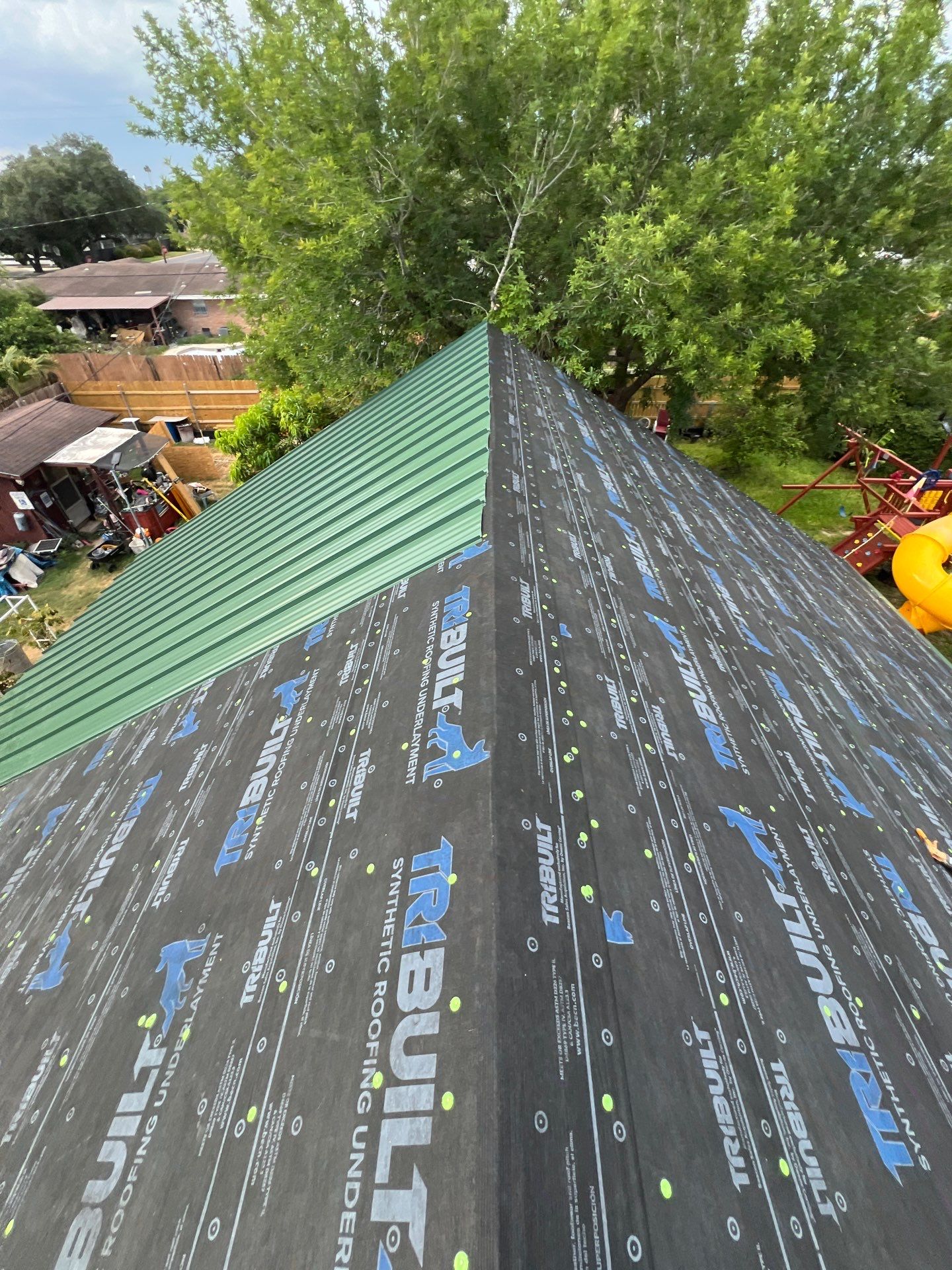
Another view of the underlying layer
Use product information to confirm suitability for the actual covering and configuration. Keep the final scope, completion photos and care instructions with your roof maintenance records; a photo alone does not verify the product or installation.
Roof underlayment replacement in McAllen: FAQs
What is roof underlayment and why does it matter?
Underlayment is a layer beneath the visible covering that helps manage water within the roof assembly. Its role and limits depend on the selected product: water-shedding synthetic underlayment and a self-adhered water barrier are not interchangeable. It does not replace suitable covering, flashing and drainage details or make every roof waterproof.
Can a tile roof need underlayment replacement even if the tiles still look okay?
Yes, a serviceable-looking tile surface does not establish the condition beneath it. But appearance alone also does not prove the underlayment has failed. Review leak history, accessible details and any agreed opening before selecting the work. Ask how tile handling, condition, attachment and replacement availability affect access and restoration of the covering.
How do I know if underlayment failure is causing the leak?
Recurring stains or leaks are investigation triggers, not proof of a failed layer. Share when and where water appears, weather conditions and earlier repairs. Review covering, flashings, connections and drainage alongside accessible underlayment and deck findings. Ask what is confirmed, which areas remain concealed and what additional access or specialist evaluation is needed before approving replacement.
Does underlayment replacement require removing the roof covering?
Access generally involves lifting or removing the agreed area of covering. The method and restoration scope depend on the material, attachment and condition. Ask what can be reused, what must be replaced, whether matching pieces are available and how breakage or newly exposed damage will be handled. Confirm weather protection and additional-work approval before opening.
Can roof underlayment be replaced in one section instead of the entire roof?
A defined section may be suitable if the concern is localized, surrounding materials are serviceable and compatible laps, flashings and covering can be restored. Ask how the proposed boundaries address the findings and connect to existing work. Wider deterioration or inability to rebuild sound details may require further evaluation; request why a smaller repair is unsuitable.
What affects roof underlayment replacement cost in McAllen?
Compare the area opened, access, selected materials, covering handling and restoration, preparation, flashing and drainage work. Confirm included deck allowances, exclusions and the measurement and price basis for extra quantities. Ask for location-linked photos and approval before additional work. Framing repairs, specialist assessments or other tasks should be separately identified rather than assumed included.
Start with the leak history and roof findings
Share the property location, leak history, previous work and available records. Our team will discuss inspection scope, safe access and available scheduling. Confirm any opening, specialist evaluation, further work and applicable charges separately before it proceeds.