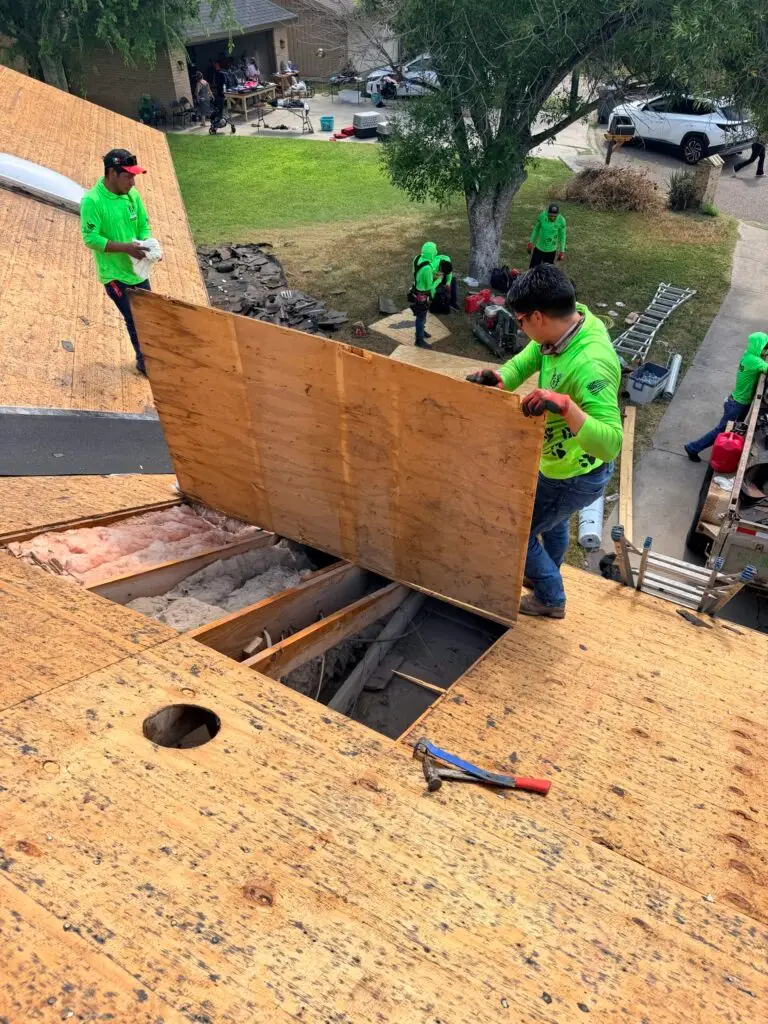
If damaged decking is uncovered during your roof replacement, the next step is a documented assessment and a clear repair decision before the affected area is covered. Ask to see the condition, understand the proposed repair and review any added cost and schedule change in writing. A damaged section does not automatically mean every sheet on the roof needs replacement.
For McAllen and Rio Grande Valley homeowners, a call about unexpected wood repairs can be stressful. You may already have an agreed price and a crew working overhead. These questions help you follow the decision without climbing onto the roof or approving an unexplained total.
1. Ask what was found and where
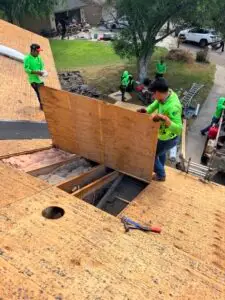
Request a wider photo that identifies the roof section and a close-up of the concern. Ask: “What makes this material unsuitable for the new roofing, and how far does the problem extend?” The explanation should describe the actual condition, not simply label every discolored area as rotten.
Decking is the sheathing beneath the underlayment and shingles. Some concerns can be seen from an accessible attic or during an earlier inspection; others become clearer after the old covering comes off. Photos help explain the findings, but a photo alone cannot establish the strength or fastening suitability of the wood.
For the technical context, Owens Corning’s Oakridge installation instructions call for a properly supported wood deck with a suitable surface and sufficient nail-holding capacity. Your contractor should assess the deck against the requirements for the actual roofing system being installed.
2. Separate decking repairs from framing repairs
Replacing a sheathing panel is a different scope from repairing rafters, trusses or other supporting members. Ask whether the concern stops at the decking or involves the structure below it. If the supporting wood is affected, request a separate explanation and ask whether a qualified specialist needs to evaluate it before the repair plan is finalized.
Also ask what may have caused the damage. A leak around a roof detail and an attic moisture problem can require different follow-up work. Replacing a panel is not an explanation of how the underlying moisture issue will be addressed. Our roof decking repair guide explains the broader inspection and repair options.
3. Make the added price easy to check
Before approving additional work, ask for the following details together in a written change:
- The location and measured quantity of decking to be replaced, with the billing unit clearly stated.
- The material description, including the proposed panel type and thickness, and what the contractor is using to select it.
- The agreed unit price or itemized repair price, including what labor, removal and disposal it covers.
- Any decking allowance already included in the original proposal and how that allowance is applied.
- The added amount, revised project total and any change to the payment or completion schedule.
An included allowance should be distinguished from additional work so you can check that the same repair is not counted twice. If the original agreement did not explain how hidden wood repairs would be priced, ask for that explanation now. Keep the approved change with the proposal. When planning a future project, raise this question while comparing roof replacement estimates.
4. Confirm protection and communication while the plan changes
Ask who will contact you, what approval is needed and which work can continue safely while the affected section is evaluated. Confirm how the exposed area will be protected if the repair decision, materials or weather delay progress. Do not assume that a pause in one roof section means the whole project follows the original schedule.
If you will be away, agree on a reliable contact method and the person authorized to approve changes. Request photos and a written description you can review on your phone. Discuss the revised sequence and expected completion window before the crew proceeds with the additional scope.
5. Keep a record before the repair is hidden
Request photos after the correction and before the roofing layers cover it. Pair those photos with the approved scope and a final invoice showing the authorized changes. The record should identify what was replaced and where; it should not leave you relying on a vague line such as “wood work.”
At the final walkthrough, ask whether any related moisture or framing concern remains unresolved and who is responsible for the next step. Keep the proposal, change approvals, progress photos and final paperwork together for future reference.
A simple question to save before roofing day
“If you uncover damaged decking, how will you show me the problem, explain the repair, price the change and get my approval before covering it?” A clear answer makes an unexpected discovery easier to manage.
Marva Roofing is family-owned and veteran-owned, serving McAllen and the Rio Grande Valley. To discuss a roof inspection or plan a shingle replacement, call (956) 217-9989. We can help you understand which questions belong in the scope before work begins.