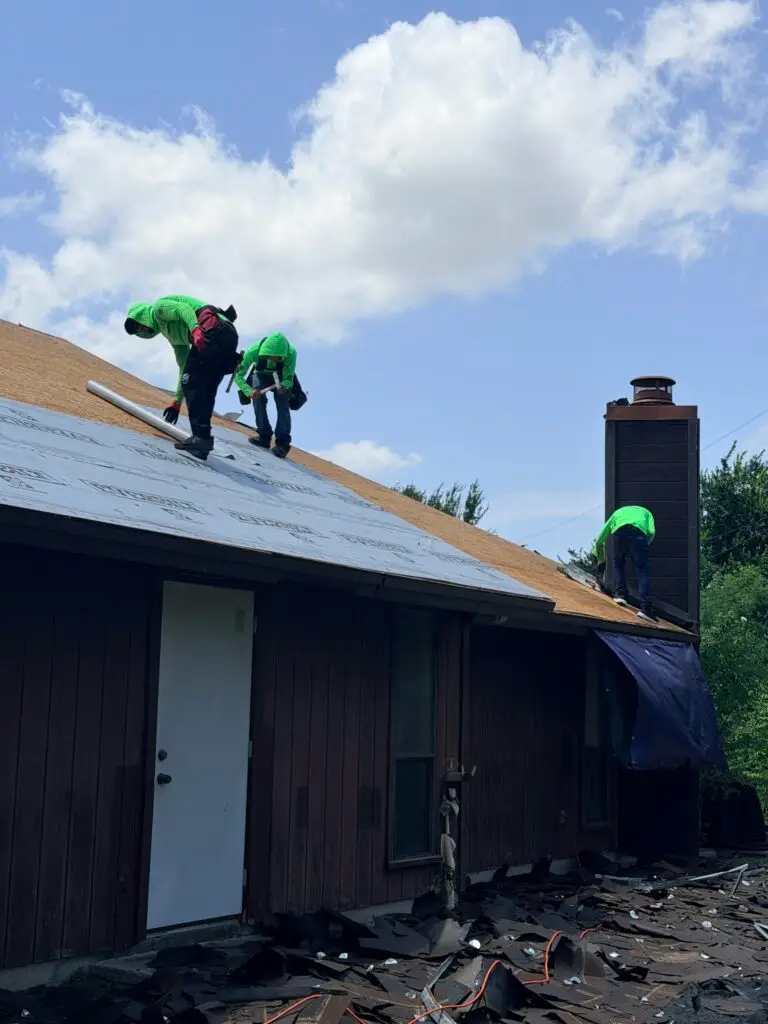
A straightforward asphalt shingle roof replacement may take one to two working days once installation begins, but your home needs its own schedule. Roof complexity, access, weather and repairs uncovered during removal can extend the work. The time from accepting a proposal to the final handoff is longer than the time the crew spends on the roof.
For context, GAF’s homeowner timing guide gives that one-to-two-day benchmark for an average-sized asphalt shingle roof. It is a general planning reference, not a promised completion time for a McAllen or Rio Grande Valley home.
Ask for two timelines before choosing your start date
Ask your roofer for both the expected installation duration and the full project schedule. “One day on the roof” does not tell you when materials arrive, whether the driveway will be occupied overnight or when the final walkthrough will happen.
- Before installation: Confirm the selected product and color, material availability, delivery window, crew start window and any approvals that apply to your property.
- During installation: Ask which work is expected each day, what could interrupt that sequence and who will contact you if the plan changes.
- At handoff: Confirm when cleanup, equipment removal, the walkthrough and any applicable inspection steps are expected.
Use those same milestones when comparing shingle replacement estimates. A shorter installation estimate is only useful when you understand the work included.
What could add time to your particular roof?
Size is only part of the answer. Steep slopes, multiple intersecting roof sections and difficult access can make the work more involved. Decking repairs discovered after removal can also change the schedule. Ask the contractor to explain which of these conditions they can assess beforehand and which remain uncertain until the covering is removed.
Make the question specific: “What assumptions does your installation estimate depend on?” Follow it with: “If one of those assumptions changes, when will you tell me and what decision will you need from me?” Those answers are more useful than choosing a contractor by the shortest advertised turnaround.
Agree on a rain plan before removal begins
For an RGV homeowner, the weather conversation belongs before the crew opens the roof. Ask who makes the start-or-delay decision, how you will receive the update and whether a changed forecast could move the start window.
- How much of the roof do you expect to open at once?
- What protection will be in place if work stops before the roof is complete?
- Who should I call if I notice water inside after the crew leaves?
- When will you confirm the next working day?
Temporary protection and a completed roofing system are different stages. Ask the supervisor to explain the condition at the end of each working day. If the schedule changes, request a revised next step instead of assuming the original finish date still applies.
Keep hidden-repair decisions from becoming a communication delay
Before work starts, confirm how the contractor will document unexpected wood damage, explain the repair and request your approval. Keep the main decision-maker reachable during the removal stage. If you will be at work or away from your phone, arrange an agreed contact method and response window.
A useful update identifies the affected area, the proposed work, the price change and the effect on completion. Ask for photos you can review safely from the ground. If supporting framing needs attention, ask whether additional evaluation or a separate scope is required. Do not treat every wood repair as the same task.
Plan parking, pets and your workday
Arrange vehicle parking before delivery. Confirm where the dumpster or trailer will sit and whether you need to move a vehicle out of the garage first. Tell the supervisor about deliveries, access needs, pets and children so the household plan matches the work zone.
If you work from home, ask when the loudest work is expected and consider another place for calls. Ask which entrance remains available. Stay out of active work and debris areas; request progress photos instead of approaching the crew on the roof.
When is the project actually finished?
The final shingle and the final handoff may happen at different times. Ask when the contractor will remove equipment, collect debris, review the agreed scope and tell you the driveway and yard are ready for normal use.
Before you put furniture back or let pets into the yard, confirm cleanup is complete and report anything still needing attention. Keep the signed proposal, approved changes, product information and follow-up contact together. Write down any remaining item and its next step.
Your five-question scheduling checklist
- What is the expected start window, and when will you confirm it?
- How many working days are you allowing for my roof, and what assumptions support that estimate?
- What happens if rain or hidden damage changes the plan?
- Who gives me updates, and when do you need me available?
- Does the completion estimate include cleanup, equipment removal and the final walkthrough?
Get a schedule built around your home
Marva Roofing is a family-owned, veteran-owned business serving McAllen and the Rio Grande Valley. To plan your project, request a roof inspection or call (956) 217-9989. We can discuss your roof, access needs and the scheduling questions to settle before work begins.