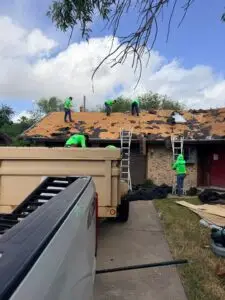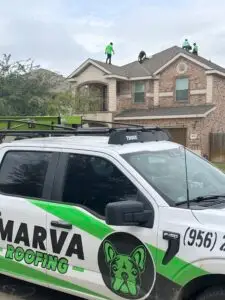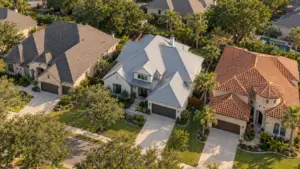
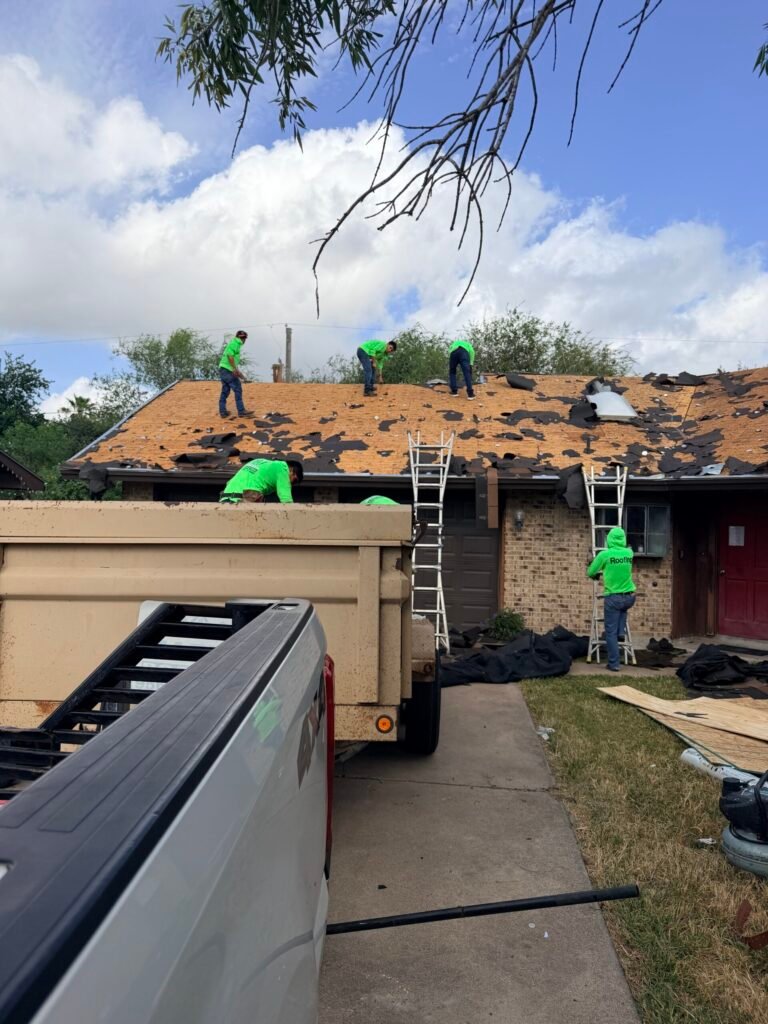
A tear-off removes the old roofing so the deck can be inspected. A shingle overlay adds new shingles over an existing layer, leaving less access to what is underneath. Before comparing estimates for your McAllen or Rio Grande Valley home, make sure you know which method each contractor is proposing.
These are different scopes of work
A tear-off removes the existing roof covering so the contractor can evaluate the exposed roof deck and build the replacement system from that surface. An overlay places new shingles over an existing covering. Both may be described casually as a “new roof,” but they do not provide the same access to the materials underneath.
Before comparing prices, ask which method the proposal includes. Do not assume removal is included simply because the estimate says roof replacement.
Why seeing the deck matters
The roof deck is the surface beneath the underlayment and shingles. When old roofing is removed, the contractor can inspect areas that were previously covered. That can reveal damaged material, questionable repairs, or conditions around an old leak that need attention before installation continues.
A view from the attic may help identify concerns, but it is not the same as seeing every part of the deck from above. Likewise, a good-looking shingle surface does not establish that everything beneath it is sound.
Ask for photos of any concerns and an explanation of the proposed correction. If repairs are necessary, get the scope and price clear before the new covering conceals the area.
A cheaper starting price needs context
An overlay can reduce removal and disposal work, which may make its initial price attractive. The tradeoff is that existing materials remain in the assembly and direct inspection is more limited. Ask how the contractor will evaluate the underlying condition, handle transitions, and address any existing leak history.
Do not assume an overlay is suitable for every roof. The contractor needs to check the existing layers, roof condition, selected product instructions, and the requirements applicable to your property. A blanket statement that overlays are always acceptable—or always forbidden—does not replace that review.
Five questions worth asking
- Are you proposing a complete tear-off or an overlay, and why?
- What existing roof conditions support that recommendation?
- How will hidden damage be identified and handled?
- How will edges, penetrations, and wall connections be addressed?
- What written product and installation requirements apply to this scope?
What if the roof has leaked before?
Tell the contractor where stains appeared, when leaks happened, and what repairs were attempted. Share photos if you have them. Covering the surface without understanding the previous leak can leave an important question unanswered.
If you are considering asphalt shingle roof replacement, start with an inspection and a clear explanation of the proposed method. Read about roof decking repairs, or call family-owned, veteran-owned Marva Roofing at (956) 217-9989 to request an inspection and estimate.
For additional background, see the manufacturer’s explanation of the roof deck and its role in a roofing system.