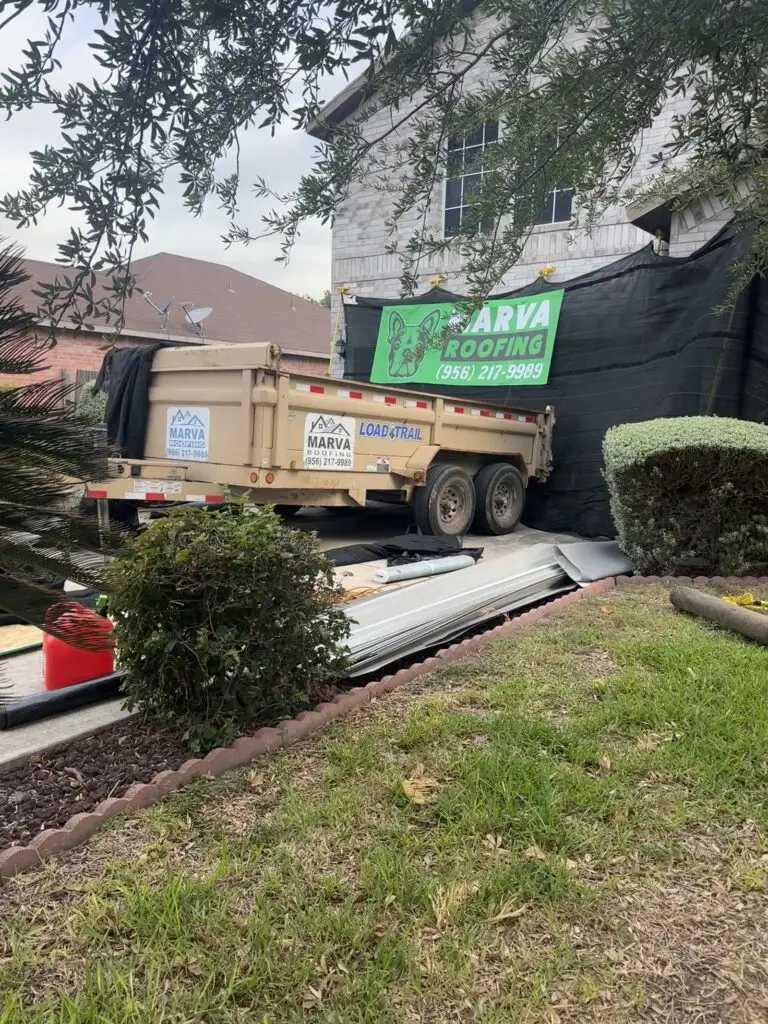
A roof replacement property-protection plan should identify the areas that need protection, who will move or cover items, where materials and debris equipment will go, how the crew will access the property, and how cleanup or accidental damage will be handled. Review it before tear-off starts, while the yard and exterior are still easy to document.
Why discuss protection before the crew arrives?
Roof replacement creates falling debris, foot traffic, delivery activity and vibration. Every home has different exposure: narrow side yards, delicate landscaping, exterior air-conditioning equipment, low windows, patios, pools, solar equipment or limited driveway access.
A short written plan helps the homeowner and contractor see the same risks before work begins. It also separates homeowner preparation from contractor responsibilities. The plan does not guarantee that nothing can go wrong, but it gives both sides a clear starting condition and a process for responding if something does.
1. Start with exterior photos and a walk-around
Ask for a quick walk-around before setup. Photograph the driveway, siding, windows, gutters, exterior lights, air-conditioning equipment, fences, patios and landscaping near the roof edge. Mark fragile or expensive items that may not be obvious to the crew.
These photos are a baseline, not proof that every later condition was caused by the roofing work. Record the date, the area shown and any pre-existing damage that matters.
2. Identify the debris path
The plan should say how old shingles and other debris will move from the roof to a trailer, dumpster or designated collection area. Ask:
- Where will debris leave the roof?
- Which doors, windows or walkways should stay closed?
- Will a driveway, gate or parking space be blocked?
- How will the crew protect surfaces along that route?
- Who should be contacted if the planned route needs to change?
A controlled debris path is easier to monitor than allowing tear-off debris to fall around the entire perimeter.
3. List what the homeowner must move
Homeowners may need to move vehicles, grills, patio furniture, toys, potted plants, decorations or other breakable items away from the work zone. Gates may need to be unlocked, pets kept inside and sprinkler heads marked.
Put the deadline in the plan. If an item is too heavy, attached to the house or unsafe for the homeowner to move, decide who will handle it before the crew arrives.
4. Write down the contractor’s protection setup
Protection depends on the property and the roofing method. The written plan may identify tarps, catch systems, temporary barriers, plywood, equipment covers or designated no-access zones. It should address:
- windows and doors below active tear-off areas;
- siding, gutters and exterior fixtures;
- flower beds, shrubs and delicate landscaping;
- patios, pools and outdoor kitchens;
- exterior air-conditioning equipment;
- driveways and surfaces used by trailers, dumpsters or material delivery.
Do not treat a product name as the entire plan. Confirm where the protection will be installed, when it will be moved and who checks it during the project.
5. Coordinate rooftop equipment and attachments
Satellite dishes, solar equipment, antennas and other roof attachments may require separate coordination. The roofing proposal should not quietly assume that another company will remove or reinstall them.
Confirm who is responsible, when that work must occur and whether the roof can remain protected if scheduling changes. Keep any separate provider agreement with the roofing documents.
6. Plan for changing weather and overnight conditions
Property protection is different from roof dry-in. Yard barriers and debris controls protect the surroundings; underlayment, tarps and temporary closures address the exposed roof.
Ask what happens if rain, wind or an unexpected delay interrupts tear-off. Our guide to roof dry-in questions explains why product exposure limits and temporary weather protection should be confirmed separately.
7. Define daily and final cleanup
The plan should state when loose debris will be collected, when ground magnetic sweeps will occur and how the crew will check work areas before leaving. A magnetic sweep is useful, but it does not prove that every fastener or fragment has been removed.
At the end of the project, walk the perimeter, driveway and outdoor living areas. If loose nails or debris remain, record the location and request another cleanup pass before the job is closed.
8. Establish a damage-reporting process
The written plan should name the contact for reporting a concern and explain what information to provide. A dated photo, location and short description are more useful than a general statement that something looks different.
Do not wait until weeks later if you see a broken light, damaged screen, scraped surface or disturbed landscaping. Prompt notice gives the contractor a better chance to inspect the condition while the project setup is still known.
Questions to ask before tear-off
- Which areas around my home are inside the active work zone?
- What must I move, unlock or mark before the crew arrives?
- Where will materials, trailers and debris equipment be placed?
- How will windows, landscaping, patios and air-conditioning equipment be protected?
- Who coordinates satellite, solar or other rooftop equipment?
- What is the daily cleanup routine?
- Who receives damage or cleanup concerns, and how quickly should I report them?
- When will we complete the final exterior walk-around?
The roof replacement timeline guide can help coordinate these steps with delivery, tear-off and installation. After the work is complete, use the final walkthrough checklist to review cleanup, photos, approved changes and warranty documents.
A clear plan protects the project relationship
The best time to discuss property protection is before the first shingle is removed. A written plan gives the homeowner, project manager and crew the same map of the work area and the same cleanup expectations.
Marva Roofing is a family-owned, veteran-owned roofing company serving McAllen and the Rio Grande Valley. If you are planning a roof replacement and want the setup, tear-off and protection details reviewed with the scope, call (956) 217-9989 to schedule an inspection.