“Dried in” describes a stage of roof work, but the phrase alone does not tell you whether your home has adequate temporary weather protection. Ask your roofer what is installed, what the product instructions allow, how unfinished details are protected, and what happens if rain arrives before the shingles are complete.
For McAllen and RGV homeowners, this is a conversation to have before removal starts. A roof can look covered from the driveway while still having unfinished connections or openings. Your goal is a clear, project-specific explanation—not a promise based only on the appearance of a sheet of material.
What does “dry-in” mean on your project?
Contractors may use the term to describe different combinations of underlayment, temporary coverings, and completed details. Ask which areas are included and which remain open. The most useful answer names the materials and explains the current stage of the assembly.
Separate three questions: Is the roof deck ready for the next layer? What is protecting the building during construction? When will the permanent roofing system be complete? Those answers may have different timelines. Our shingle replacement timeline guide explains why installation and the overall project schedule are separate conversations.
An exposure rating is not a rain guarantee
Read the limitations for the exact product on your roof. For example, GAF’s FeltBuster information distinguishes UV resistance from weather protection and says the product must not serve as a temporary roof protecting property or possessions. This is a product-specific example, not a claim that this material is installed on your home.
A label describing days of permitted exposure should not be interpreted as a guarantee against leakage for that many days. Ask what the stated limit measures, which installation conditions apply, and whether additional protection is needed. Different underlayments and self-adhered membranes have different requirements; there is no universal waiting period that makes every exposed roof safe.
Ask: “What is the product name, and can you show me the instructions that apply while it is uncovered?”
Ask about openings and connections
A broad roof surface is only part of the conversation. Ask the contractor to explain the current condition around vents, pipes, chimneys, walls, valleys, roof edges, and transitions between finished and unfinished sections. Do not assume that laying material across most of the deck finishes these details.
You can request progress photos and a plain-language explanation without climbing onto the roof. Photos help document the stage of work, but they do not prove that every concealed detail is correct. The contractor should identify what still needs to be completed and who is responsible for checking it.
Ask: “Which details are complete today, which are temporary, and what remains before the permanent roof is finished?”
Agree on the weather decision before tear-off
Ask how the team decides whether to start removal, how much roof it plans to open, and who monitors changing conditions. Discuss the response if weather interrupts work earlier than expected. A project plan should account for the roof’s complexity, access, available materials, and the time needed to protect an opened section.
Get a named contact and the update method before the crew leaves. If the schedule changes, ask what stage the roof will remain in overnight and when it will be checked again. A forecast can change; a homeowner should not have to guess whom to call.
For background on the layer beneath the roof covering, see our underlayment guide. For an urgent temporary-protection need, learn about emergency roof tarping. The appropriate method depends on the actual roof and conditions.
If water appears inside during the project
Notify the project contact promptly. Record when you first noticed it and take photos from a safe location. Describe the room and the visible symptom rather than guessing the entry point. Keep away from wet electrical fixtures, unstable ceilings, and active work areas; do not climb onto the roof or try to reposition coverings yourself.
Ask the contractor what immediate response is planned and what needs evaluation before work continues. Keep the response and any approved scope changes with your project records. Avoid assuming that a stain alone establishes its cause or that any particular repair or insurance outcome is guaranteed.
Five questions to save before work begins
1. What exact materials and temporary protection are planned?
2. What do their instructions allow while uncovered?
3. How will openings and unfinished connections be handled?
4. Who decides when weather requires a change in the work?
5. Who can I reach after the crew leaves?
Marva Roofing is family-owned and veteran-owned, serving McAllen and the Rio Grande Valley. Call (956) 217-9989 to request an inspection and discuss a replacement plan that explains the work stages and weather preparations for your home.
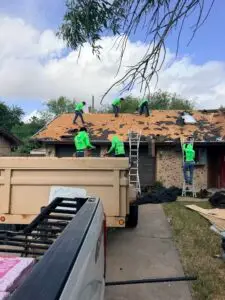
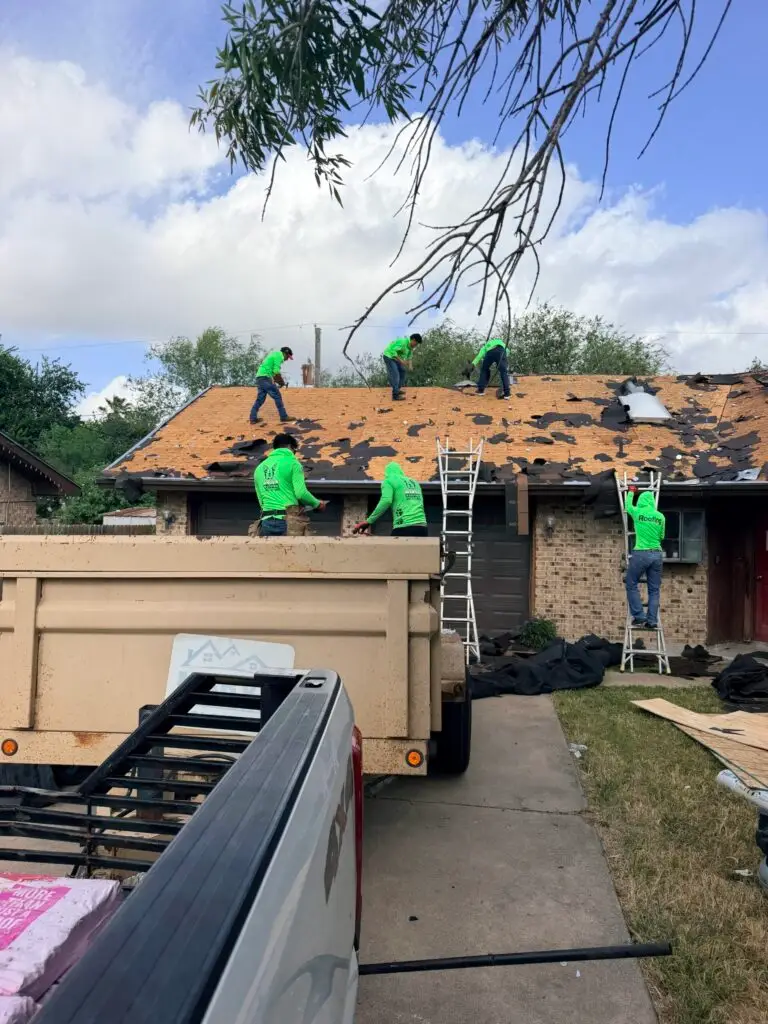
Project image shows tear-off in progress, not a completed temporary roof or proof of compliance.