Commercial Roofing Cluster • McAllen, TX
Commercial Roof Maintenance McAllen: A Pro Plan to Prevent Leaks, Extend Roof Life, and Protect Your Building
Commercial Roof Maintenance McAllen is not “optional upkeep.” It’s the difference between predictable, budgeted roof performance and surprise leaks that disrupt tenants, damage inventory, and shorten roof lifespan. In South Texas, heat, UV exposure, humidity, and storm cycles create a harsh operating environment for commercial roofing systems—especially low-slope roofs where drainage and details matter most.
At Marva Roofing, we treat maintenance like a system—not a patch. Our process focuses on the specific failure zones that cause repeat leaks: drains and scuppers, seams and laps, penetrations near HVAC units, parapet transitions, and edge metal exposure points. We also stay insurance-aware, because documenting roof condition after storm events can prevent confusion and protect property owners during claim conversations.
Table of Contents
Most TOC plugins auto-detect headings. These anchors also work for manual TOC linking.
- Why Commercial Roof Maintenance McAllen Matters
- McAllen Climate: What It Does to Commercial Roofs
- Commercial Roof Types and Maintenance Priorities
- The Maintenance Plan: What We Check and Why
- Drainage Maintenance: Drains, Scuppers, Ponding Water
- Seams, Laps, and Field Membrane Care
- Penetrations + HVAC Curbs: The #1 Leak Zone
- Edges, Parapets, and Terminations
- Documentation + Photo Reporting (EEAT Standard)
- When Maintenance Becomes Repair or Replacement
- Storm Awareness + Insurance Considerations
- Video: What Good Maintenance Looks Like
- FAQs
- CTA + Contact Section
Asset Protection
Why Commercial Roof Maintenance McAllen Matters
Property owners often call maintenance “a nice-to-have” until they experience a commercial leak. The truth is simple: Commercial Roof Maintenance McAllen reduces emergencies by catching small issues before moisture spreads through insulation, decking, and interior finishes. A roof doesn’t fail all at once. It fails in predictable stages—usually at details—and maintenance slows that process.
The biggest value of maintenance is control. Instead of reacting to water intrusion, you plan: scheduled drain cleanouts, targeted corrections, and routine photo documentation that shows your roof’s true condition over time.
- Fewer emergency calls and business interruptions
- Lower total cost of ownership over the roof’s life
- Less risk of insulation saturation and hidden damage
- Better long-term performance at seams, edges, and penetrations
- Stronger documentation after storms and repairs
EEAT + Standards
Maintenance That Holds Up to Professional Standards
A legitimate Commercial Roof Maintenance McAllen program is more than “apply sealant.” It follows a repeatable inspection-and-correction process. We cross-check our approach against recognized industry best practices, including guidance from the National Roofing Contractors Association (NRCA), and we stay aware of manufacturer recommendations (including resources from Owens Corning Roofing) when system requirements or warranty compliance matters.
McAllen Climate
McAllen Climate: What It Does to Commercial Roofs
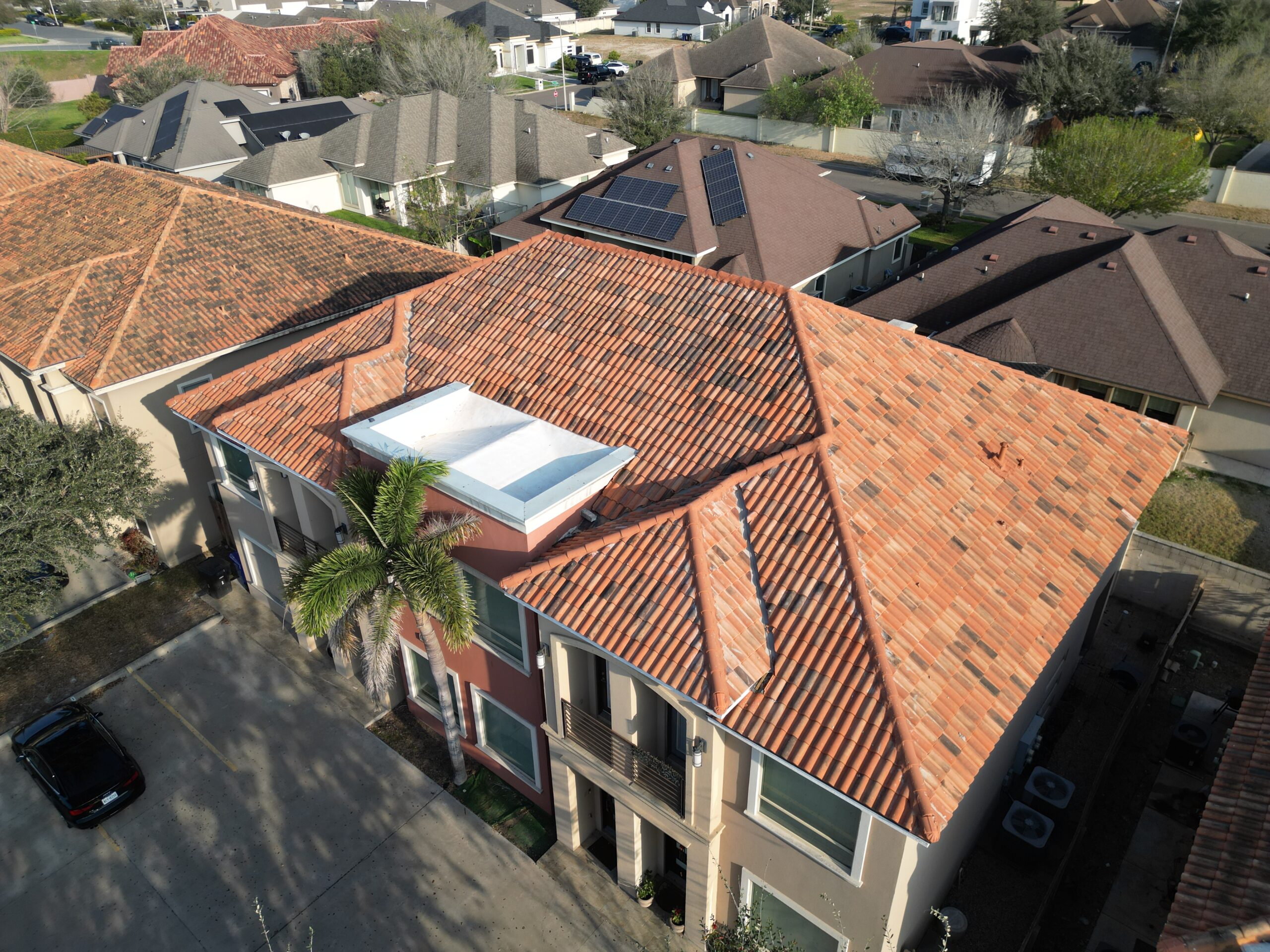
McAllen commercial roofs face an aggressive combination: intense UV exposure, high heat, humidity, and periodic storm events. These conditions change how roofs age. Heat drives expansion and contraction cycles that fatigue seams, fasteners, and flashing terminations. Humidity increases the risk that trapped moisture becomes insulation saturation. And storms can expose weak edges even when the field membrane looks “fine.”
- Thermal cycling: seam stress and fastener movement
- UV exposure: surface aging and coating breakdown
- Humidity: moisture retention and hidden deterioration risk
- Wind-driven rain: edge/termination vulnerability
- Debris: punctures and drain clogs after storms
That’s why Commercial Roof Maintenance McAllen prioritizes drains, penetrations, and edges—the areas where climate stress concentrates.
Flat Roof Reality
Why Ponding Water Turns Small Problems Into Big Ones
Low-slope commercial roofs are designed to drain. When water stands repeatedly, heat and water together accelerate aging. Ponding often signals drain restriction, low points from settlement, or insulation compression—issues that maintenance can catch early.
Roof Systems
Commercial Roof Types and Maintenance Priorities
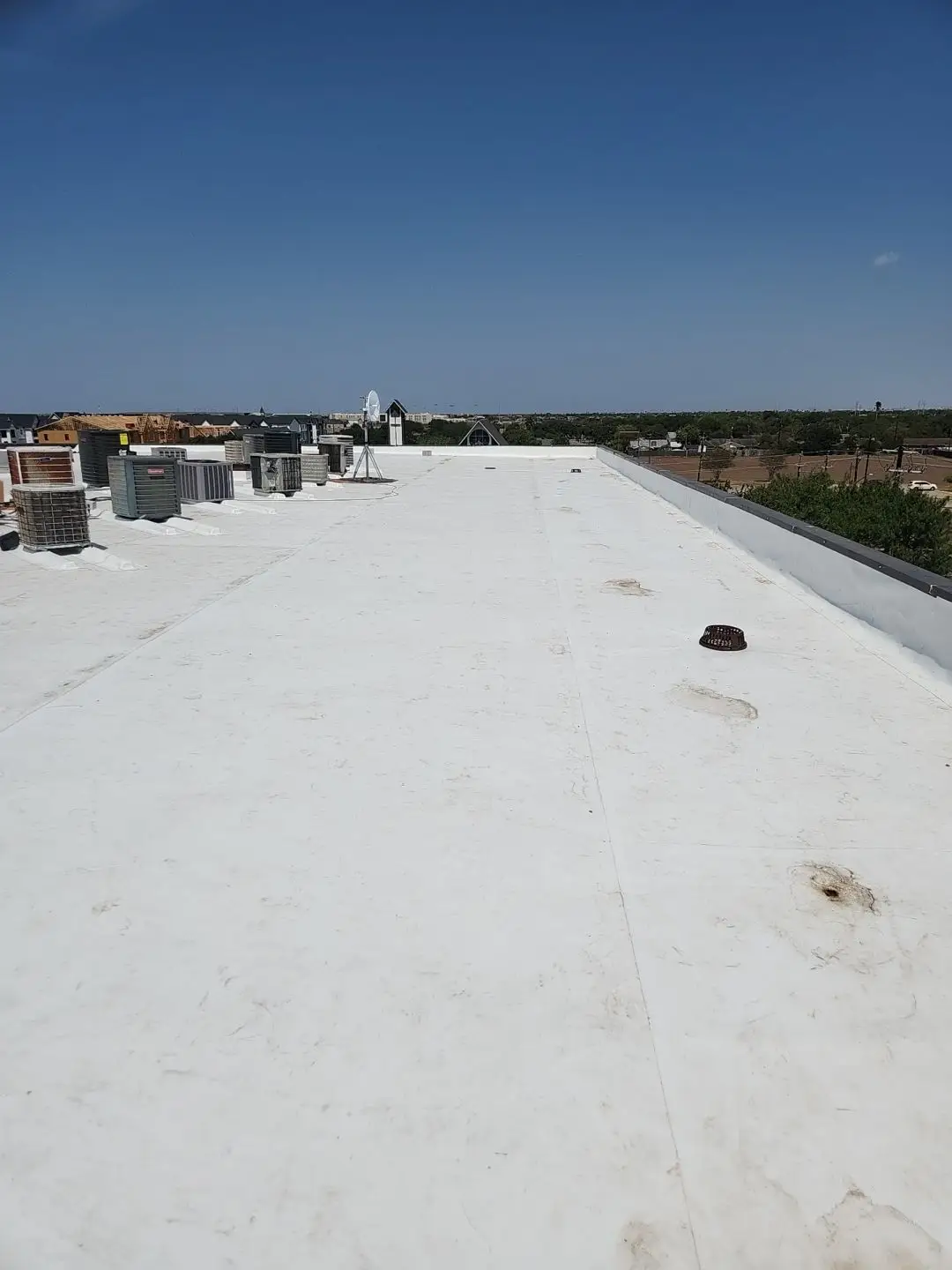
Commercial Roof Maintenance McAllen should be customized to your roofing system. Each system fails differently and requires different checks to prevent leaks.
- TPO / PVC (single-ply): seam weld verification, punctures, terminations, shrinkage indicators
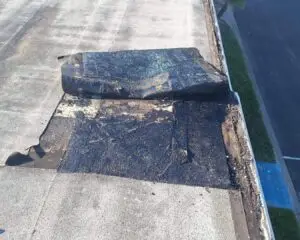
- Modified Bitumen: lap cracking, cap sheet wear, split flashings, granule loss
- BUR: surfacing wear, blisters, alligatoring, gravel displacement, localized soft spots
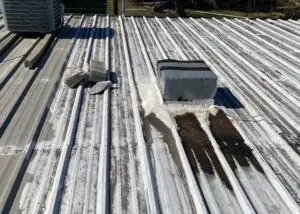
- Metal roofing: fastener back-out, panel movement, closures, end-lap sealing, oxidation
- Coatings: thin spots, peeling, adhesion loss, ponding-related breakdown
Maintenance works best when it targets the system’s actual failure modes, not generic “seal everything” work.
Internal Linking
How Maintenance Connects to Repair and Replacement
Maintenance is the front line. When issues are localized, maintenance often transitions into targeted repairs. When issues are system-wide (or insulation is saturated across large areas), maintenance findings inform replacement planning.
- Commercial Roof Repair McAllen — localized seams, flashing, drains, penetrations
- Commercial Roof Replacement McAllen — system-level solutions for long-term performance
- Commercial Roofing McAllen — pillar overview of commercial systems and services
Maintenance Plan
The Maintenance Plan: What We Check and Why
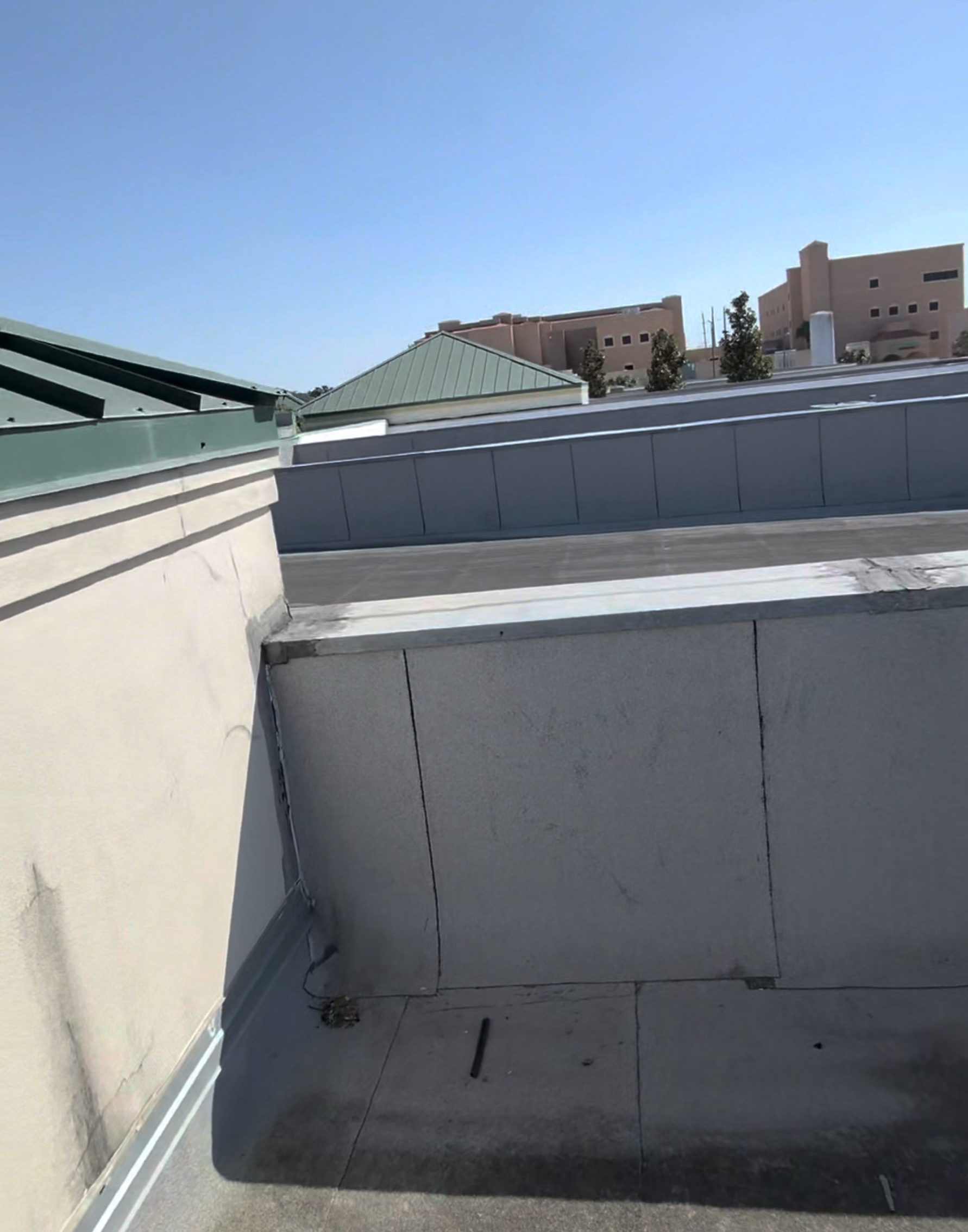
A professional Commercial Roof Maintenance McAllen visit should include both inspection and correction. The inspection finds the issues. The correction addresses the causes early—before moisture spreads.
Core maintenance categories:
- Drainage clearing + flow verification
- Field membrane review + puncture identification
- Seam and lap condition checks
- Penetration integrity around rooftop equipment
- Edge metal, coping, and termination stability
- Photo documentation + prioritized action list
We also evaluate patterns. If multiple issues cluster near HVAC units, that often indicates foot-traffic damage and movement stress. If issues cluster at edges, uplift exposure and termination design may be the root cause.
Frequency
How Often Should You Schedule Maintenance?
Most buildings benefit from at least annual Commercial Roof Maintenance McAllen. Many owners choose semi-annual service (pre-storm season + post-storm season) because debris, wind-driven rain, and drain clogs are common triggers for leaks.
| Building Situation | Suggested Maintenance Timing |
|---|---|
| Typical low-slope roof with normal traffic | 1x per year + after major storms |
| Frequent HVAC servicing / heavy roof traffic | 2x per year + after storms |
| Known ponding zones or past leak history | 2x per year + targeted follow-ups |
Drainage First
Drainage Maintenance: Drains, Scuppers, Gutters, and Downspouts
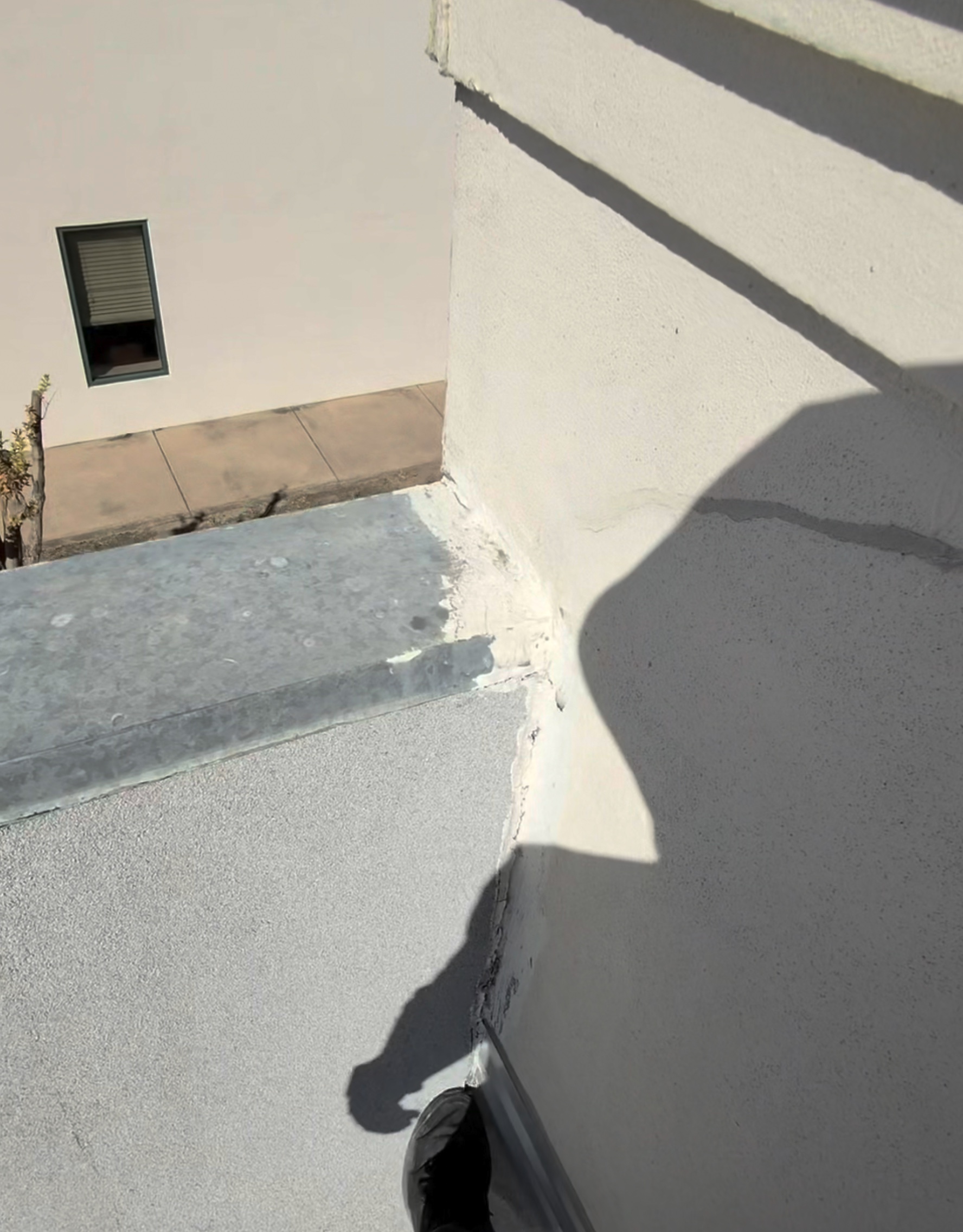
If you want fewer leak calls, start here. Drainage issues are one of the most common triggers for emergency service requests. Commercial Roof Maintenance McAllen must include drain clearing and documentation of how water leaves the roof.
- Clear debris around drains and scuppers
- Inspect drain bowls for cracks, separation, and tie-in integrity
- Check gutters and downspouts for clogs and overflow evidence
- Document ponding zones with wide photos + close-ups
- Identify sediment/waterline evidence that suggests chronic standing water
Drainage maintenance prevents water from sitting against seams, flashings, and terminations—the exact places where roofs fail first.
Ponding Analysis
What Ponding Water Usually Means (and What to Do)
Maintenance should not just note ponding—it should interpret it. Ponding commonly indicates a restriction, settlement, or insulation compression. Documenting the location and pattern allows a property owner to plan a correction before deterioration accelerates.
| Ponding Pattern | Common Root Cause |
|---|---|
| Ponding around one drain | Clog/restriction, drain bowl issue, localized compression |
| Ponding across multiple zones | Systemic slope/settlement issue, aging insulation, design limitations |
| Waterlines at parapets | Overflow behavior, chronic ponding, poor evacuation path |
Seams + Field
Seams, Laps, and Field Membrane Care
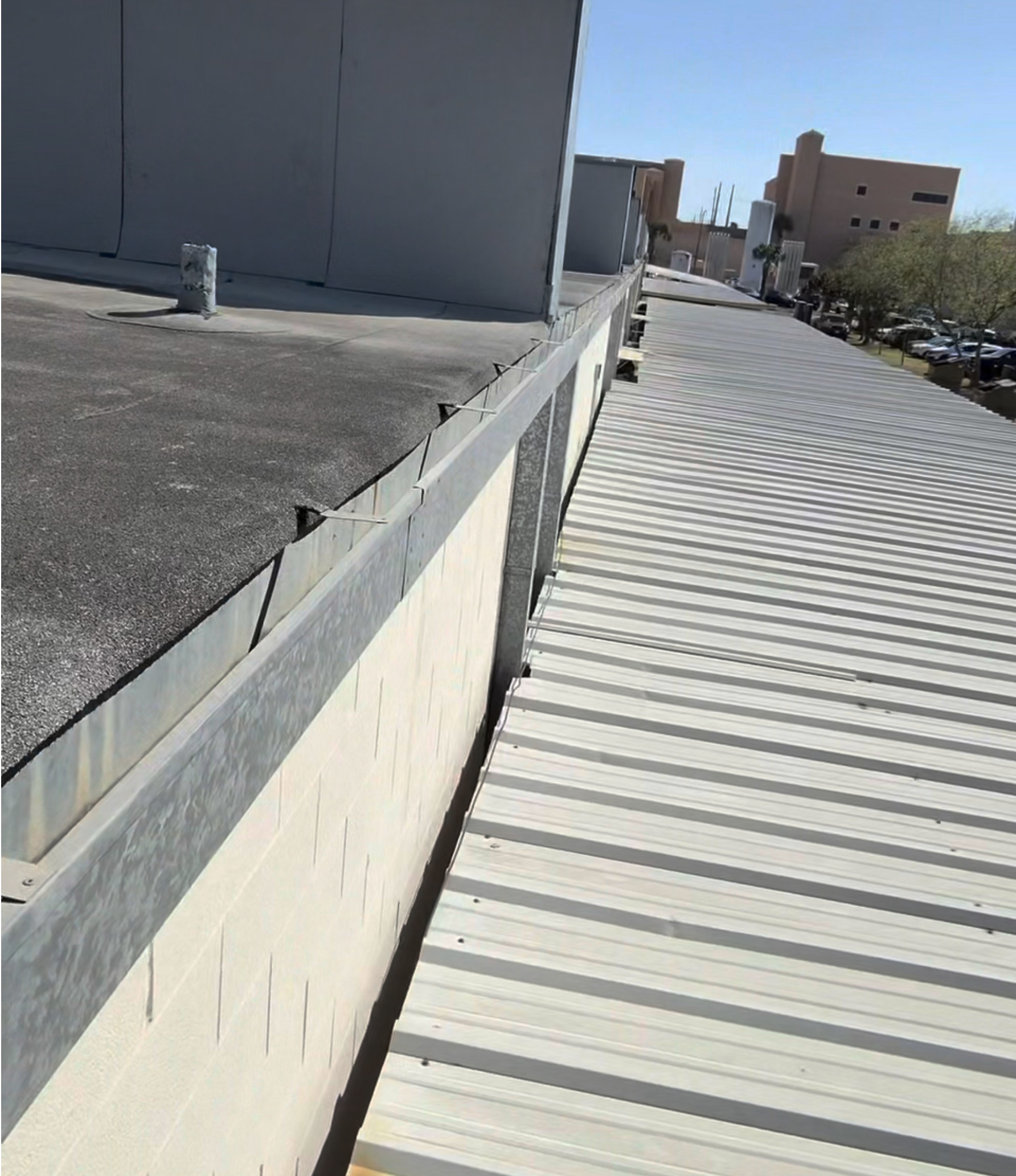
Seams are the “joints” of the system. In Commercial Roof Maintenance McAllen, seam verification matters because small seam defects can become big problems under wind-driven rain and thermal movement. The maintenance goal is early detection: edge lifting, cracks, or fatigue before water intrusion becomes widespread.
- Single-ply: check weld continuity, edge lifting, voids, and stress points
- Mod-bit/BUR: check lap cracking, blistering, splits, and surfacing wear
- Field membrane: identify punctures, abrasion, wrinkles, and “traffic lane” damage
We document seam conditions with close-ups and context photos so repairs (if needed) are targeted and measurable.
Traffic Control
Foot Traffic: The Silent Roof Killer
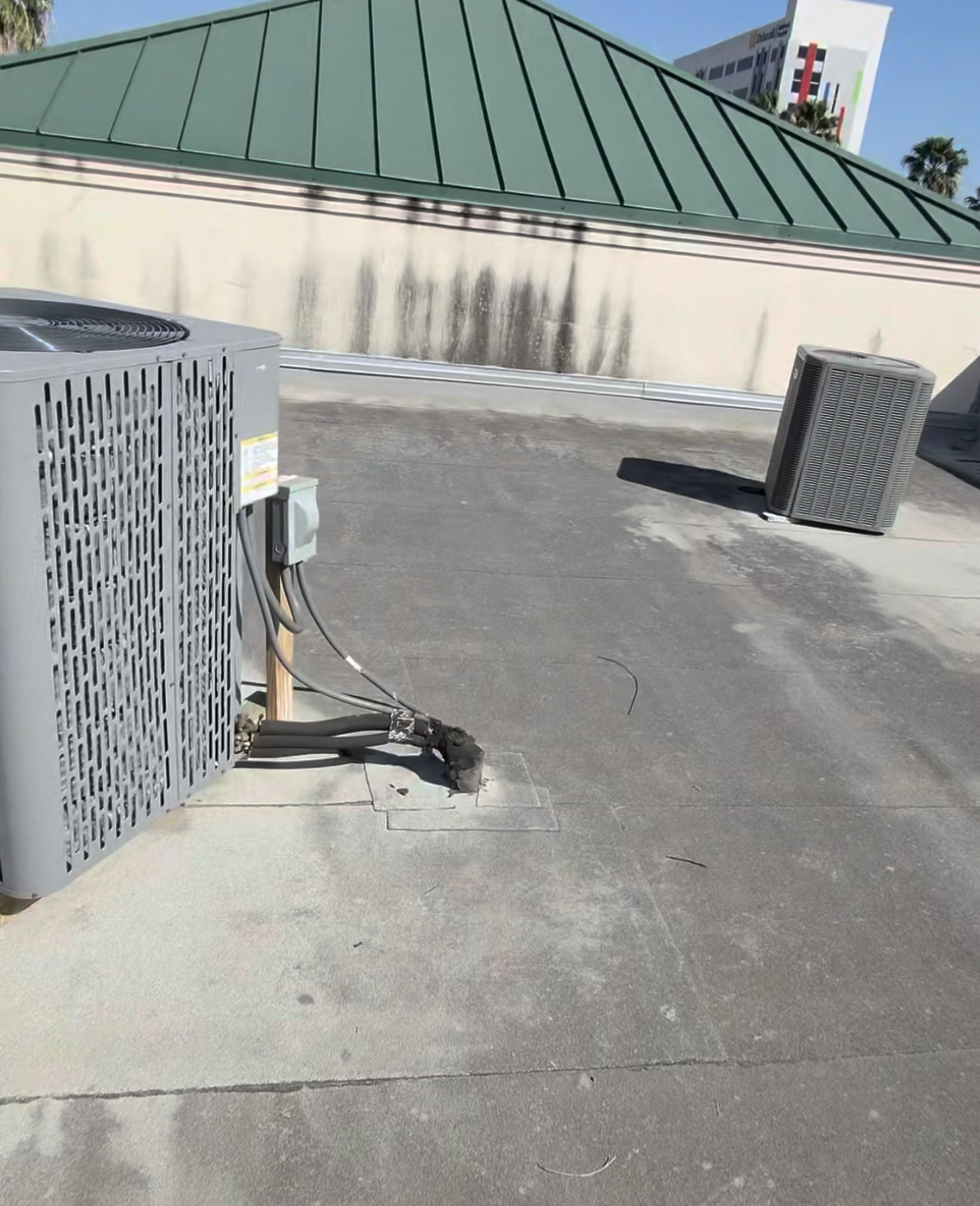
Many commercial roofs leak near HVAC units—not because the HVAC itself leaks, but because tech traffic damages the roof surface over time. A smart Commercial Roof Maintenance McAllen plan checks “service paths” for punctures and abrasion and recommends protective routing strategies if needed (like walk pads or controlled access).
Penetrations
Penetrations + HVAC Curbs: The #1 Leak Zone
If you only remember one thing about Commercial Roof Maintenance McAllen, remember this: penetrations leak first. Roof penetrations are where different materials meet—membrane, metal, fasteners, sealants—and where movement happens most. HVAC curbs, pipe boots, vents, and conduit stands deserve extra attention.
- HVAC curb flashing integrity + counterflashing stability
- Pipe boots and seals (cracking, splits, deterioration)
- Pitch pans (fill condition, cracks, voids)
- Conduit stands (movement and attachment issues)
- Skylight transitions (seal breakdown and edge lifting)
Maintenance should document these details, not just “look at them.” Close-up photos matter because small gaps become water pathways.
Movement
Why Sealant-Only Fixes Often Fail
Sealants can be part of a detail strategy, but sealant-only work fails when the underlying issue is movement, poor termination, or drainage. A durable maintenance approach evaluates why the detail is stressed and recommends reinforcement that respects how the roof system works.
Perimeters
Edges, Parapets, and Terminations
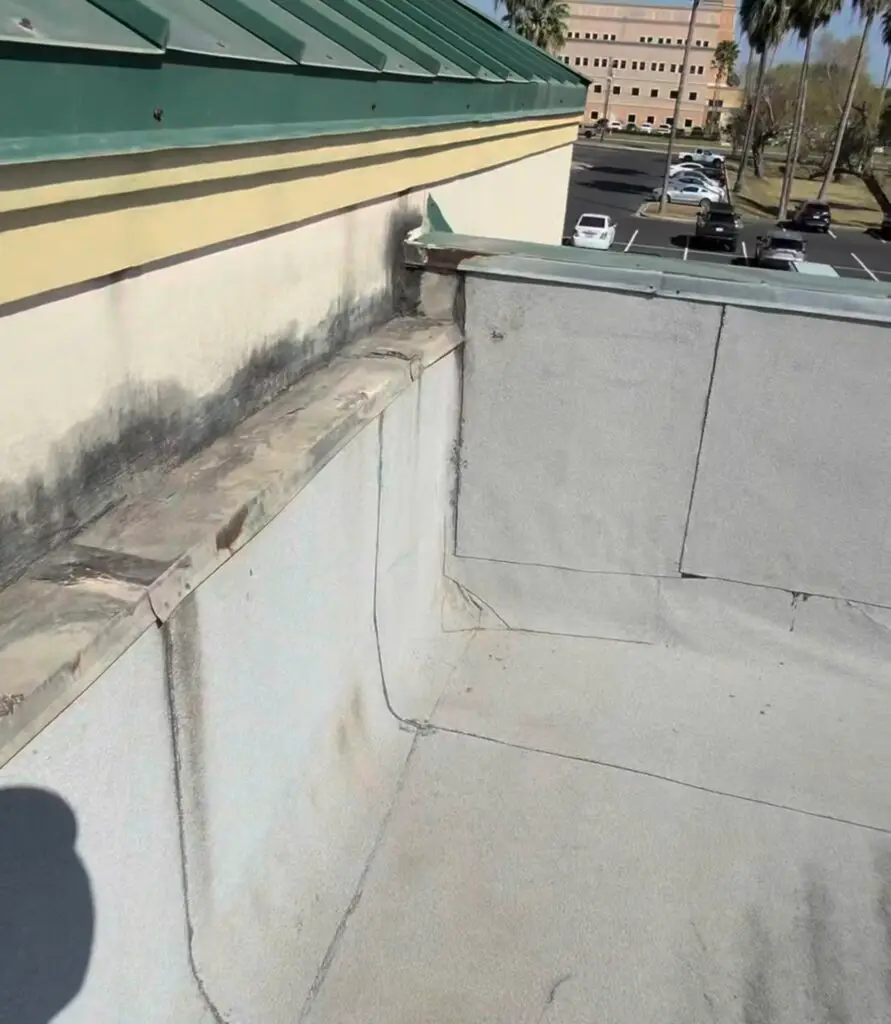
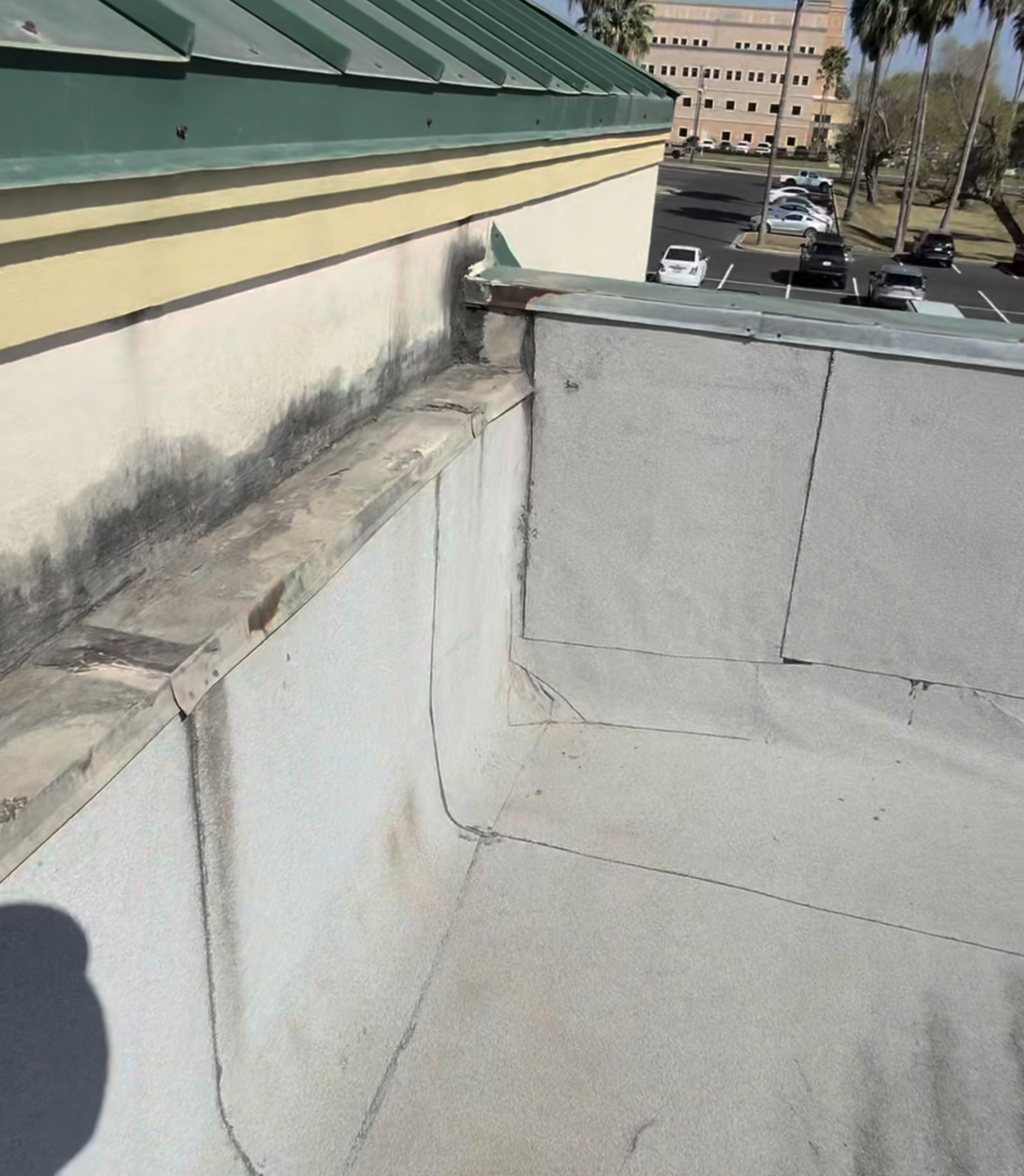
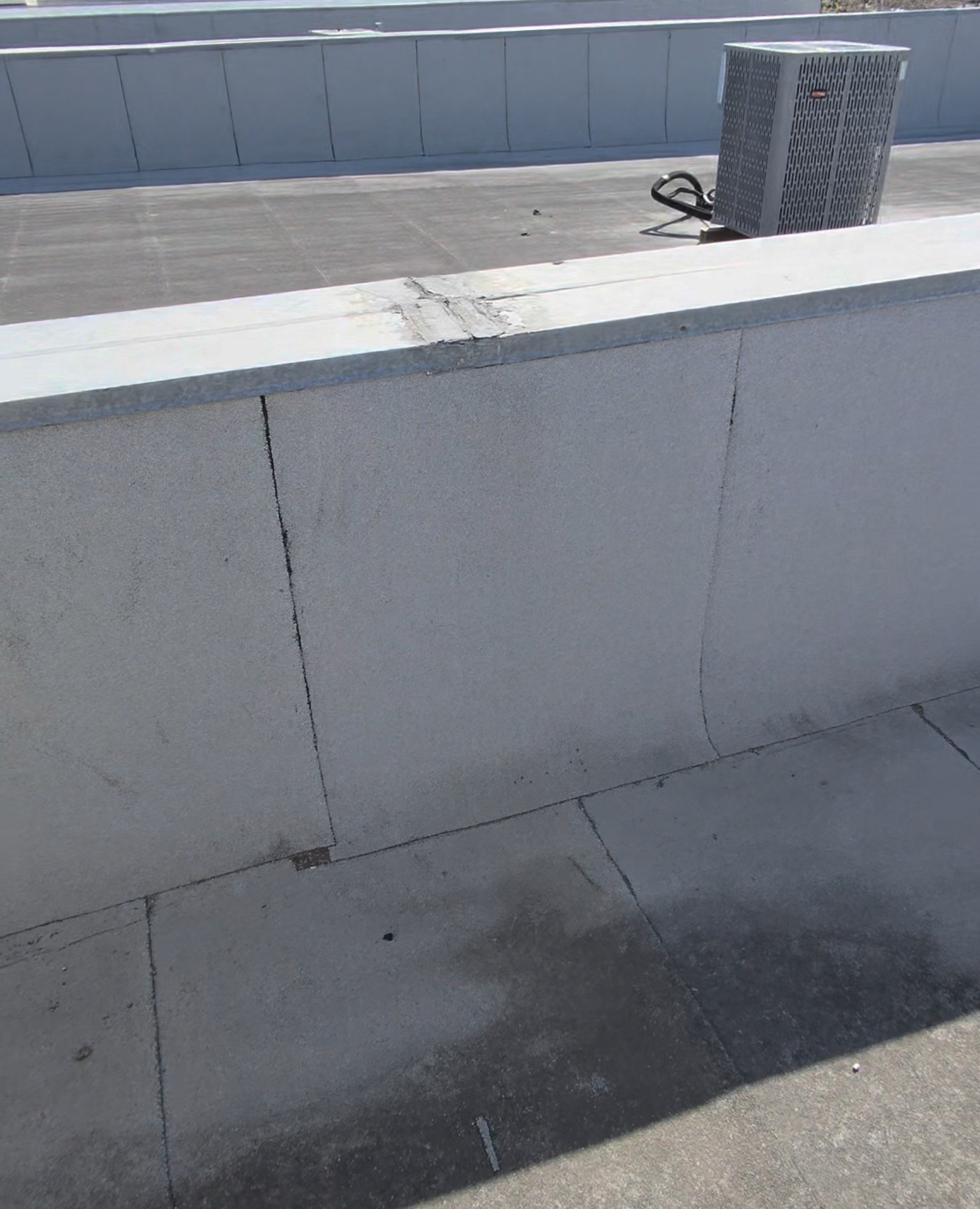
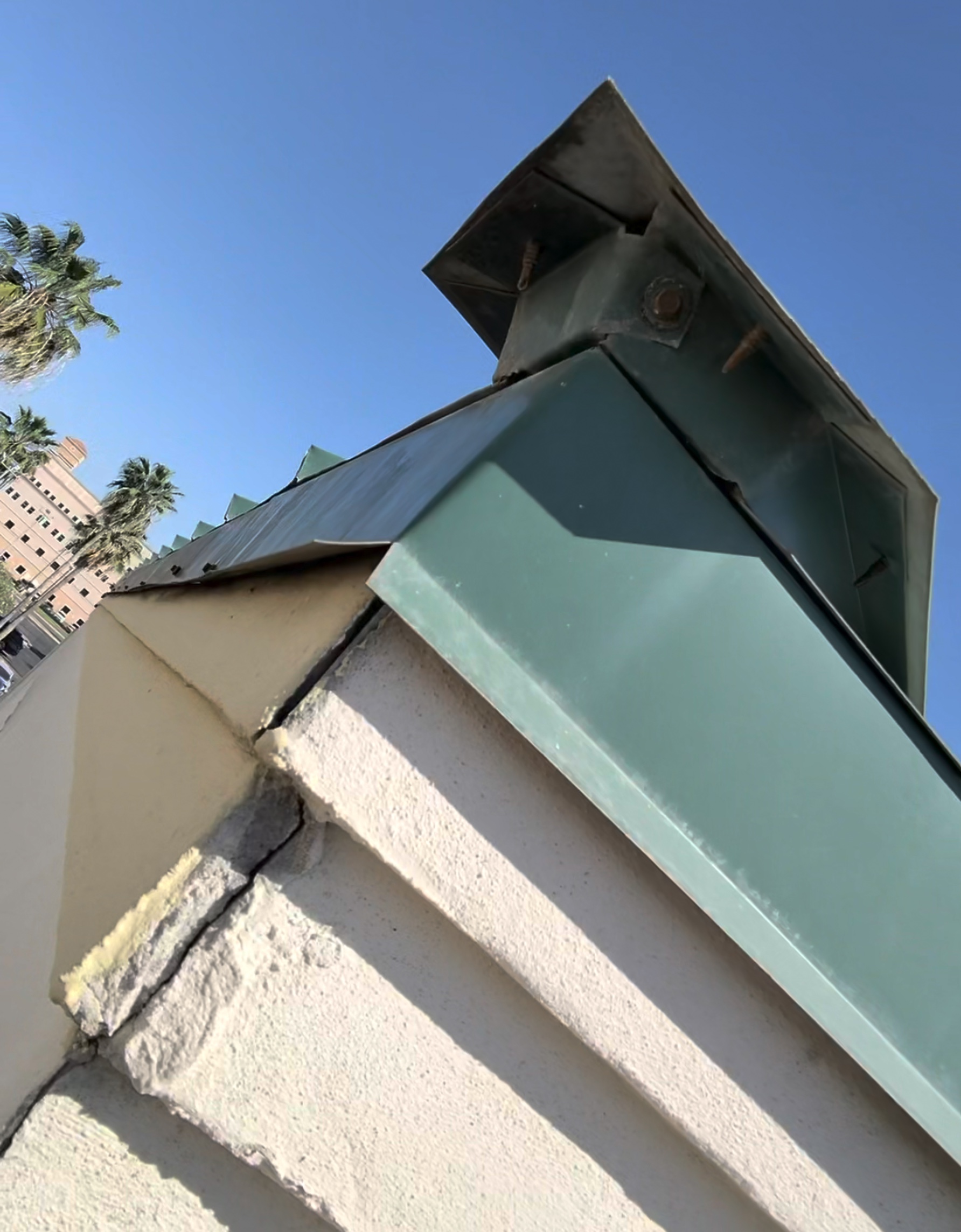
Edges are exposed to uplift. Parapets and coping caps experience movement. Termination bars and wall transitions see stress under thermal cycling. That’s why Commercial Roof Maintenance McAllen should include perimeter verification: edge metal stability, coping joints, and wall termination integrity.
- Edge metal separation, fastener back-out, and uplift exposure
- Coping cap joints and corner conditions
- Wall transitions and termination bars
- Cracks, gaps, and movement evidence at corners
When edge details loosen, wind-driven rain can push water into areas the roof wasn’t designed to handle.
Preventive Fixes
Small Corrections That Prevent Big Failures
Most maintenance wins come from small, targeted corrections: clearing drains, reinforcing stressed details, addressing minor seam issues early, and documenting everything so you can track roof performance over time.
If maintenance reveals a localized defect that needs targeted work, jump to: Commercial Roof Repair McAllen. If the issues are widespread and system-level, review: Commercial Roof Replacement McAllen.
Documentation
Documentation + Photo Reporting (EEAT Standard)
In Commercial Roof Maintenance McAllen, documentation is not “extra.” It’s part of the service. Photos prevent misunderstandings, help prioritize budgets, and create a roof history that supports better decision-making. Your report should include wide context photos, close-up defect photos, and notes that explain the likely causes—not just the symptoms.
- Wide photos showing roof zones and drainage context
- Close-ups showing seam edges, cracks, voids, and transitions
- Priority list: urgent vs maintenance vs monitor
- Recommendations: repair scope or replacement indicators
- Storm notes when applicable
Owner Clarity
What You Should Receive After Commerial Roof Maintenance McAllen
A strong maintenance visit ends with clarity. You should know:
- What’s currently performing well
- What’s at risk (and why)
- Which items are urgent vs scheduled
- Whether repair is recommended now
- Whether replacement planning should begin
For the full service overview and commercial system options, visit: Commercial Roofing McAllen.
Escalation
When Maintenance Becomes Commercial Roof Repair
Good Commercial Roof Maintenance McAllen catches defects early—often before they become leaks. When maintenance identifies a localized issue (like a seam defect, flashing gap, drain tie-in problem, or penetration failure), targeted repair is usually the next step.
Learn more about repair options here: Commercial Roof Repair McAllen.
- Localized seam reinforcement
- Drain/scupper tie-in corrections
- Penetration flashing repairs
- Edge metal stabilization
- Detail rebuilds at repeated leak zones
Replacement Planning
When Commercial Roof Maintenance McAllen Reveals It’s Time to Plan Replacement
Replacement is not the first recommendation—unless the roof is failing system-wide. Maintenance findings that often indicate replacement planning include: widespread membrane fatigue, recurring leaks across multiple zones, repeated patch history without resolution, and evidence that insulation may be saturated across large areas.
Review replacement planning here: Commercial Roof Replacement McAllen.
Storm Awareness
Storm Awareness + Insurance Considerations
After storms, maintenance becomes documentation. A post-storm Commercial Roof Maintenance McAllen visit should record roof condition while evidence is fresh: impacted areas, debris damage, edge stress, and drainage problems. For official consumer guidance about insurance processes, review: Texas Department of Insurance (TDI).
Our focus is clarity and evidence—photos, locations, and condition notes—to support accurate evaluations and reduce disagreements.
Owner Protection
Maintenance Records Protect Property Owners
A commercial roof maintenance McAllen record shows the roof’s condition over time. That helps owners:
- Plan budgets and capital timing
- Track recurring issues by zone
- Document post-storm condition changes
- Verify the effectiveness of repairs
- Reduce “he said / she said” confusion during evaluation
Commercial Roof Maintenance McAllen: Frequently Asked Questions
How often should I schedule commercial roof maintenance in McAllen?
Most buildings benefit from annual Commercial Roof Maintenance McAllen plus a post-storm check. Properties with frequent HVAC roof traffic, known ponding zones, or prior leak history often benefit from semi-annual service.
What is included in commercial roof maintenance?
A pro maintenance visit includes drainage clearing, seam/lap checks, penetration and flashing verification, edge/perimeter evaluation, and photo documentation with a prioritized action list.
Does maintenance reduce the chance of roof replacement?
Maintenance can extend roof life by catching issues early and preventing insulation saturation. While it can’t stop natural aging forever, it often delays replacement and reduces emergency costs.
What’s the difference between maintenance and repair?
Maintenance focuses on prevention and early detection. Repair addresses a specific defect found during maintenance. If you need targeted fixes, see Commercial Roof Repair McAllen.
When should I consider replacement instead of maintenance?
When issues are widespread, leaks recur in multiple zones, or evidence suggests insulation saturation across large areas, replacement planning may be smarter. Review Commercial Roof Replacement McAllen.
CTA + Contact
Schedule Commercial Roof Maintenance McAllen
If you own or manage a warehouse, office, retail building, church, or multi-tenant facility, routine Commercial Roof Maintenance McAllen helps protect your building and keep costs predictable. We provide clear documentation, clear next steps, and a professional process built for South Texas conditions.
7207 E Curry Rd, Edinburg, TX 78542
Phone: (956) 217-9989 • Email: info@marvaroofing.com
Serving McAllen and the Rio Grande Valley

Related resources: Commercial Roofing McAllen • Commercial Roof Repair McAllen • Commercial Roof Replacement McAllen