
Residential-First Low-Slope Roofing for McAllen, Mission, Edinburg, Donna, Pharr & the Rio Grande Valley
Low-Slope Residential Roofing McAllen TX
Low-slope roof sections fail differently than standard pitched roofs. On homes across McAllen, the trouble spots are often patios, room additions, porches, front entries, and other areas where water moves slower than it does on a steeper roof. Marva Roofing helps homeowners inspect these sections correctly so they can understand whether the right answer is repair, replacement, or a different system altogether.
- Veteran-Owned
- Family-Owned
- 0% Money Down Financing Options
- Google Guarantee Messaging
- Inspection-First Guidance
Clear answers before you commit to a low-slope roof repair or replacement
We built this page for homeowners comparing low-pitch roof leaks, patio and porch roof options, addition roof repairs, drainage behavior, and better-fit roofing systems for slower-draining residential sections.
- What counts as low-slope on a home
- Why low-slope sections leak sooner
- System options for residential low-pitch roofs
- Repair vs replacement guidance
- Inspection-first recommendations
Start with facts, not pressure
Schedule Your Free Inspection
Before you spend money patching a porch roof or replacing an addition with the wrong system again, we inspect the actual slope, drainage behavior, transitions, penetrations, and material fit so the next decision is based on facts.
Low-slope residential roofing guide
Low-slope decisions should start with slope, drainage, and material fit
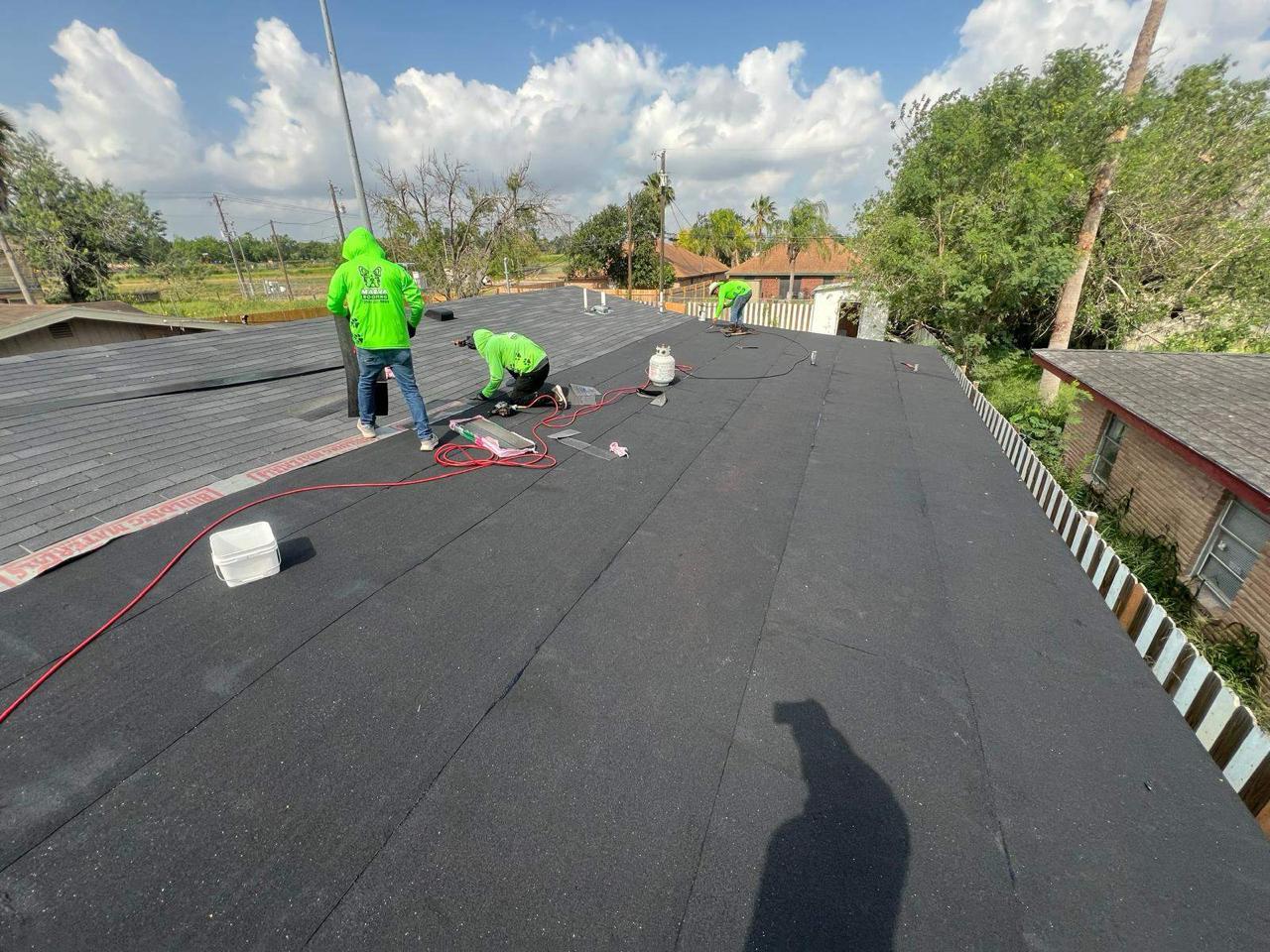
Low-Slope Residential Roofing McAllen is not just a smaller version of a standard sloped roof. In South Texas, it is a decision about slower drainage, transition detailing, water management, material limits, and whether the system currently on the house is actually a good fit for the pitch. At Marva Roofing, we help homeowners sort through that decision with documented inspections, clear repair-vs-replacement guidance, and realistic recommendations built around the way low-slope sections actually perform.
We inspect and plan low-slope residential roofs throughout McAllen, Mission, Edinburg, Donna, Pharr, and the broader Rio Grande Valley. Whether you are dealing with a patio leak, an addition that has been patched too many times, or a porch roof that may need a system change instead of another quick repair, this page is designed to help you make a smart decision with less guesswork.
You will also find links throughout this page to deeper resources on residential roofing, roof inspections, leak repair, replacement planning, ventilation, materials, financing, and nearby service areas so the pillar page can guide visitors into the right next step.
Table of contents
Jump to the section you need
What low-slope means on a residence
Many residential roofs are not flat, but they still need low-slope planning
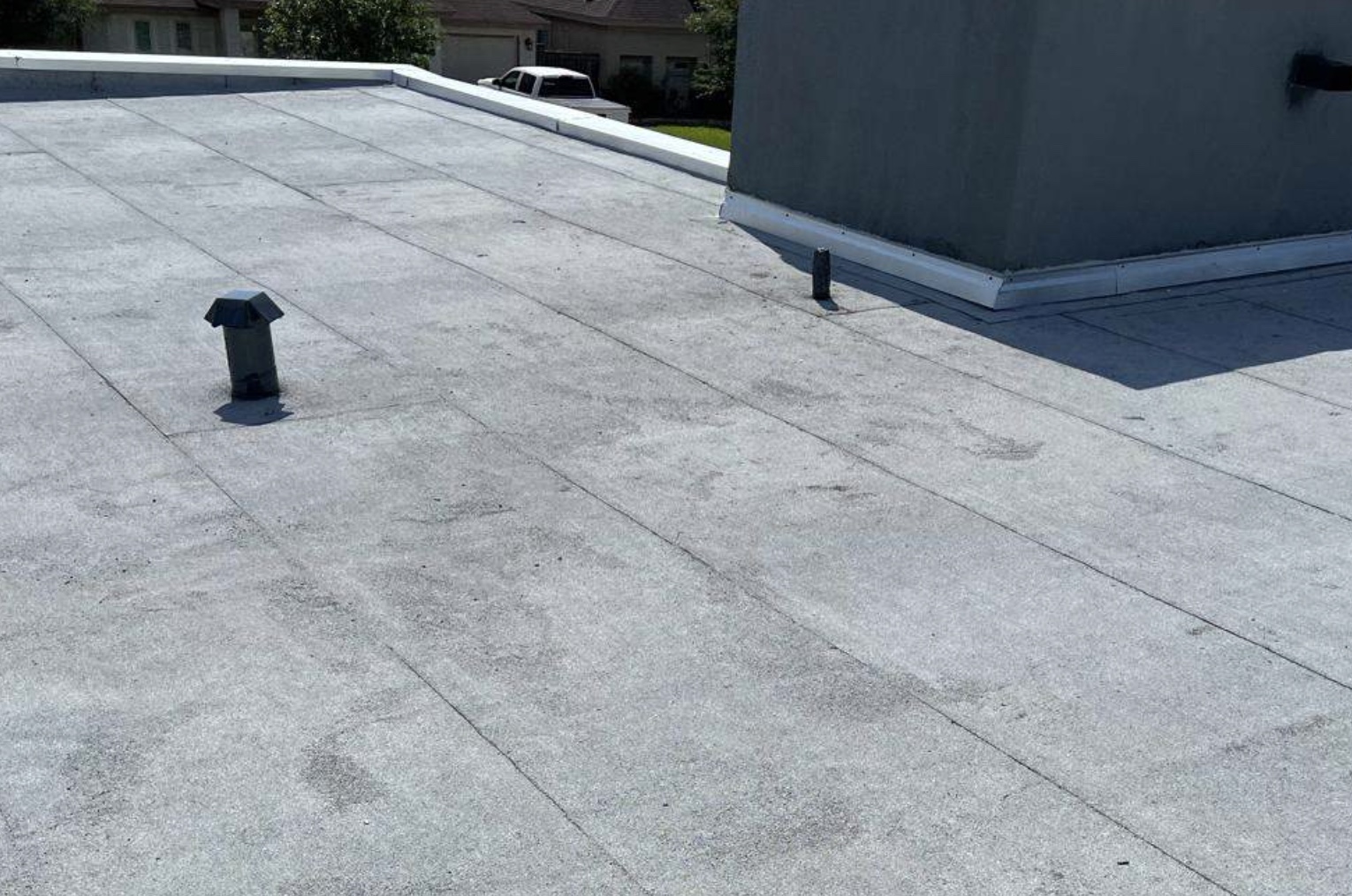
Many residential roofs are not perfectly flat, but they are low enough that water behavior changes and material limits become more important. That often includes patio covers, enclosed additions, front porch roofs, rear slope transitions, and some main roof sections on ranch-style or custom homes.
The key issue is not just how the roof looks from the street. The key issue is whether the roofing assembly is appropriate for the pitch, the drainage behavior, and the way that section ties into the rest of the home.
That is why low-slope planning should connect directly into Residential Roofing McAllen, Roof Inspection McAllen, and Best Roofing Materials McAllen instead of being treated like a minor side project.
Why steep-slope advice often fails here
Low-slope sections leak for different reasons than standard roof slopes
Slower water movement
When water drains slowly, seams, transitions, and penetrations are under pressure longer than they are on steeper roofs.
Wrong material choice
Some low-slope sections keep failing because the material never truly matched the pitch in the first place.
Weak transition detailing
Roof-to-wall tie-ins, addition transitions, and edge details often become the first trouble spots.
Repeat patch history
Many low-slope roofs live in a cycle of caulking and patching that never really fixes the underlying problem.
Drainage problems
Minor drainage flaws that might be tolerable on a steeper section become bigger problems on a low-pitch area.
Storm exposure
After South Texas storms, low-slope sections can hold onto trouble longer because drying and drainage are less forgiving.
Common problem areas
Where low-slope residential roofs usually start having trouble
- Roof-to-wall transitions
- Patio and addition tie-ins
- Penetrations and vent flashings
- Drainage slow points
- Roof edges and eaves
- Areas with chronic ponding or slow dry-out
If the section has already produced stains, bubbling ceilings, or repeat caulking patches, compare it against Roof Leak Repair McAllen and Storm Damage Repair McAllen before deciding whether the problem is isolated or systemic.
Low-slope sections are also worth reviewing alongside Roof Ventilation McAllen when attic heat, moisture, or roof-system stress seems to be part of the story.
For homes with low-slope roof sections, Owens Corning offers helpful product information on its DeckSeal Self-Adhered Roofing System. Owens Corning describes DeckSeal as a self-adhered roofing system for residential re-roofing applications on low-slope areas, including pitches from 1/4:12 to 2:12, and the page also points visitors to product literature such as the data sheet and installation information. It’s a useful manufacturer resource for homeowners who want to learn more about low-slope roofing options, product details, and system specifications before starting a project.
Low-slope systems we evaluate
Different low-slope sections call for different solutions
Qualifying shingle-based assemblies
Some low-pitch residential sections can still be addressed with shingle-based assemblies when slope and detailing allow.
Membrane-oriented solutions
Some sections perform better with a different low-slope approach because of drainage behavior and water exposure.
Metal options on the right design
Certain homes may be better served by a metal approach when geometry, slope, and ownership goals align.
Transition-focused rebuilds
Sometimes the issue is not the whole section—it is the way the low-slope area ties into the rest of the roof.
Still comparing system options? Start with Best Roofing Materials McAllen, Metal Roofing McAllen, or Asphalt Shingle Roofing McAllen before choosing a repair path based on price alone.
Inspection / diagnostic process
What Marva Roofing looks at during a low-slope residential roof inspection
Slope and drainage review
We inspect how the section is pitched and how water actually moves off the roof.
Surface and seam review
We look for deterioration, weak points, prior patches, seam concerns, and visible wear.
Transition and penetration inspection
Most low-slope problems start at details, not in the middle of the field.
Moisture and decking clues
Where conditions allow, we check for signs that the substrate may already be affected.
Material-fit evaluation
We assess whether the current system is a reasonable fit for the slope and structure.
Clear recommendation
We explain whether the section is a repair candidate, replacement candidate, or better fit for a different system.
Installation / replacement process
How a properly planned low-slope residential roofing project should move
Inspection and measurement
The exact slope and drainage behavior have to be understood before a system is recommended.
System recommendation
We match the right system to the section instead of forcing the same answer everywhere.
Tear-off and substrate review
If replacement is needed, the failing assembly is removed so the underlying condition can be checked.
Detail preparation
Flashings, transitions, drainage edges, penetrations, and substrate prep matter tremendously on low-slope sections.
Installation
The selected system is installed with special attention to seams, terminations, and water management.
Final walkthrough
We explain what was done, what to monitor, and how the section fits into the larger roof plan.
Decision friction is normal
Not sure whether to patch, replace, or change systems?
That is exactly why inspection comes first. Many low-slope sections are not just damaged—they are mismatched, under-detailed, or stuck in a repeat-repair cycle.
Repair vs replacement decision guide
When repair makes sense and when replacement becomes the better move
Repair often makes sense when…
- The issue is isolated and clearly documented
- The current system is still a valid fit for the slope
- The surrounding structure still has meaningful remaining life
- The trouble is tied to a specific transition or detail
Replacement becomes smarter when…
- Leaks are recurring across the same section
- Drainage and detail failures are systemic, not isolated
- The deck or substrate may already be compromised
- Patching is becoming financially inefficient
Changing systems makes sense when…
- The current material has been a poor fit from the beginning
- You want a longer-term answer instead of another short-term patch
- You are already investing in related roof replacement work
- You want better drainage and detail performance on that section
The correct answer is not always “replace it.” Sometimes the smartest move is a targeted repair. Sometimes the smarter move is changing the system before another rainy season turns repair spending into wasted money.
Why details matter on low-slope roofs
Low-slope sections reward detail, not shortcuts
Low-slope roofing is rarely forgiving. Water moves slower, drying times can be longer, and small flashing or transition errors can turn into large leak paths. That is why homeowners should think about patios, additions, porch roofs, and other low-pitch sections as detail-driven systems, not minor add-ons.
That is also why these sections should be reviewed alongside Roof Ventilation McAllen, Roof Leak Repair McAllen, and Roof Replacement McAllen instead of being evaluated in isolation.
Preventive maintenance
Low-slope roofs still need maintenance—just smarter maintenance
Keep drainage paths clear
Gutters, edges, and runoff paths should stay open so low-slope sections do not hold water longer than they should.
Watch transitions after storms
Storms often expose the weak points where patios, additions, and low-slope sections meet the rest of the roof.
Do not rely on repeat caulking
Frequent patching is often a sign the section needs deeper evaluation, not just more sealant.
Inspect before stains spread
Small water marks on a ceiling can quickly turn into larger interior and substrate damage on a low-slope section.
Why choose Marva Roofing
Local low-slope guidance built around clarity, details, and accountability
Local RGV experience
South Texas weather and long heat cycles expose weak low-slope detailing fast.
Family-owned and veteran-owned
We focus on straight answers and workmanship that holds up under scrutiny.
Inspection-first recommendations
We do not assume every low-slope section needs replacement. We inspect and explain the real path forward.
Strong homeowner support
From financing to project planning, we help homeowners make practical decisions without guesswork.
Want to vet us before you call? Visit our About page, browse the project gallery, read customer reviews, or check current financing options.
Low-slope roofing service areas
Serving McAllen and nearby RGV communities
McAllen
Our main low-slope pillar is built around McAllen homeowners comparing patio, porch, and addition roofing solutions.
Mission
Mission homeowners often use this page when repeated leaks keep showing up on slower-draining sections.
Edinburg
Edinburg homeowners use this page to compare repairs against system changes on residential low-slope areas.
Pharr
Pharr homeowners looking for a more durable answer on additions and patio roofs can use this page as the starting point before inspection.
Donna
Donna remains part of Marva Roofing’s broader Rio Grande Valley service coverage, and homeowners there can request the same inspection-first guidance used across the region.
Internal link hub / resource center
Keep exploring the low-slope residential cluster
Compare & plan
Inspect & protect
Nearby city support
Trust & next steps
Frequently asked questions
Low-slope residential roofing FAQs for McAllen homeowners
Is low-slope roofing the same as flat roofing?
Not always. Many residential sections are low-pitch rather than perfectly flat, but they still need different planning than a conventional steep roof.
Can shingles be used on a low-slope roof?
Sometimes, on qualifying slopes and with the right assembly. But many low-slope sections need a different system or special handling.
Why do low-slope sections leak more often?
Water moves more slowly, which puts more pressure on seams, transitions, penetrations, and detailing.
What is the best roofing system for a patio or room addition?
It depends on the exact slope, drainage behavior, and how that section ties into the rest of the home.
Can a low-slope section be repaired without replacing the whole roof?
Often yes, if the issue is isolated and the current system is still a good fit.
Your next step
Schedule Your Free Inspection
If you are comparing low-slope residential roofing in McAllen, Mission, Edinburg, Donna, or Pharr, start with a professional inspection and a clear recommendation. We will help you understand whether your best next move is repair, replacement, or a better-fit roofing system for the slope.
Marva Roofing | info@marvaroofing.com | Serving McAllen, Mission, Edinburg, Donna, Pharr & the Rio Grande Valley