
Residential-First Metal Roofing for McAllen, Mission, Edinburg, Donna, Pharr & the Rio Grande Valley
Metal Roofing McAllen TX
If you want a roof that handles South Texas heat, sudden storms, and long-term ownership better than a basic short-cycle system, metal roofing deserves a serious look. Marva Roofing installs, repairs, and replaces residential metal roofs with a system-first approach built around durability, ventilation, flashing detail, and honest recommendations.
- Veteran-Owned
- Family-Owned
- 0% Money Down Financing Options
- Google Guarantee Messaging
- Inspection-First Guidance
Clear answers before you commit to metal
We built this page for homeowners who are comparing lifespan, heat performance, repair vs replacement timing, material options, and long-term value across McAllen and the Rio Grande Valley.
- Standing seam vs exposed fastener
- Metal vs shingles vs tile
- Repair vs replacement guidance
- Cost drivers and long-term ROI
- Storm damage and inspection planning
Start with facts, not pressure
Schedule Your Free Inspection
Before you commit to a full replacement, we inspect the roof, document what we find, and explain whether repair, maintenance, or a full metal upgrade actually makes sense for your home.
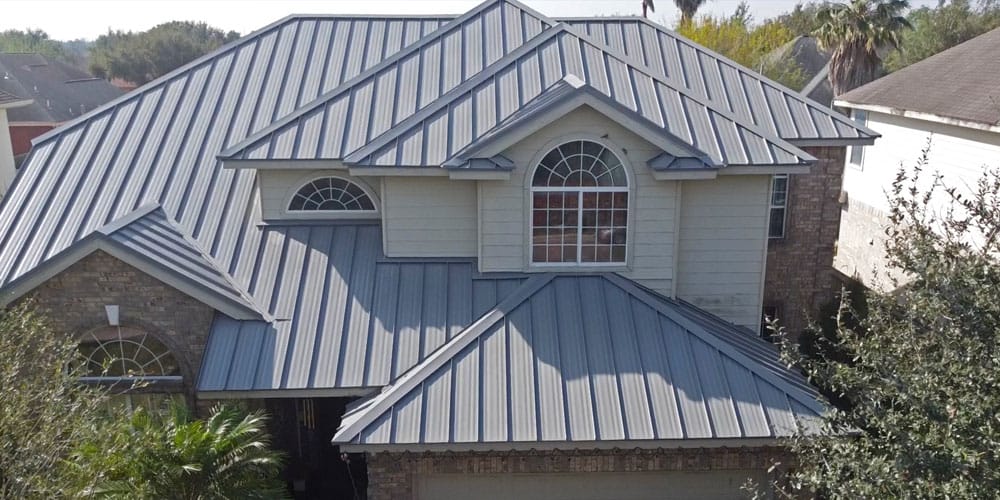
Metal roofing McAllen guide
Metal roofing decisions should match how you plan to own the home
Metal Roofing McAllen is not just a material search. In South Texas, it is a long-term decision about heat control, wind performance, maintenance, curb appeal, and whether you want a roofing system that can outlast repeated short-cycle replacements. At Marva Roofing, we help homeowners sort through that decision with documented inspections, clear cost drivers, and installation details built around flashing, underlayment, ventilation, and durable trim work.
We install, replace, repair, and inspect residential metal roofs throughout McAllen, Mission, Edinburg, Donna, Pharr, and the broader Rio Grande Valley. Whether you are planning a full upgrade from shingles, comparing standing seam to exposed fastener systems, or trying to determine if your existing metal roof can still be repaired, this page is designed to help you make a smart decision with less guesswork.
You will also find links throughout this page to deeper resources on roof inspections, replacement planning, storm damage, roofing materials, financing, and nearby service areas so the pillar page can guide visitors into the right next step instead of overwhelming them.
Table of contents
Jump to the section you need
Why metal roofing McAllen makes sense
South Texas climate changes the roofing conversation
Roofs in McAllen and across the RGV do not age the same way they do in milder climates. Prolonged UV exposure, intense attic heat, wind-driven rain, seasonal storm events, and rapid thermal expansion and contraction all put pressure on surface materials and detail work. That is why the smartest roofing decisions here are usually system-based decisions, not just “what is the cheapest material today?” decisions.
Metal roofing performs well in this environment because reflective finishes can help manage solar load, well-designed panels shed water quickly, and the right system can be built around trim, flashing, fastener strategy, and ventilation instead of relying on a short-cycle surface alone. For long-term homeowners, that often changes the math.
That said, metal is not automatically the right answer for every home. Budget, neighborhood style, roof geometry, HOA considerations, and ownership horizon still matter. The goal is not to push metal on everyone. The goal is to determine when it is the best long-term fit.
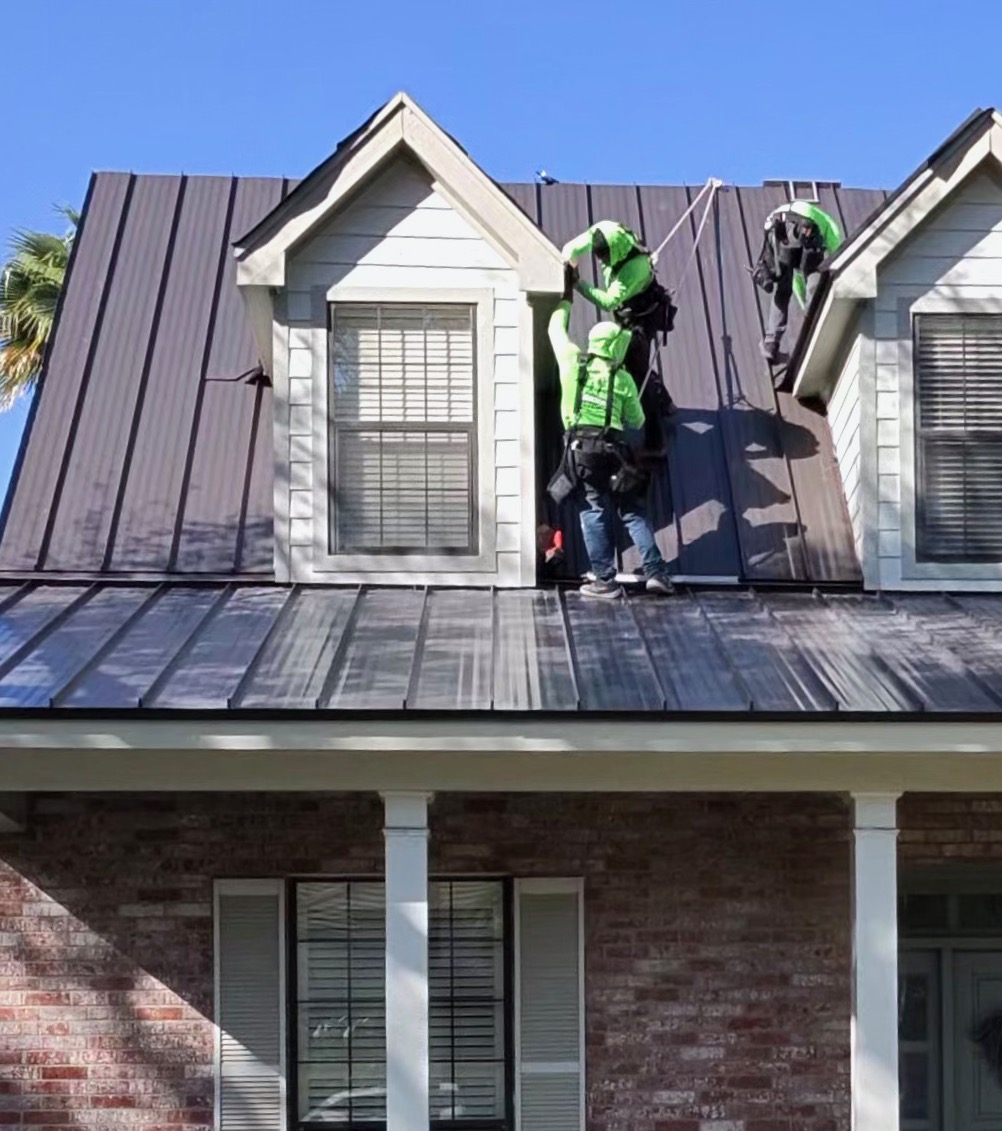
Benefits of installing a metal roof
Why more homeowners are comparing metal as a long-term upgrade
Longer ownership value
When you plan to stay in the home for years, durability matters more than just upfront price. Many homeowners look at metal because they want fewer replacement cycles and fewer repeat repair decisions over time.
Better heat performance potential
Reflective coatings and properly designed assemblies can help limit solar heat gain compared with darker, heat-absorbing systems. That does not make attic ventilation optional, but it can improve overall roof performance in McAllen’s climate.
Strong wind and weather performance
Metal is popular in storm-conscious markets because properly selected panels, trim, and fastening strategies can perform extremely well against wind exposure and fast-moving weather events.
Lower routine maintenance profile
Metal is not maintenance-free, but it typically avoids some of the recurring wear patterns homeowners see with aging shingle systems. Less frequent surface deterioration can mean fewer surprise repairs.
Cleaner modern curb appeal
Standing seam and other metal profiles can dramatically upgrade the look of a home. Stone-coated options can also deliver metal durability with a more traditional visual style.
Smart upgrade path from aging shingles
If your current shingle roof is nearing the end of its useful life, repeated repairs are adding up, or you want a more storm-ready system, metal often becomes one of the strongest upgrade conversations.
Metal roofing systems we install
Different metal systems serve different goals
Standing Seam Metal Roofing
Standing seam uses concealed fasteners and a cleaner panel profile. It is often the best fit for homeowners prioritizing long-term performance, cleaner aesthetics, and fewer exposed attachment points.
Best for: long-term ownership, modern curb appeal, premium performance.
Exposed Fastener Metal Roofing
Exposed fastener systems can lower the initial investment and still provide solid durability, but they require realistic expectations. Fastener locations need periodic attention because exposed washers and screws age in the sun.
Best for: budget-conscious metal installs, certain residential profiles, detached structures.
Corrugated / Panel-Style Metal Roofing
Panel-style metal can fit certain home styles very well and offers a strong, distinctive appearance. The right fit depends on roof geometry, neighborhood style, and the detail package around penetrations and trim.
Best for: homeowners who want bold metal character and practical durability.
Stone-Coated Metal Roofing
Stone-coated systems are attractive when a homeowner wants metal strength but prefers a more traditional look than long panel seams. They can bridge the gap between performance and architectural style.
Best for: homeowners who want metal without a full panel appearance.
Need a deeper conversation about which profile fits your home? Start with a free inspection or review our broader best roofing materials guide before you choose a system based on price alone.
Types of metal and what actually affects performance
Panel profile and metal type are not the same thing
One of the biggest points of confusion in metal roofing is the difference between system profile and metal type. Standing seam, exposed fastener, corrugated, and stone-coated describe system profiles. Steel and aluminum describe the underlying metal. Coatings and paint systems add another layer to the decision.
For most homes in McAllen, the discussion is less about finding the “fanciest” metal and more about matching the right panel, coating, attachment strategy, trim detail, and ventilation plan to the home itself. A beautiful metal panel on weak flashing or poor underlayment is still a risky system.
If you are comparing materials broadly, see our roofing materials guide. If you are comparing metal to a premium asphalt system, the Owens Corning roofing resource center can also help frame what goes into an asphalt roof assembly.
- Steel: common, strong, widely used, and available in multiple finishes.
- Aluminum: lighter weight and useful in specific environments and design applications.
- Coatings / paint systems: affect heat reflection, finish durability, and long-term appearance.
- Underlayment: crucial backup protection beneath the visible metal surface.
- Flashing and trim: where many leaks begin if the detail work is weak.
- Ventilation: helps the entire roof assembly perform better in South Texas heat.
Comparison section
Metal roof vs asphalt shingles vs tile
Metal roofing
Best for: long-term owners who want strong heat, wind, and durability performance.
- Higher upfront investment than basic shingles
- Often stronger long-term value conversation
- Lower routine wear profile when detailed correctly
- Available in multiple looks, from panel systems to stone-coated options
Asphalt shingles
Best for: lower upfront cost and conventional residential appearance.
- Typically lower starting price than metal
- Widespread style availability
- Can be a very smart fit when budget is the priority
- Usually shorter lifecycle and more storm / heat wear over time
Tile roofing
Best for: architectural style and long-term aesthetics when structure and budget support it.
- Distinctive look and strong curb appeal
- Heavier system that may require structural consideration
- Can be premium in both cost and installation demands
- Detail work and repair planning matter significantly
The right choice depends on your ownership horizon, roof geometry, neighborhood style, maintenance tolerance, and what level of long-term durability you want. If you are still comparing, start with Best Roofing Materials McAllen and then narrow in on a system with a professional inspection.
When repair or replacement enters the conversation
Signs you may need metal roof repair or a full replacement
Loose trim, flashing, or fasteners
If ridge caps, wall transitions, pipe boots, or exposed fasteners are moving, loosening, or separating, the risk is not just cosmetic. These are common entry points for water.
Recurring leaks at penetrations
Leaks around chimneys, vent stacks, skylights, and roof-to-wall transitions often signal failing detail work. The panel may not be the problem—the transition might be.
Rust, coating wear, or cut-edge deterioration
Surface wear, corrosion, or compromised finish at panel edges deserves inspection before it grows into a larger replacement decision.
Repeated repairs on an aging shingle roof
If your current roof is not metal yet but keeps demanding repairs after storms or during hot-season expansion cycles, it may be time to evaluate whether upgrading to metal is the smarter long-term move.
Storm dents or hidden impact concerns
Not every dent means failure, and not every impact shows obvious damage from the ground. Hail and wind events should be documented before assumptions are made.
Interior heat, moisture, or ventilation red flags
If the attic runs excessively hot, moisture is appearing near deck lines, or indoor comfort has changed, the issue may involve the roof system design rather than the visible roof surface alone.
If you are seeing any of the signs above, the best next step is a documented roof inspection in McAllen instead of guessing whether the answer is repair or replacement.
Inspection / diagnostic process
What Marva Roofing looks at during a metal roof inspection
Surface and panel review
We look for visible panel movement, impact marks, coating wear, fastener issues where applicable, seam concerns, and trim irregularities.
Flashing and transition inspection
Most leak paths begin at details. We review penetrations, wall transitions, valleys, ridges, eaves, and termination points closely.
Underlayment and deck clues
Where conditions allow, we look for signs that water may have traveled below the metal surface or compromised the supporting assembly.
Ventilation and heat-performance review
Metal roofing still needs a strong system underneath it. Ventilation, attic conditions, and overall assembly performance all matter.
Storm-related documentation
If hail or wind is part of the concern, we document visible findings carefully so you understand the condition before making an insurance or repair decision.
Clear recommendation
We explain whether the roof is a repair candidate, a maintenance candidate, or a replacement candidate, and why.
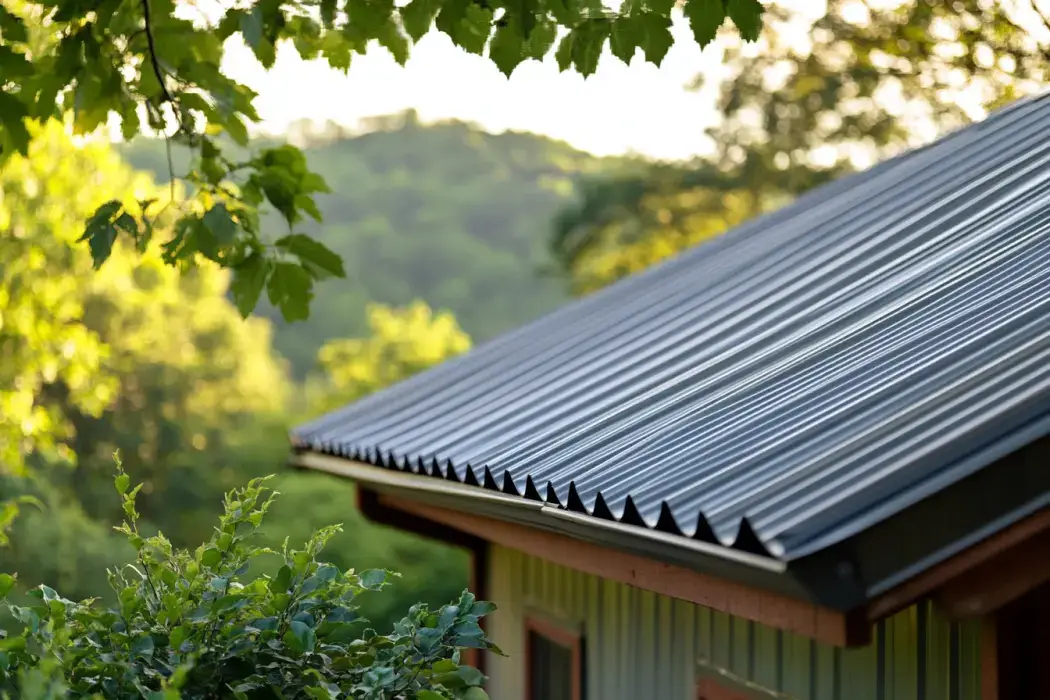
Metal roof installation / replacement process
How a properly planned metal roof project should move
Inspection and roof assessment
Every strong project starts with understanding roof condition, roof shape, existing problem points, and homeowner goals.
System recommendation
We match the right metal profile to the home, the budget, and the long-term ownership plan instead of forcing one profile on every property.
Tear-off and deck review
If replacement is required, the old system is removed so the deck can be evaluated and weak areas can be addressed before new materials go down.
Underlayment and detail preparation
This is where long-term performance is protected. Underlayment, drip edge, flashing details, and transition prep matter as much as the visible panel.
Panel and trim installation
Panel placement, fastening method, seam quality, trim alignment, and penetration detailing all affect how the system behaves in heat and storms.
Cleanup and final walkthrough
The project should end with a clean site, clear communication, and a homeowner who understands the system that was installed.
Decision friction is normal
Not sure whether to repair, replace, or upgrade from shingles?
That is exactly why inspection comes first. We help you compare the remaining life of the current roof against the long-term value of a metal system.
Repair vs replacement decision guide
When repair makes sense and when replacement becomes the better move
Repair often makes sense when…
- The problem is isolated and clearly documented
- The roof still has meaningful remaining service life
- The deck and detail work are still fundamentally sound
- You are addressing storm-related or transition-specific issues quickly
Replacement becomes smarter when…
- Leaks are recurring in multiple areas
- The roof assembly is aging out, not just one detail
- Repairs are becoming frequent and financially inefficient
- You want better long-term durability, appearance, and storm readiness
Upgrading from shingles to metal makes sense when…
- You plan to stay in the home long-term
- Heat, wind, and repeated repairs are driving the decision
- You want a stronger maintenance and lifespan conversation
- You value design, durability, and long-term ownership clarity
The correct answer is not always “replace it.” Sometimes the smartest move is a targeted repair. Sometimes the smarter move is replacing an aging shingle system with metal before another storm cycle turns repair spending into wasted money. That is why the recommendation should follow the evidence.
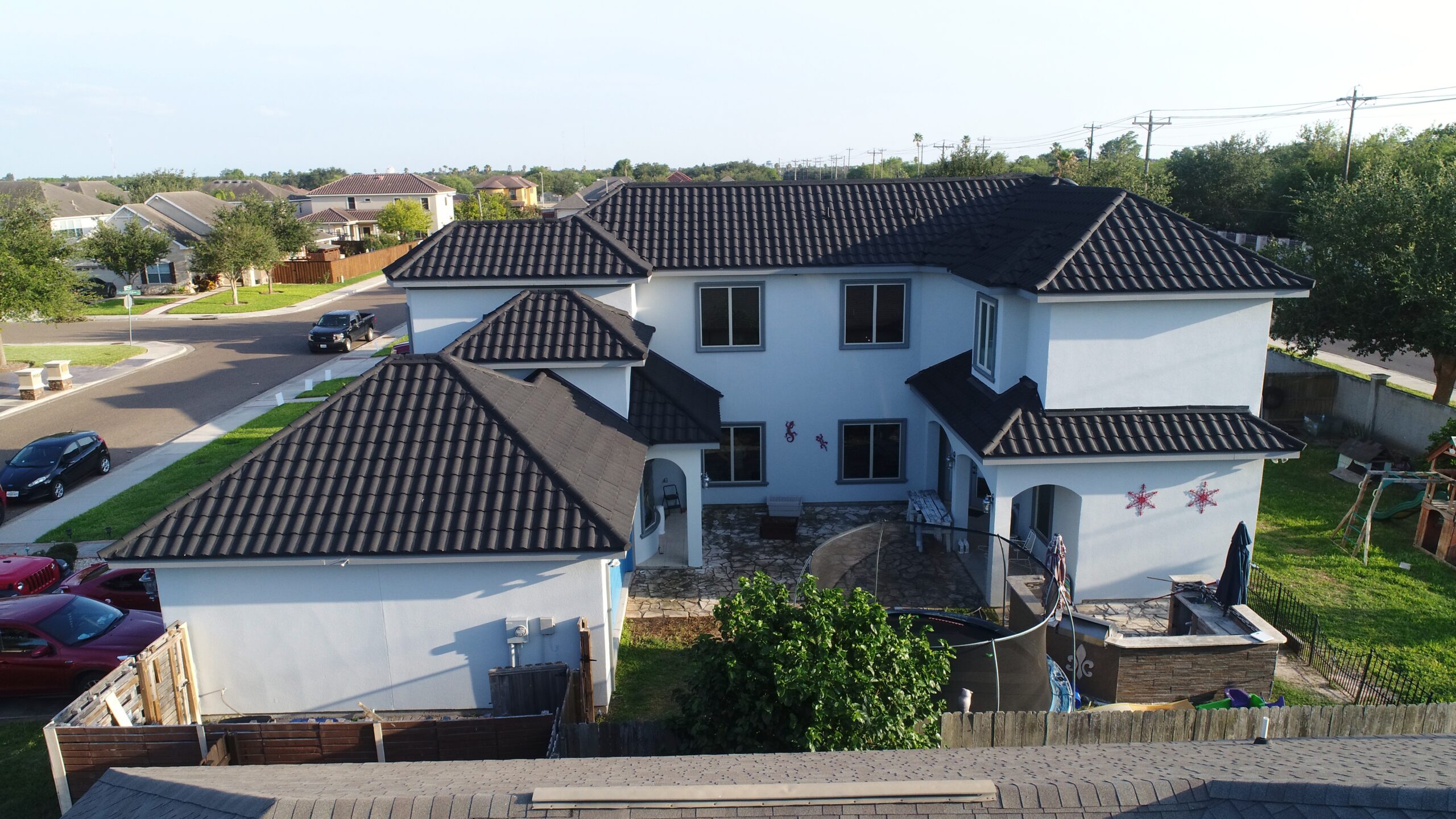
Cost / scope / long-term value
What actually drives metal roof cost in McAllen
Trying to price metal roofing by square footage alone is one of the quickest ways to misunderstand the project. Two homes with similar size can price very differently once roof pitch, valley count, chimney and vent detail, tear-off complexity, trim work, decking repairs, ventilation upgrades, and profile selection are involved.
Main cost drivers
- Standing seam vs exposed fastener profile
- Roof size, slope, and geometry
- Tear-off scope and deck condition
- Underlayment and flashing package
- Penetration count and trim complexity
- Ventilation improvements
- Material and coating choice
Where long-term value shows up
- Fewer full replacement cycles over time
- Reduced repeat repair pressure on aging roofs
- Potentially stronger heat management when paired with the right assembly
- Stronger curb appeal and ownership confidence
- Better fit for homeowners planning to stay put
In other words, metal usually costs more upfront than a basic shingle roof, but the value discussion should be framed around lifecycle, not just initial invoice. If you want the deeper pricing page, visit Metal Roof Cost McAllen. If you already know replacement is the likely path, visit Metal Roof Replacement McAllen.
Metal roof lifespan in Texas
Service life depends on the roof assembly, not just the word “metal”
Homeowners often hear that metal roofs last a very long time, and that is generally true when the system is properly specified, properly detailed, and properly maintained. But lifespan in Texas is shaped by more than the panel surface. Heat cycles, UV intensity, fastener exposure, trim quality, underlayment, ventilation, and storm history all influence how the system ages.
That is why not all metal roofs age equally. A well-detailed standing seam system typically has a different long-term profile than a lower-cost exposed fastener system that receives little maintenance. Likewise, a roof with strong flashing, good attic ventilation, and correct transition work will usually age more gracefully than a system that looked good on day one but was weak at the details.
For McAllen homeowners, the practical question is not “Can metal last a long time?” The practical question is, “Which metal system fits my house, my budget, and my ownership horizon best?” If you are comparing lifespan against replacement cost, pair this page with our metal replacement guide and roof warranty planning.
Storm damage + insurance awareness
After hail or high wind, inspection and documentation matter more than assumptions
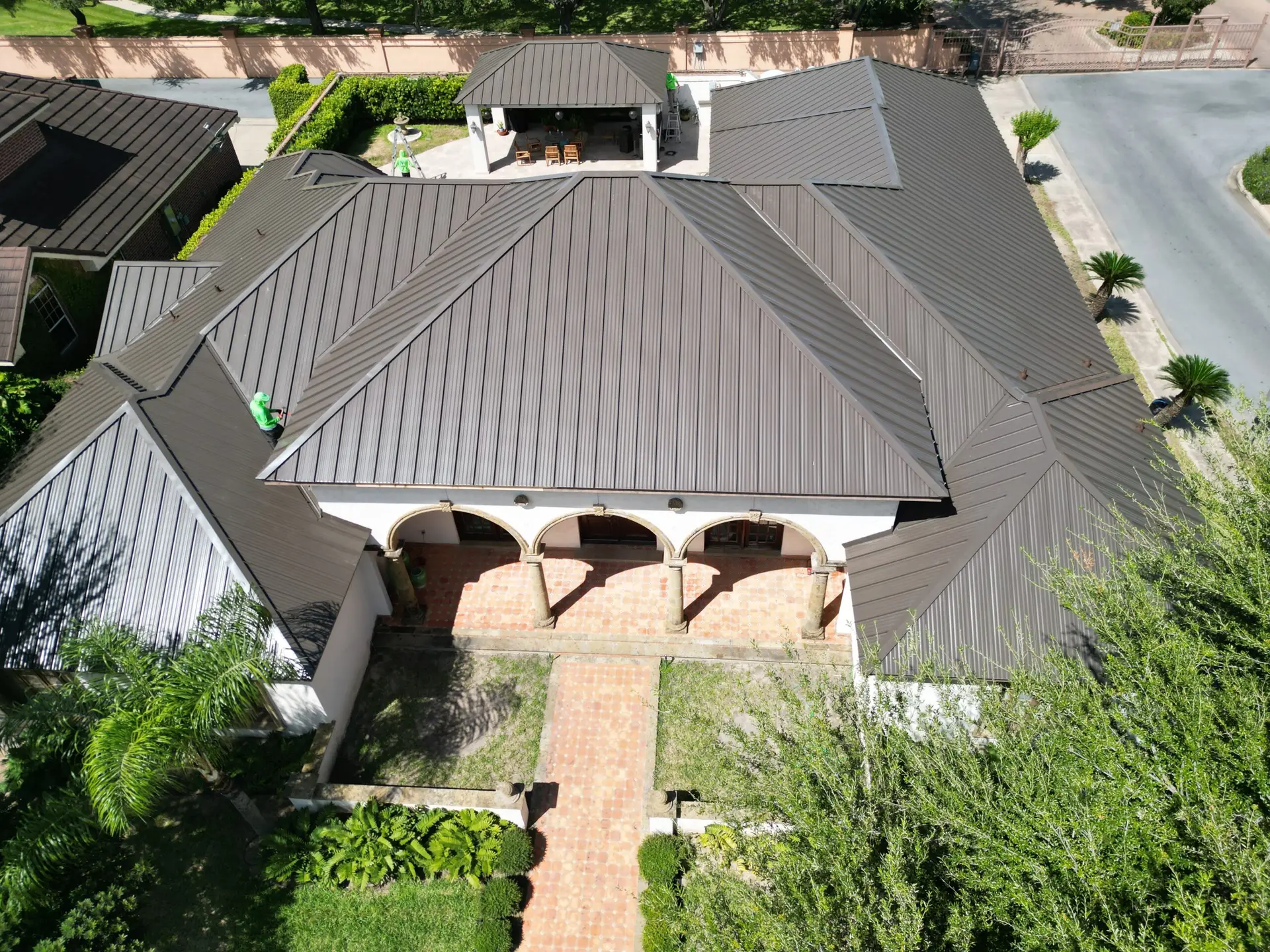
Metal roofing is resilient, but it is not invisible to storms. Hail can leave dents or hidden impact-related concerns. Wind can loosen trim, disturb fasteners, or stress flashing transitions. Water intrusion may show up far from the visible point of entry. That is why storm evaluation should be systematic, not casual.
At Marva Roofing, our role is to inspect the roof, document what we see, and explain the difference between cosmetic issues, repairable damage, and larger system concerns. We stay insurance-aware, but contractor-led. That means we focus first on roof condition, building protection, and the facts on site.
If your concern is storm-related, see Storm Damage Roof McAllen, Hail Damage Roof Inspection McAllen, and the Texas Department of Insurance for general consumer claim guidance.
Preventive maintenance / asset protection
Metal roofs still need maintenance—just smarter maintenance
Schedule inspections before small issues spread
A periodic inspection is the simplest way to catch loose trim, fastener movement, sealant fatigue, or storm-related trouble before it becomes interior damage.
Check fasteners where the system uses them
Exposed fastener systems especially need realistic maintenance expectations. Hardware ages in South Texas heat and should not be ignored.
Keep debris and drainage under control
Leaves, limbs, and backed-up drainage paths create avoidable moisture and trim stress. Tree contact can also scratch finishes and damage details.
Watch flashing and sealant transitions
Leaks usually start at details. Pipe boots, wall transitions, skylights, and edge metal deserve attention long before interior stains appear.
Inspect after major storms
Even if the roof looks fine from the driveway, post-storm inspection helps confirm whether the system took hidden damage or stayed intact.
Use maintenance as asset protection
Maintenance is not an upsell. It is the lowest-cost way to protect the larger investment you already made in the roof system.
For broader roof-system maintenance best practices, the NRCA is a useful industry reference. For homeowner-specific next steps, start with a roof inspection in McAllen.
Why choose Marva Roofing
Local metal roofing guidance built around clarity, details, and accountability
Local RGV experience
South Texas roofs fail differently than roofs in mild climates. We plan around heat, UV, storm exposure, and the detail points that typically create leaks first.
Family-owned and veteran-owned
Our brand is built around accountability, communication, and doing the job right. We focus on straight answers, not confusion or pressure.
Inspection-first recommendations
We do not assume replacement just because a roof is older. We inspect, document, and explain the right path—repair, maintenance, or full replacement.
Strong homeowner support
From financing conversations to project planning and storm-related documentation, we help homeowners move forward with more confidence and less guesswork.
Want to vet us before you call? Visit our About page, browse the project gallery, read customer reviews, or check current financing options. If you own a warehouse, retail building, or other commercial property instead of a residence, use our separate Commercial Metal Roofing McAllen page for business-focused guidance.
Metal roofing service areas
Serving McAllen and nearby RGV communities
McAllen
Our main metal roofing pillar is built around McAllen homeowners comparing repair, replacement, lifespan, and material options in South Texas conditions.
Mission
Mission homeowners often call when storm exposure, repeated repairs, or long-term ownership make a more durable roofing strategy worth exploring.
Edinburg
From newer subdivisions to aging residential roofs, Edinburg homeowners use metal roofing to compare value, durability, and heat performance.
Pharr
Pharr homeowners looking for stronger storm resilience and long-term roof planning can use this pillar page as the starting point before requesting an inspection.
Donna
Donna remains part of Marva Roofing’s broader Rio Grande Valley service coverage, and homeowners there can request the same inspection-first guidance used across the region.
Outside these cities? Visit our full service areas page. We also serve homeowners throughout the wider Rio Grande Valley.
Internal link hub / resource center
Keep exploring the metal roofing cluster
Compare & plan
Inspect & protect
Nearby city support
Trust & next steps
Frequently asked questions
Metal roofing FAQs for McAllen homeowners
Is metal roofing a good fit for homes in McAllen?
Often, yes—especially for homeowners who care about long-term durability, strong weather performance, and a more strategic lifecycle conversation. The right answer still depends on budget, house style, and how long you plan to stay in the home.
What is the difference between standing seam and exposed fastener metal roofing?
Standing seam hides the fasteners and usually fits homeowners wanting a more premium long-term system. Exposed fastener systems can lower the initial price, but they require more realistic fastener maintenance over time.
Are metal roofs loud when it rains?
A properly installed residential metal roof over solid decking with quality underlayment and attic insulation is typically not dramatically louder inside the home than other systems. Assembly details matter.
How long can a metal roof last in Texas?
Metal roofs can offer very long service life, but the actual lifespan depends on system choice, fastener exposure, coatings, ventilation, storm history, maintenance, and installation quality. Not all metal systems age the same way.
Can a metal roof be repaired, or does it always need replacement?
Many metal roofs can be repaired when the issue is isolated and the overall assembly still has solid remaining life. Replacement becomes more likely when leaks repeat, details are failing in multiple areas, or the roof system is simply aging out.
What affects metal roof cost in McAllen?
Main factors include roof size, slope, complexity, profile choice, underlayment package, flashing detail, tear-off requirements, deck repairs, and ventilation upgrades. Square footage alone does not tell the whole story.
Will insurance pay for metal roof storm damage?
Coverage depends on your policy and whether the damage came from a covered event. The right first step is a documented inspection so you understand the condition before deciding what to do next.
Do you serve Mission, Edinburg, Donna, and Pharr as well as McAllen?
Yes. Marva Roofing serves homeowners throughout McAllen and the broader Rio Grande Valley, including Mission, Edinburg, Pharr, and Donna.

Your next step
Schedule Your Free Inspection
If you are comparing metal roofing McAllen, Mission, Edinburg, Donna, or Pharr, start with a professional inspection and a clear recommendation. We will help you understand whether your best next move is repair, maintenance, or a full metal roof replacement.
Marva Roofing | info@marvaroofing.com | Serving McAllen, Mission, Edinburg, Donna, Pharr & the Rio Grande Valley