Roof Leak Advice for McAllen Homeowners
Can a Roof Leak Be Repaired Without Replacing the Whole Roof?
Yes—many roof leaks can be repaired without replacing the whole roof. But not every leak is a simple patch job. The right answer depends on what failed, how far water traveled, how old the roof is, and whether the leak is isolated or part of a larger system problem.
- Veteran-Owned
- Family-Owned
- Roofing Advice for RGV Homeowners
- Inspection-First Guidance
How this post helps you choose faster
We wrote this article for homeowners who want to understand when a leak is a repair problem, when it becomes a replacement conversation, and why the visible stain rarely tells the whole story.
- When a roof leak is usually repairable
- When replacement becomes the smarter move
- Why leak location and entry point are often different
- How flashing, underlayment, and decking change the scope
- What to inspect before you approve a repair
Start with facts, not pressure
Stop the water first—then diagnose the roof correctly
If active water is getting into the house, speed matters. But fast action should still lead to the right diagnosis, not a random patch that misses the real entry point.
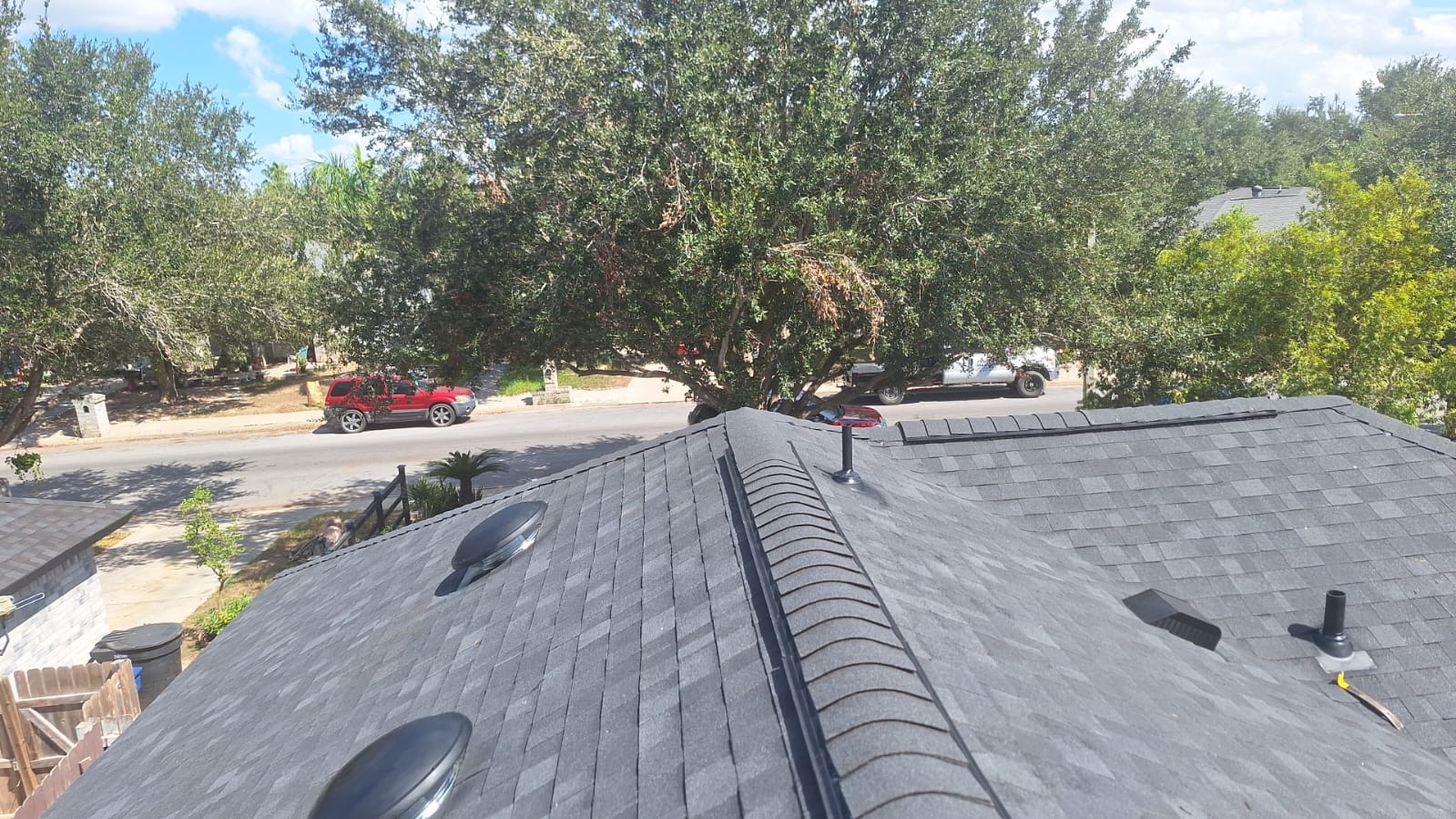
Roof leak repair guide
A roof leak does not automatically mean full replacement—but it should never be guessed at from the ceiling stain alone
One of the biggest mistakes homeowners make is assuming the wet spot on the ceiling tells them exactly where the roof failed. In reality, water can travel along underlayment, decking, rafters, and framing before it finally shows up indoors. That means the leak location you notice and the entry point that caused it are often not the same place.
This article explains when a roof leak can usually be repaired, when replacement becomes more realistic, and how flashing, underlayment, decking, storm damage, and age all influence the answer. It is designed to help McAllen homeowners move into the right next step with less wasted repair spending.
Table of contents
Jump to the section you need
Quick answer for homeowners
Yes, many roof leaks can be repaired without replacing the whole roof
A leak is often repairable when the issue is isolated, the roof still has meaningful remaining life, and the failure point can be traced to a specific component such as flashing, a small storm-damaged section, a pipe boot, a valley detail, or a limited underlayment breach. In those cases, a real repair can hold up very well.
Replacement becomes more likely when leaks are recurring, the roof is aging out across multiple areas, the underlayment or decking is compromised, or the leak is just the latest symptom of a broader failing assembly. That is why a good leak inspection should answer two questions: where did water get in and what condition is the rest of the roof in?
When a roof leak is usually repairable
Localized failures often make repair the right first move
Flashing-related leaks
Leaks at walls, chimneys, skylights, valleys, or penetrations are often tied to flashing details rather than the entire roof field.
Storm-created openings
A lifted shingle, missing ridge cap, small puncture, or isolated wind-related separation can often be repaired cleanly if the rest of the roof is still healthy.
Pipe boots and seal failures
Pipe boots, vent collars, and seal transitions wear out before the whole roof does. These are common repair candidates.
Limited underlayment or edge issues
Some leaks begin at eaves, valleys, or small detail zones where the rest of the roof still has solid remaining life.
If the roof is still fundamentally sound, the goal is to repair the failure point and the conditions that allowed it to happen—not just smear sealant over the stain and hope for the best.
Why a simple patch sometimes fails
The ceiling stain is usually the end of the water path, not the beginning
Many failed leak repairs were never “wrong” because the roofer could not patch. They failed because the repair targeted the visible symptom instead of the entry point. Water can travel under shingles, under tile, beneath panels, or along underlayment and framing before it finally appears inside the home. That is why a leak near a vent might really begin at a valley, wall flashing, or roof-to-wall transition several feet away.
Good leak repair should answer these questions first:
- Where is water actually entering the roof assembly?
- How far has it traveled before showing up indoors?
- Did the leak start at a visible component or beneath the surface?
- Is this an isolated opening or a broader system failure?
Common roof leak sources in McAllen
The visible water spot is only one clue—these are the failure points that often start the problem
Wall and chimney flashing
Roof-to-wall transitions are some of the most common leak zones because they combine water flow, flashing detail, and movement over time.
Valleys and drainage paths
Valleys concentrate water and are under more pressure than much of the rest of the roof, especially during heavy South Texas rain.
Pipe boots and penetrations
Vent stacks, exhaust penetrations, and pipe boots are high-probability leak points as rubber, sealant, and fasteners age.
Storm-damaged shingles or ridge caps
Wind uplift, missing tabs, creases, or hail-weakened surfaces can create openings that later become active leaks.
Underlayment failure under tile
Tile roofs often leak because the waterproofing layer beneath the tile is aging or compromised, even when many tiles still look acceptable.
Decking or structural moisture damage
Sometimes the visible leak is the first sign that trapped moisture has already affected the roof deck underneath.
That is why leak diagnosis usually touches more than one page in your site structure: Roof Leak Repair McAllen, Roof Underlayment Replacement McAllen, Roof Decking Repair McAllen, and Roof Inspection McAllen.
When replacement becomes smarter than another repair
A leak becomes a replacement conversation when the problem is no longer isolated
Multiple leaks or repeat leak history
If the roof keeps finding new ways to leak after every storm season, the issue is often broader than one repair point.
Widespread material aging
If shingles are brittle, seal strips are failing, tile underlayment is old, or panel details are wearing out across the roof, replacement may protect the home better than continued patching.
Hidden deck or moisture damage
If inspection shows the substrate is soft, rotted, or moisture-compromised, the repair scope can change quickly.
Storm damage changed the math
A roof that was barely holding on before a storm may cross the line from repairable to replaceable afterward.
Texas Department of Insurance reminds homeowners that insurance will not pay for a new roof just because it is old or worn out. Storm-related damage is one thing. Age and wear are another. That is why a leak inspection should separate storm scope from long-term wear before a claim decision is made. See TDI’s roof guidance here.
What a good leak inspection should actually check
A useful leak inspection does more than point at the stain and say “yep, it’s leaking”
Interior symptom review
Stains, drips, bubbling paint, attic moisture, and where you first noticed the problem help narrow the water path.
Roof-surface review
The inspection should evaluate shingles, tiles, or panels for openings, movement, missing pieces, and visible storm clues.
Flashing and penetration review
Most leaks begin at transitions, not the middle of the field. Pipe boots, valleys, wall flashings, and skylights matter.
Underlayment and deck clues
The inspector should look for signs that water moved beneath the visible roof surface or compromised the deck.
Storm and age context
The best inspection separates a recent storm problem from old wear, deferred maintenance, or poor original detailing.
Repair-vs-replacement recommendation
You should leave knowing whether the leak is truly isolated or whether the roof is moving into replacement territory.
Temporary repairs vs real repairs
An emergency fix can protect the house today—but it is not always the full solution
If water is actively entering the home, a temporary response such as a tarp, seal-up, or targeted dry-in can be the right move to stop further interior damage. Texas Department of Insurance also tells homeowners to make temporary repairs to keep damage from getting worse and to save receipts. But it also says not to make permanent repairs before the adjuster sees the damage when a claim is in play. See the official TDI storm recovery page here.
That is why the smartest sequence is often:
- Protect the home from ongoing water intrusion
- Document the condition thoroughly
- Identify the actual entry point and full scope
- Then choose repair, replacement, or claim action based on facts
Leak mistakes that waste the most money
Homeowners usually overspend on leaks in one of three ways
Paying for repeat patches
The same roof section gets patched again and again because nobody verified the real source of water entry.
Jumping straight to replacement without inspection
Some leaks really are isolated, and a strong repair could buy years of service life if the rest of the roof is solid.
Ignoring hidden components
Underlayment, decking, flashing, and ventilation can all change the scope. Missing those pieces leads to incomplete work.
Waiting too long
Small leaks rarely get cheaper after another storm cycle. Water has a habit of widening the repair area over time.
If your leak is tied to older materials or recurring storm wear, pair this post with What Actually Raises Roof Replacement Cost in McAllen Besides Square Footage? so the bigger financial picture is clearer.
Local homeowner situations
Who this post helps across the RGV
McAllen
Best fit for homeowners trying to decide whether a leak needs repair only or whether the roof is starting to move into replacement territory.
Mission
Useful for Mission homeowners who see water staining but do not want to overreact or underreact before inspection.
Edinburg
Helpful for Edinburg homeowners who want to know whether the leak is coming from flashing, storm damage, or deeper roof-system failure.
Pharr
Useful for Pharr homeowners who need a leak diagnosis before repeated patchwork turns into bigger spending.
Donna
Applies to Donna homeowners who want to protect the home quickly without guessing at whether the roof really needs full replacement.
Internal link hub / resource center
Keep exploring the leak, repair, and replacement cluster
Leak-first pages
Scope-changing support pages
Residential planning pages
Frequently asked questions
Roof leak repair FAQs for McAllen homeowners
Can a roof leak really be repaired without replacing the whole roof?
Yes. Many roof leaks can be repaired when the issue is isolated and the rest of the roof still has meaningful remaining life.
How do I know if the leak is isolated or part of a bigger problem?
That is what the inspection should determine. A good inspection looks at flashing, penetrations, underlayment clues, decking condition, storm history, and the overall age of the roof.
Why does a patch sometimes fail even when it stops the leak for a while?
Because the patch may cover the visible symptom but miss the real entry point or the broader condition that caused the leak in the first place.
Does a leak always mean I should file an insurance claim?
No. Some leaks come from wear, aging, or maintenance issues rather than a covered storm event. The roof condition should be documented before that decision is made.
What should I do first if water is actively coming in?
Protect the home from additional damage, document what you can safely see, and get a professional inspection so the real scope can be identified quickly.
Your next step
Schedule Your Free Inspection
If your roof is leaking and you are trying to figure out whether the right move is repair or replacement, start with a professional inspection and a clear leak-path diagnosis. Marva Roofing will help you understand what failed, what can be repaired, and whether the roof still makes sense to keep.
Marva Roofing | info@marvaroofing.com | Serving McAllen, Mission, Edinburg, Donna, Pharr & the Rio Grande Valley