
Emergency Roof Tarping & Dry-In for McAllen, Mission, Edinburg, Donna, Pharr & the Rio Grande Valley
Emergency Roof Tarping McAllen TX
When a storm opens the roof, a branch tears through the deck, or an active leak starts putting the interior at risk, the first priority is temporary protection. Marva Roofing helps property owners understand when emergency roof tarping or emergency dry-in is the right first move, what it does and does not solve, and how to transition from immediate protection into a real repair plan.
- Veteran-Owned
- Family-Owned
- Fast leak-response planning
- Google Guarantee Messaging
- Inspection-First Guidance
Clear answers when the roof needs immediate protection
We built this page for homeowners and property owners comparing emergency tarping, emergency dry-in, storm documentation, temporary leak control, and what happens after the roof is stabilized.
- When tarping is urgent
- What emergency dry-in actually means
- What tarp work does and does not solve
- Inspection, documentation, and next-step planning
- Repair vs replacement after emergency protection
Protect the structure first
Schedule Emergency Leak Response & Inspection
If the roof is actively leaking or open to the weather, temporary protection and documentation should happen quickly so interior damage does not keep spreading while you decide on the permanent fix.
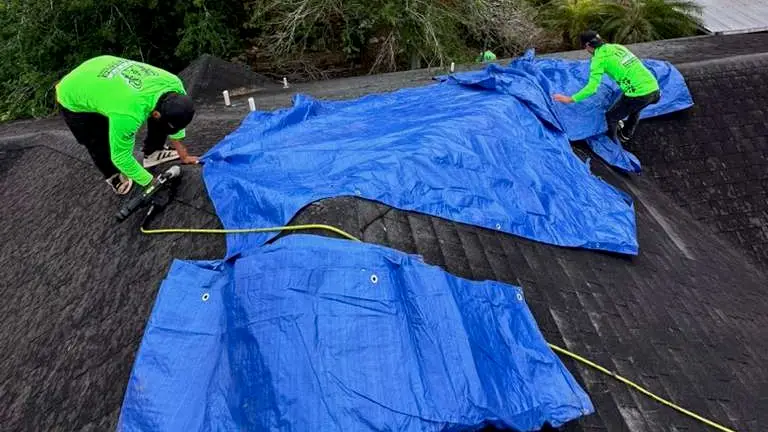
Emergency roof tarping guide
Temporary protection is not the final repair—but it can be the most important first step
Emergency Roof Tarping McAllen is not really a roofing-material decision. It is a building-protection decision. When water is getting in right now, the first goal is to reduce further damage to the attic, decking, insulation, ceilings, walls, contents, and electrical areas while the full condition of the roof is documented and a permanent repair plan is developed.
At Marva Roofing, we help homeowners and property owners understand what emergency tarp work can accomplish, when emergency dry-in is the right move, and how to move from temporary protection into the right next step—whether that is leak repair, storm-damage repair, or full replacement. This page is designed to match the way real storm emergencies unfold instead of treating everything like a standard repair appointment.
You will also find links throughout this page to deeper resources on Storm Damage Repair McAllen, Emergency Roof Repair McAllen, Roof Leak Repair McAllen, Hail Damage Repair McAllen, Wind Damage Roof Repair McAllen, and Roof Replacement McAllen so this pillar page can guide high-intent visitors into the right path fast.
Table of contents
Jump to the section you need
When emergency tarping is urgent
Some roof problems cannot wait for a standard repair timeline
Active interior leaking
If water is entering the home now, temporary protection is often the first priority before a permanent repair scope is finalized.
Exposed decking or open roof sections
When shingles, tile, or panels are torn open or blown off, the structure needs immediate weather protection.
Storm or debris impact
Fallen limbs, flying debris, and severe wind can create openings that keep letting water in until the roof is temporarily secured.
Temporary stabilization before full inspection
In some cases, you need to stop the water first so the building can be protected while the full scope is documented.
Emergency tarp work is about limiting additional loss. It is not the same thing as diagnosing the full roof or approving the permanent repair path.
What tarping does and does not do
Temporary protection matters—but it is still temporary
Emergency roof tarping and dry-in work are designed to reduce additional water intrusion, protect interior spaces, and buy the property owner time to move into a real repair decision. That can be incredibly valuable after a storm or sudden roof opening.
But tarp work does not mean the roof is fully repaired. It does not replace proper leak diagnosis, deck evaluation, flashing correction, or full replacement planning where those are needed. It is the first protection step, not the final scope of work.
- Tarping does: reduce new water entry
- Tarping does: help stabilize the property temporarily
- Tarping does: support next-step inspection and documentation
- Tarping does not: count as the permanent roof repair
- Tarping does not: answer whether the roof ultimately needs repair or replacement
Common reasons property owners need emergency roof tarping
Storm damage is the big driver, but it is not the only one
Wind uplift and missing shingles
When wind strips off roofing materials, the underlayment and deck can be exposed fast.
Hail plus active leaks
Hail often leads to leak paths through bruised surfaces, damaged flashing, or weakened details after the storm passes.
Tree or debris impact
A puncture from a branch or flying debris can create a direct entry point for rain and a much bigger interior problem if it is left open.
Sudden flashing failure
Storm movement at walls, chimneys, skylights, and penetrations can turn a detail failure into an active leak event.
Ongoing leak escalation during bad weather
A roof that has been vulnerable for a while can tip into an emergency during the next heavy rain.
Commercial or multi-surface roof exposure
Some emergencies involve larger sections of exposed roofing or drainage trouble that need immediate dry-in before full diagnosis.
What emergency dry-in means
Dry-in is about getting the building temporarily protected fast
Emergency dry-in is the broader idea of getting the roof temporarily protected quickly enough to limit additional interior damage. In some situations that means a tarp. In others it may also involve targeted temporary sealing, stabilizing exposed sections, or other short-term protective steps depending on the roof type and the damage pattern.
The purpose is the same: stop the damage from getting worse while the roof condition is documented and the permanent repair path is determined.
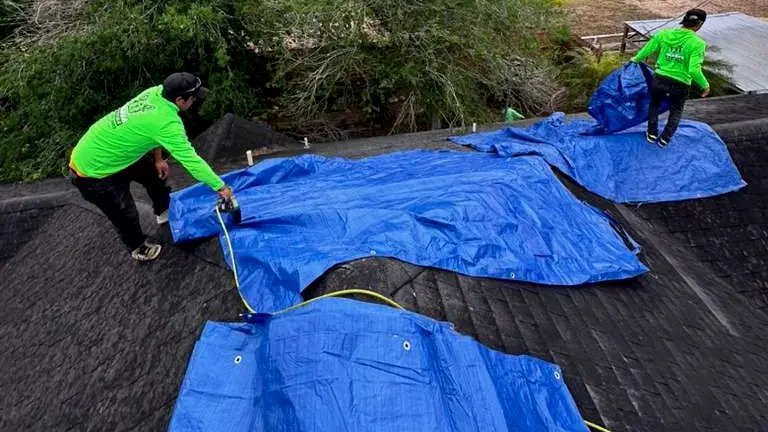
Inspection and documentation
What Marva Roofing looks at after the roof is temporarily protected
Immediate safety review
We identify active leak points, open roof areas, and whether temporary protection should happen before anything else.
Damage documentation
Visible storm, wind, impact, and water-entry conditions are documented so the next decision is based on facts.
Roof-system review
We assess whether the problem is isolated or whether the storm exposed a broader weakness in the roof assembly.
Interior and attic clues
Ceiling stains, insulation wetting, or hidden deck-side moisture can change the urgency and long-term scope of the project.
Repair vs replacement review
Once the emergency is stabilized, we help determine whether the roof is still a clean repair candidate or moving toward replacement.
Clear next-step plan
You get a recommendation for the permanent path forward, not just a temporary patch left hanging.
Emergency response process
How a properly handled emergency tarp / dry-in job should move
Call and condition triage
We confirm the nature of the leak or roof opening so the response matches the urgency.
Site arrival and damage review
The exposed areas and the immediate risk to the structure are identified.
Temporary protection / dry-in
The roof is stabilized with temporary measures designed to reduce additional water intrusion.
Photo documentation
Condition documentation supports the next repair decision and may also be useful for the property owner’s records.
Permanent-scope evaluation
Once the emergency is controlled, the roof can be reviewed more clearly for repair vs replacement planning.
Next-step recommendation
You get a documented path forward into leak repair, storm repair, or full replacement if needed.
Decision friction is normal
Not sure whether the roof needs a tarp, a repair, or a full replacement?
That is exactly why emergency protection should be paired with inspection. The tarp controls the immediate loss. The inspection tells you what the roof really needs next.
Repair vs replacement after dry-in
Once the emergency is stabilized, the real roof decision starts
Repair often makes sense when…
- The damage is isolated and clearly documented
- The surrounding roof still has meaningful service life
- The deck and major details are still fundamentally sound
- The tarp was only needed to bridge the roof to a clean permanent repair
Replacement becomes smarter when…
- The storm exposed wider roof-system weakness
- The roof is already aging out
- Leaks or damage are spread across multiple sections
- Repair spending is starting to chase an old roof instead of protect a sound one
Emergency dry-in often reveals hidden damage
- Decking damage beneath the opening
- Underlayment or flashing failure around the leak path
- Storm movement at trim, valleys, and penetrations
- A larger roof problem that only became visible after the emergency
Temporary protection is only one phase of the job. The real value comes from moving quickly into the right permanent path after the roof is stabilized.
Storm and insurance awareness
Documentation and damage control go together
Storm conversations are easier when the roof condition is documented early and honestly. Temporary protection matters because it shows the property owner acted to limit additional damage instead of letting the loss spread while waiting for the perfect final answer.
That is why this page should be used alongside Storm Damage Repair McAllen, Hail Damage Repair McAllen, Wind Damage Roof Repair McAllen, and Roof Leak Repair McAllen. Those pages help the visitor move from emergency protection into the real repair-or-replacement conversation.
- Protect the property quickly
- Document visible storm or leak conditions
- Do not confuse tarp work with a final repair scope
- Move into a documented permanent plan as soon as the roof is stabilized
Why choose Marva Roofing
Local emergency-response guidance built around clarity, speed, and accountability
Local storm experience
South Texas weather moves fast, and roofs can go from vulnerable to urgent in one event. We understand that reality.
Family-owned and veteran-owned
Our brand is built around accountability, clear communication, and doing the job right under pressure.
Inspection-first emergency planning
We do not stop at the tarp. We help property owners understand the real roof condition and what needs to happen next.
Strong fit inside the storm silo
This page naturally supports storm damage, leak response, hail, wind, and emergency repair pages that are already part of your site structure.
Want to vet us before you call? Visit our About page, browse the project gallery, read customer reviews, or check current financing options.
Emergency roof tarping service areas
Serving McAllen and nearby RGV communities
McAllen
Our main emergency tarping pillar is built around McAllen property owners who need fast leak protection, storm documentation, and a clear next-step plan.
Mission
Mission property owners often use this page after hail, wind, or debris has turned a roof problem into an active leak emergency.
Edinburg
Edinburg property owners can use this page when immediate temporary protection is needed before a storm-damage scope is finalized.
Pharr
Pharr homeowners and property owners can use this page to move quickly from active leak protection into repair or replacement planning.
Donna
Donna remains part of Marva Roofing’s broader Rio Grande Valley service coverage, and property owners there can request the same emergency guidance used across the region.
Internal link hub / resource center
Keep exploring the storm-response cluster
Compare & plan
Inspect & protect
Nearby city support
Trust & next steps
Frequently asked questions
Emergency roof tarping FAQs for McAllen property owners
When do I need emergency roof tarping in McAllen?
Emergency roof tarping makes sense when the roof is actively leaking, the decking or interior is exposed, a storm opened the roof, or delaying protection would allow more water to enter the structure.
Is emergency roof tarping the same as a permanent repair?
No. Emergency tarping and dry-in work are temporary protection steps designed to control water intrusion until the roof can be fully inspected and permanently repaired.
What does emergency dry-in mean?
Emergency dry-in means getting the roof temporarily protected quickly enough to reduce ongoing water intrusion. That can include tarp placement, temporary sealing, and other short-term protective measures depending on the damage.
Should I still get a full roof inspection after emergency tarping?
Yes. A tarp only stabilizes the immediate situation. A documented inspection is still needed to determine the real damage, whether repairs are enough, and whether replacement should be considered.
Can you tarp a roof after hail, wind, or a fallen branch?
Yes. Those are some of the most common reasons emergency roof tarping is needed, especially when the roof covering is torn open or debris has created an active entry point for water.
Will insurance cover emergency roof tarping or dry-in work?
Coverage depends on the policy and the storm event, but emergency protection and documentation are often important because they show the homeowner acted to limit further damage.
Your next step
Protect the roof now, then make the right long-term decision
If you are dealing with an active roof leak or exposed roof section in McAllen, Mission, Edinburg, Donna, or Pharr, start with temporary protection and a documented inspection. We will help you move from emergency tarp work into the right permanent repair or replacement path.
Marva Roofing | info@marvaroofing.com | Serving McAllen, Mission, Edinburg, Donna, Pharr & the Rio Grande Valley