Roofing Advice for McAllen Homeowners After a Storm
Hail Damage vs Wind Damage McAllen: How Homeowners Can Tell the Difference
After a South Texas storm, many homeowners ask the same question: is this hail damage, wind damage, or something else entirely? The answer matters because the repair path, documentation, and replacement conversation can change based on what actually happened to the roof.
- Veteran-Owned
- Family-Owned
- Roofing Advice for RGV Homeowners
- Inspection-First Guidance
How this post helps you choose faster
We wrote this article for homeowners who want to tell the difference between hail and wind damage without guessing from the driveway or getting pushed into the wrong next step.
- The most common signs of hail damage
- The most common signs of wind damage
- What often gets confused between the two
- When a repair is realistic and when replacement becomes smarter
- What to document before you talk to insurance
Start with facts, not pressure
Schedule an inspection before the next rain turns uncertainty into a leak
A documented inspection is the safest way to separate hail impact, wind uplift, old wear, and hidden leak paths before you spend money or make a claim decision.
Storm diagnosis guide
Hail and wind can damage a roof in very different ways—even when the same storm caused both
McAllen homeowners often assume storm damage means the same thing on every roof. It does not. Hail typically leaves impact-style evidence such as bruising, divots, granule loss, or dents on soft metals, while wind often shows up as lifted tabs, broken seal strips, creases, missing shingles, shifted ridge caps, or moved flashing details. Some roofs have both at the same time, which is why curbside guessing so often leads to the wrong conclusion.
This article is built to help you understand the difference, know what you can safely look for from the ground, and decide when it is time to move into a documented inspection, repair, or replacement conversation. It also connects into your live storm and inspection pages so readers can move naturally into the right next step instead of getting lost.
Table of contents
Jump to the section you need
Quick answer for homeowners
The short version: hail usually bruises or dents; wind usually lifts, creases, or removes
If you see round impact marks, soft bruised spots, granule loss, or dents on vents and flashing after a hailstorm, hail is a likely part of the story. If you see lifted tabs, creases at shingle lines, broken seal strips, missing shingles, shifted ridge caps, or flashing that looks pulled loose, wind is a stronger suspect.
But real roofs rarely read like a textbook. A strong thunderstorm can bring hail, straight-line wind, flying debris, and water intrusion in the same event. That is why a good storm inspection should look at the whole roof system—not just the most obvious mark from the ground.
What hail usually looks like
Signs the damage pattern points more toward hail than wind
Round or random impact marks
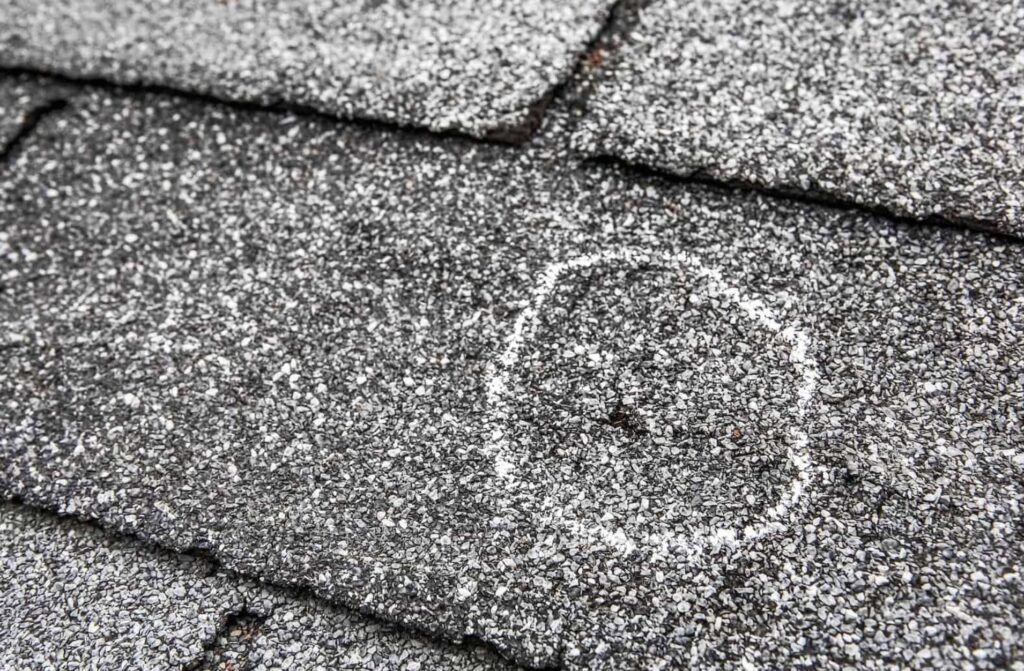
Hail tends to strike in random patterns. On asphalt shingles, that may show up as small divots, bruises, dark spots, or impact marks that are not neatly lined up.
Granule loss
Granules may be knocked loose from the shingle surface and later show up in gutters and downspouts. That does not always mean an immediate leak, but it can shorten shingle life.
Dents on soft metals
Dented vents, flashing, gutters, downspouts, or AC fins often support a hail diagnosis because those materials record impact more obviously than shingles do.
Damage on more than one slope
Hail can hit multiple elevations depending on wind direction during the storm. A single visible stain inside the home does not tell you how broad the impact pattern really is.
One tricky part of hail is that some of the most important damage can be subtle. Bruised shingles, fractured seal areas, or backside cracking are easy to miss from the ground, which is why many homeowners underestimate the problem until the next rain finds the weak spot.
What wind usually looks like
Signs the roof is dealing more with uplift, movement, and separation than impact
Lifted or creased shingles
Wind often lifts tabs and creates creases where the shingle bent under pressure. Even if the tab settles back down, the damage can remain.
Broken seal strips
Shingles rely on adhesive seal strips to stay watertight and resist uplift. Wind can break those bonds before anything visibly flies off.
Missing shingles or ridge caps
When wind gets more aggressive, it can remove shingles outright, disturb ridge caps, or expose nails and underlayment.
Moved flashing and edge details
Wall flashing, valley metal, pipe boots, and edge trim can loosen or separate under wind pressure, creating leak paths that show up later.
Wind damage is often progressive rather than dramatic. A roof can look mostly fine from the yard while lifted tabs, loosened ridge caps, and flashing movement are already setting up the next leak. That is one reason the best next step after a windy storm is usually a documented roof inspection, not waiting to see whether the ceiling stains appear first.
Where homeowners get confused
The same storm can leave both hail and wind clues—and old wear can muddy the picture
Here is where storm diagnosis gets tricky. Hail can bruise a shingle and wind can later exploit the weakened area. Wind can loosen flashing and a later rain can make the roof look like it was only a leak problem. Old brittle shingles can crack in ways that homeowners mistake for fresh hail damage. Blistering, UV wear, foot traffic, scuff marks, and plain old age can also imitate storm damage if nobody checks closely.
That is why a strong inspection looks beyond the first visible clue. Good diagnosis compares slope direction, impact pattern, soft-metal evidence, seal-strip condition, ridge caps, valleys, flashing transitions, gutters, attic clues, and whether the roof had pre-existing wear before the storm ever arrived.
What homeowners can safely check from the ground
You do not need to climb the roof to start gathering useful clues
From the yard and driveway
- Dents on gutters, downspouts, vents, mailbox tops, or AC fins
- Shingles that look missing, folded, or visibly out of line
- Ridge caps that look shifted or lifted
- Debris impact near valleys, skylights, or roof edges
- Granules collecting unusually fast in downspouts after the storm
From inside the house or attic
- Fresh ceiling stains or wall discoloration
- Wet insulation or attic moisture
- Musty smell after the storm
- Drips near penetrations or ridge lines
- Light visible through a new opening
If active water is entering the home, do not wait for perfect certainty. Move straight into Roof Leak Repair McAllen, Storm Damage Repair McAllen, or a temporary protection step like your emergency tarp page.
Repair vs replacement after hail or wind
Not every storm-damaged roof needs a full replacement—but not every damaged roof is a clean repair either
Repair is often realistic when…
- Damage is limited to a small area or one elevation
- The roof still has solid remaining service life
- Flashing, seal strips, or ridge caps are the main issue
- The leak path is isolated and clearly documented
Replacement becomes smarter when…
- Storm effects show up across multiple slopes
- The roof was already aging out before the event
- Granule loss, fractures, uplift, and leak paths are widespread
- Repair would only buy a short amount of time before broader failure
Inspection matters because…
- The visible ceiling stain is rarely the whole story
- Water can travel far from the entry point
- Hidden damage changes scope and cost
- Documentation protects you before repairs or claims
If you already know the roof is storm-related, compare this post with Hail Damage Roof Inspection McAllen, Wind Damage Roof Repair McAllen, and Storm Damage Roof McAllen.
What to document before you call the insurance company
Good storm documentation makes the next conversation easier whether the answer is repair, replacement, or no claim at all
Start by taking timestamped photos and video from the ground. Capture all elevations, gutters, downspouts, vents, roof edges, interior stains, attic moisture, and anything else on the property that supports the weather event—such as dented soft metals or debris impact. Then write down the storm date, what you noticed first, when water entered the home if it did, and any emergency measures you took.
Texas Department of Insurance guidance tells homeowners to take pictures and video, make temporary repairs to keep damage from getting worse, keep receipts, and avoid permanent repairs before the adjuster sees the damage. That is the cleanest way to protect the property without muddying the claim conversation. See the official consumer guidance here and here.
This blog pairs especially well with How to Document Roof Storm Damage Before Filing a Claim in Texas.
Why local diagnosis matters in McAllen
South Texas roofs age differently, and that changes how storm damage should be interpreted
McAllen roofs are already dealing with heat, UV, humidity, and seasonal storm exposure before the hail or wind event ever arrives. That means the same storm can affect an older brittle shingle very differently than a newer architectural shingle, a tile roof, or a metal roof. It also means some “storm-looking” damage turns out to be older wear that a generic out-of-town diagnosis might miss or misread.
A local inspection should understand how South Texas weather affects seal strips, attic heat, ventilation, flashing life, and material aging in the Rio Grande Valley. That local context helps homeowners avoid two bad outcomes: overreacting to cosmetic-only clues or underreacting to real system-level storm damage.
Local homeowner situations
Who this post helps across the RGV
McAllen
Best fit for homeowners trying to separate hail impact from wind uplift before deciding on repair, replacement, or a claim.
Mission
Useful for Mission homeowners who saw a recent storm roll through and are not sure whether they are looking at impact damage or movement damage.
Edinburg
Helpful for Edinburg homeowners comparing post-storm inspection, leak response, and repair-vs-replacement timing.
Pharr
Useful for Pharr homeowners who want documentation before the next storm exposes a hidden problem.
Donna
Applies to Donna homeowners who need a documented storm read before spending money or filing a claim.
Internal link hub / resource center
Keep exploring the storm-damage education cluster
Storm diagnosis pages
Leak & repair support
Planning & material pages
Frequently asked questions
Hail vs wind damage FAQs for McAllen homeowners
How can I tell whether my roof has hail damage or wind damage?
Hail usually leaves impact clues such as bruises, divots, granule loss, or dents on soft metals. Wind usually leaves movement clues such as lifted or missing shingles, broken seal strips, creases, moved flashing, or shifted ridge caps.
Can a roof have both hail and wind damage from the same storm?
Yes. Many South Texas storms bring both hail and strong wind, so it is common for one roof to show impact damage and uplift-related damage at the same time.
Should I get on the roof to check the damage myself?
It is safer to start from the ground, document what you can see, and schedule a professional inspection. Some hail and wind damage is subtle, and climbing the roof can be risky.
Does hail damage always mean I need a new roof?
No. Localized hail damage can often be repaired. Replacement becomes more likely when storm effects are widespread or the roof was already near the end of its useful life.
What should I do first after a storm if I am not sure what damaged the roof?
Start with photos, basic notes, and a documented roof inspection. That gives you a cleaner basis for repair, replacement, or claim decisions.
Your next step
Schedule Your Free Inspection
If a recent storm left you wondering whether the roof is dealing with hail, wind, or both, start with a professional inspection and documented photos. Marva Roofing will help you understand what actually happened before you spend money or make a claim decision.
Marva Roofing | info@marvaroofing.com | Serving McAllen, Mission, Edinburg, Donna, Pharr & the Rio Grande Valley