
Texas Lifespan Guide for McAllen, Mission, Edinburg, Donna, Pharr & the Rio Grande Valley
How Long Does a Metal Roof Last in Texas?
A realistic homeowner answer is that many properly installed metal roofs in Texas last decades—often around 30 to 50+ years—and premium standing seam systems can move into even longer service-life conversations when the full roof assembly is designed and maintained correctly. But Texas makes lifespan a system question, not a slogan. In South Texas, UV, heat cycling, storm exposure, fastener strategy, coatings, flashing, ventilation, and maintenance all change how long a metal roof really lasts.
- Veteran-Owned
- Family-Owned
- Texas Metal Roof Guidance
- Inspection-First Recommendations
- South Texas Expertise
A lifespan page built around real-world conditions
This page helps homeowners understand the realistic service life of metal roofs in Texas, what shortens that life, which systems age differently, and how to tell whether your roof is still a repair candidate or moving toward replacement.
- Realistic lifespan range for Texas homeowners
- Standing seam vs exposed fastener aging profile
- What Texas weather changes about metal roofing
- Signs a metal roof is aging faster than it should
- Maintenance actions that protect long-term service life
A metal roof does not fail because of age alone
Start with condition, not guesswork
Two metal roofs can be the same age and have very different remaining life. The reason is usually not the calendar. It is system type, detail quality, storm exposure, ventilation, maintenance, and how the roof was installed in the first place.
What makes a Metal Roof last
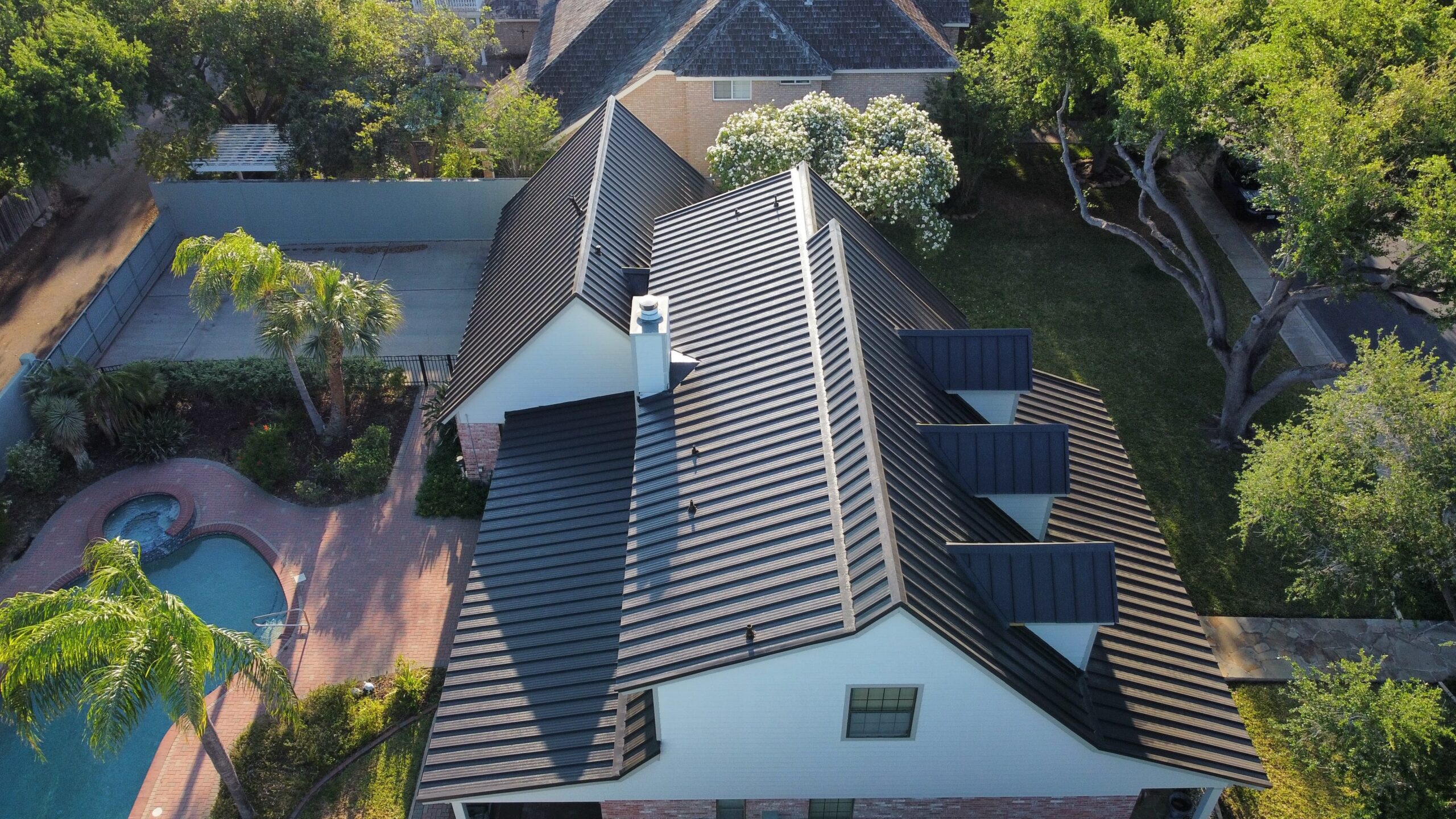
Metal roof lifespan guide
Texas homeowners need a better answer than “metal lasts a long time”
How long does a metal roof last in Texas? That question deserves a practical answer, not a vague one. The national homeowner conversation often places quality metal roofing in the 30 to 50+ year range, and premium standing seam systems can enter 60+ year discussions under best-practice conditions. But Texas changes the question because Texas is not one climate, one storm pattern, or one type of roof assembly.
A metal roof in McAllen does not age exactly like one near the coast or in a hail-heavier North Texas market. Even within South Texas, two homes can produce very different outcomes depending on system profile, coating quality, ventilation, fastener exposure, flashing execution, tree debris, and maintenance habits.
That is why this page sits naturally beneath Metal Roofing McAllen. It takes the live pillar’s lifespan conversation and turns it into a dedicated authority page that can also support replacement, maintenance, repair, and system-comparison pages across the metal cluster.
Table of contents
Jump to the section you need
Quick answer for Texas homeowners
Many metal roofs in Texas last decades. The real range depends on the system.
For homeowners, the most useful answer is this: many properly installed residential metal roofs in Texas last around 30 to 50+ years, and premium standing seam assemblies can move into even longer service-life conversations when the coating, flashing, ventilation, and maintenance plan are strong. That does not mean every metal roof automatically reaches those numbers. It means metal has the potential for a very long life when the roof system is built and cared for correctly.
Fair statewide answer
Think in decades, not short-cycle replacement years. Quality metal roofs often live in the 30 to 50+ year conversation.
Premium-system answer
Standing seam usually enters the strongest long-term residential conversation because it reduces exposed weather-side attachment points.
Practical-system answer
Exposed fastener metal can still last a long time, but the maintenance conversation becomes more important because screws and washers stay exposed.
Most important reality
You cannot predict remaining life from roof age alone. Installation quality, storm history, ventilation, details, and maintenance decide how the roof actually ages.
That is why the live metal pillar answers the lifespan question carefully: system choice, fastener exposure, coatings, ventilation, storm history, maintenance, and installation quality all matter. This page simply expands that answer into a full homeowner decision guide.
What affects lifespan most
The word “metal” tells you less than the roof assembly does
System profile
Standing seam, exposed fastener, corrugated, and stone-coated systems do not age identically. The fastening method and panel design affect long-term maintenance exposure.
Coating and finish quality
The finish is not just cosmetic. It helps protect the visible surface against UV, fade, chalk, and long-term weather wear.
Flashing and trim execution
Many metal roof failures begin at details rather than broad panel failure. Penetrations, valleys, walls, ridges, edges, and transitions often determine whether a roof ages gracefully or starts leaking early.
Ventilation and attic heat
Metal roofing still relies on a healthy roof assembly underneath it. Excess attic heat, trapped moisture, and weak airflow can shorten the life of the system as a whole.
Storm exposure
Wind, hail, and debris do not affect every metal roof the same way. Repeated storm history changes both lifespan and maintenance requirements.
Maintenance behavior
Two roofs of the same age can have very different remaining life simply because one was inspected, documented, and repaired early while the other was ignored until small issues spread.
Why Texas changes the answer
Texas is not one roofing environment, and South Texas adds its own pressure
Texas homeowners often hear a single lifespan number and assume it applies everywhere equally. It does not. A metal roof in Texas is dealing with a combination of heat, thermal movement, storm cycles, and regional weather patterns that can be very different from one part of the state to another.
From a McAllen and Rio Grande Valley perspective, the big factors are prolonged UV exposure, heat-loaded attics, humidity, sudden heavy rain, and wind-driven storm events. Those conditions do not make metal a bad choice. In many cases, they are exactly why metal becomes attractive. But they do mean that weak detail work or neglected maintenance will show up faster than many homeowners expect.
A great metal roof in Texas is not just “metal on top of a house.” It is a full assembly built to move, shed water, handle heat, protect vulnerable transitions, and stay repairable over time.
- UV exposure: finish quality and surface protection matter more over time.
- Thermal movement: Texas heat puts constant expansion and contraction pressure on the system.
- Storm cycles: wind, hail, and debris create cumulative wear and maintenance needs.
- Humidity and rain: water management at details always matters.
- Attic conditions: poor ventilation can shorten more than just material life.
Why system type matters
Not all metal roofs age the same way in Texas
Standing seam
Standing seam usually sits at the premium end of the residential metal conversation. Concealed fasteners, cleaner seams, and fewer exposed weather-side attachment points are a big reason many homeowners see it as the strongest long-term metal path.
Exposed fastener metal
Exposed fastener systems can still deliver long service life, but they should always be chosen with realistic expectations. Because the screws and washers are part of the weather-facing surface, periodic inspection and maintenance matter more.
Corrugated / panel-style metal
Corrugated and panel-style roofs can be durable, practical, and visually distinctive, but long-term performance still depends on underlayment, flashing, penetrations, trim detail, and how the specific system is installed.
Stone-coated metal
Stone-coated metal lives in the metal category but brings a more traditional premium appearance. Its lifespan still depends on the metal core, system profile, detail work, and maintenance—not just on the textured finish homeowners see from the ground.
This is one of the biggest reasons the live pillar already separates metal systems into dedicated subpages. A homeowner deciding between standing seam and exposed fastener is also deciding between two different long-term aging profiles.
Signs a roof is aging faster than it should
A metal roof can still have good years left—or be moving toward bigger problems
Recurring leaks at penetrations or walls
If leaks keep returning in the same areas, the problem is often detail failure, not just age. That still affects lifespan because repeated water entry can damage the roof assembly beneath the visible metal.
Fastener movement or washer deterioration
On exposed fastener systems, hardware condition is part of the lifespan conversation. If the attachment points are aging poorly, the roof may not be on track to reach its best-case service life.
Rust, coating wear, or cut-edge concerns
Visible finish problems deserve attention before they grow into deeper corrosion or water-management issues.
Loose trim, ridge, or flashing details
Many metal roofs stay serviceable far longer than expected when detail issues are repaired early. When those details are ignored, the roof can age out faster than the panels alone would suggest.
Attic heat and moisture red flags
Excess heat, poor airflow, or moisture symptoms in the attic can point to broader system conditions that shorten the life of the overall roof assembly.
Storm history without follow-up inspection
A roof can look fine from the driveway and still have hidden life-shortening damage after hail, wind, or debris impact. A lack of documentation is often the bigger risk than the storm itself.
How to make a metal roof last longer in Texas
Service life grows when small issues are handled before they spread
Inspect after major storms
Storm documentation is one of the easiest ways to protect remaining service life because it catches trim movement, hidden impacts, and early leak risks before interior damage appears.
Watch fasteners where the system uses them
Exposed fastener systems especially should never be treated as maintenance-free. Hardware condition is part of the roof’s long-term health.
Protect flashing and penetrations
Pipe boots, wall transitions, valleys, ridges, and edge details deserve attention long before they produce interior staining.
Keep drainage and roof surfaces clear
Debris buildup, tree contact, and blocked runoff paths create avoidable stress on the roof system and its finish.
Use inspection as asset protection
Periodic photo documentation gives you a much clearer idea of remaining life, repair timing, and whether the roof is aging normally or faster than expected.
Do not confuse “no leak yet” with “no problem”
Many life-shortening issues start quietly. The roof often warns you first at details, hardware, and trim—not with a dramatic interior failure.
To keep the upkeep conversation inside the metal cluster, pair this page with Metal Roof Maintenance McAllen and Metal Roof Repair McAllen.
Most lifespan questions are really condition questions
Not sure whether your metal roof still has strong years left?
That is exactly where a documented inspection helps. Age alone does not tell you whether a metal roof is still a repair candidate, a maintenance candidate, or finally moving toward replacement.
Repair vs replacement timing
Long service life does not mean every aging metal roof deserves full replacement today
Repair is often still smart when…
- The issue is isolated and clearly documented
- The panels and major details still have meaningful remaining life
- Storm-related damage is localized rather than system-wide
- Flashing, trim, or fastener repairs can restore performance efficiently
Replacement becomes smarter when…
- Leaks are recurring across multiple areas
- Maintenance keeps repeating and no longer feels efficient
- The assembly beneath the metal is compromised
- You want to move from a lower-tier system into a better long-term metal profile
The biggest mistake homeowners make
- Replacing too late after avoidable detail failures spread
- Or replacing too early before a strong repair could extend useful life
- Both mistakes are expensive, which is why inspection matters first
For deeper timing support, use Metal Roof Replacement McAllen, Metal Roof Cost McAllen, and Roof Replacement Warranty McAllen.
What Marva inspects during a lifespan-focused visit
We look for remaining service life, not just visible damage
Panel and finish condition
We review visible wear, impact marks, coating issues, movement, and other signs the surface may be aging differently than expected.
Fasteners, seams, and attachment points
Where the system uses visible hardware, that hardware matters. Where the system uses concealed attachment, seam quality and adjacent details still matter.
Flashing, trim, and penetration details
Most life-shortening issues begin at transitions, not in the broad panel field. We inspect the spots where roofs usually start leaking first.
Underlayment and deck clues
Where conditions allow, we look for signs that water may have traveled below the visible metal surface or that the underlying assembly is part of the problem.
Ventilation and attic performance
Metal longevity is still tied to a healthy assembly beneath the panels. Attic heat and airflow are part of the lifespan conversation.
Clear remaining-life guidance
We explain whether the roof still looks like a strong repair candidate, a maintenance candidate, or a replacement candidate—and why.
Internal link hub / next-step resources
Keep exploring the metal roof lifespan conversation
Core metal pages
Lifespan and upkeep support
Replacement and value pages
Frequently asked questions
Metal roof lifespan FAQs for Texas homeowners
How long does a metal roof last in Texas?
A realistic homeowner answer is that many properly installed residential metal roofs in Texas last around 30 to 50+ years, while premium standing seam systems can move into even longer service-life conversations when the assembly, coatings, and maintenance plan are strong.
Does standing seam usually last longer than exposed fastener metal roofing?
Standing seam usually enters the stronger long-term conversation because it relies on concealed fasteners and fewer exposed weather-side attachment points. Exposed fastener systems can still last a long time, but they generally require more realistic maintenance because the screws and washers remain part of the weather-facing surface.
Can a metal roof really last 50 years in Texas heat?
Yes, it can, but only if the system is well-designed and well-maintained. Texas heat does not automatically disqualify metal roofing. Poor installation, weak flashing, neglected fasteners, storm damage, and bad ventilation are usually what cut service life short.
What shortens the life of a metal roof the fastest in Texas?
The biggest life-shortening factors are weak detail work, flashing failures, exposed-fastener neglect, storm damage, trapped moisture, poor attic ventilation, and waiting too long to address small leaks or trim problems.
Does storm damage always mean a metal roof needs replacement?
No. Many metal roofs can still be repaired after storms when the issue is isolated and the rest of the assembly remains sound. The right first step is a documented inspection that separates cosmetic concerns, repairable damage, and replacement-level system problems.
How often should a metal roof be inspected in Texas?
A metal roof should be inspected after major storms and periodically even when no leak is visible. Regular inspections help catch fastener movement, flashing issues, coating wear, and hidden trouble before they shorten the roof’s life.
Can maintenance really extend the life of a metal roof?
Yes. Maintenance is one of the main reasons two metal roofs of the same age can perform very differently. Catching small issues early, documenting storm exposure, and protecting flashing and fastener details can add meaningful service life.
Your next step
Schedule Your Free Inspection
If you are trying to understand how long a metal roof lasts in Texas, the best next step is a professional inspection and a remaining-life conversation. We will help you understand whether your roof still has strong years ahead, needs maintenance to protect that life, or is finally moving toward replacement.
Marva Roofing | info@marvaroofing.com | Serving McAllen, Mission, Edinburg, Donna, Pharr & the Rio Grande Valley