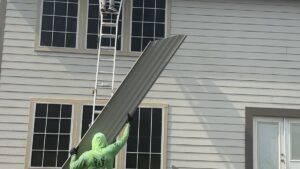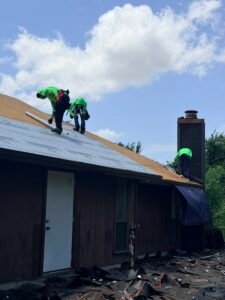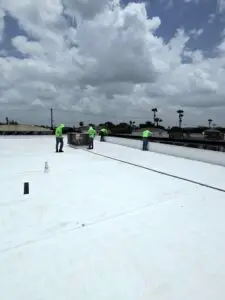
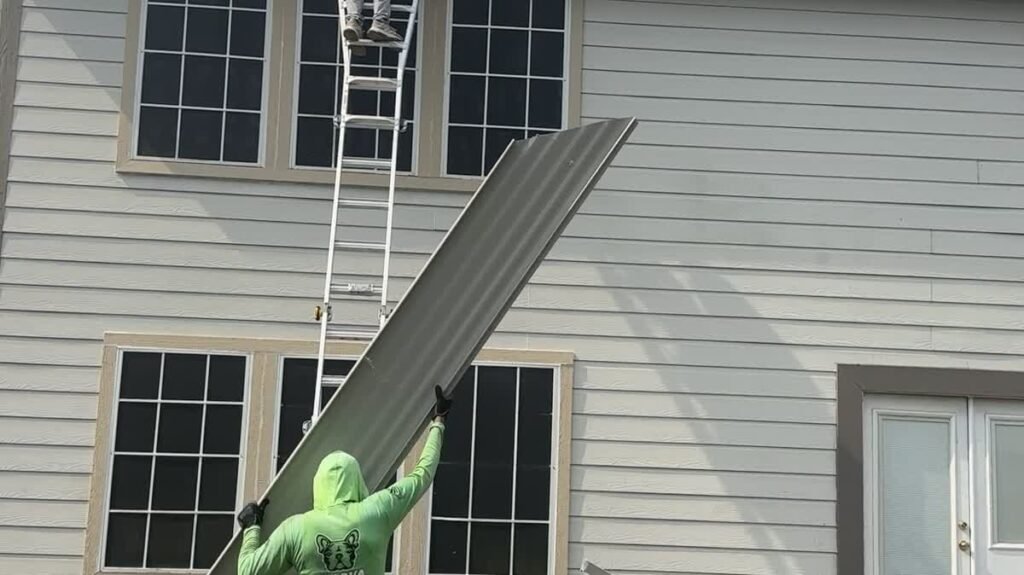
Roofing materials can arrive with a different color, facer, label, package, or accessory than the owner expected. That visual difference is a reason to verify the product before installation. It is not, by itself, proof that the material is wrong. It is also not proof that the material matches the approved scope.
The useful question is: can the contractor connect the delivered material to the written estimate, approved submittal, current manufacturer documents, and the roof assembly being installed?
Start with the product label, not the appearance
Before material is opened or installed, photograph the manufacturer label and any identifying information that is still legible. Depending on the product, that may include:
- manufacturer and product name;
- thickness, size, color, profile, or finish;
- lot, batch, or production code;
- packaging condition;
- storage instructions; and
- any product-specific warnings or installation limits.
For a commercial project, add the delivery ticket and the approved submittal page to the same record. For a residential project, compare the label with the written estimate and any product selection sheet.
Compare four documents before the material disappears into the roof
A clean receiving check compares the delivered item with four sources:
- The contract or estimate. Does it identify the product precisely enough to compare?
- The approved submittal or selection record. Does the manufacturer, product line, thickness, color, profile, or finish match?
- The current product data sheet and installation instructions. Are the documents current for the product on site?
- Any manufacturer product bulletin. Has the manufacturer announced a temporary packaging, facer, label, or manufacturing change?
This is different from deciding whether a proposed roof material substitution is acceptable. A receiving check first identifies what actually arrived. Only then can the project team decide whether the item matches the approved scope or needs a formal substitution review.
A different appearance can have a documented explanation
Manufacturers sometimes change packaging, labels, colors, or visible facers without changing the product’s stated performance. For example, Carlisle announced in an October 2026 InsulBase product update that some InsulBase polyiso boards would temporarily ship with tan facers on both sides instead of the usual ReadyFlash facer because of a facer supply constraint. Carlisle stated that the temporary appearance change did not affect product performance, installation, quality, or existing code and warranty requirements.
That bulletin is useful evidence for the specific Carlisle product it names. It is not permission to assume every product difference is cosmetic. Keep the bulletin with the project record, verify that the exact delivered product is covered, and ask who confirmed any approval required by the contract or project specification. Carlisle’s own roofing-system form specification is a practical example of written requirements for material identification, original labeled containers, submittals, and storage.
Check compatibility with the whole roof assembly
A label match is only one part of the review. The contractor should also confirm that the product is compatible with the rest of the assembly, including the membrane, insulation, cover board, adhesive, fasteners, primers, sealants, and accessories that will contact it.
For commercial roofs, ask who checked the approved roof-system design, attachment pattern, and warranty submittal. For residential metal roofing, verify panel profile, gauge or thickness, finish, trim pieces, clips, fasteners, and sealants against the written selection. A package that says “roofing” is not specific enough.
Record storage and condition before installation
Materials can be the correct product and still be unsuitable for immediate installation if they were stored incorrectly, arrived damaged, or became wet. Photograph the delivery and record:
- whether packaging was intact;
- whether insulation or other moisture-sensitive materials stayed dry;
- whether rolls, panels, or accessories were protected as directed by the manufacturer;
- whether labels remained readable; and
- who accepted or rejected damaged material.
If wet insulation is already part of an existing roof, the decision is different. See our guide to commercial roof wet insulation repair for the questions that follow moisture findings in an installed system.
Do not let the review live only in a text message
Before installation covers labels and packaging, save one short decision record. It should identify the questioned material, the documents reviewed, the person who confirmed the decision, and any required owner, designer, consultant, manufacturer, or contractor approval.
For buildings with several rooftop trades, add the record to the same file used for the commercial roof access log. That creates a traceable timeline without pretending the log proves responsibility, warranty coverage, or code compliance.
Questions to ask when roofing materials look different
- What exact product was specified, and what exact product was delivered?
- Which label, lot number, or product code connects the package to the data sheet?
- Is the visible difference covered by a current manufacturer bulletin?
- Does the contract require written approval for this change?
- Who confirmed compatibility with the rest of the roof assembly?
- Were the materials stored and protected according to current instructions?
- Where will the photos, bulletin, and approval record be kept?
Get the answer before installation removes the evidence
If roofing materials arrive with an unexpected label, color, facer, profile, or package, pause long enough to document and compare. A short receiving check is easier than trying to reconstruct the decision after the roof is covered.
Marva Roofing serves residential and commercial owners across McAllen and the Rio Grande Valley. If you need help documenting roof materials or reviewing visible conditions before work continues, request an inspection or call (956) 217-9989. We will explain what we can verify, what remains unknown, and what documents the project team should provide.