The next heavy rain is a poor time to discover that an old ceiling stain was never fixed. For homeowners in McAllen, Mission, Edinburg, and the surrounding Rio Grande Valley, preparing the roof now can help reduce the chance of a small problem becoming wet insulation, damaged drywall, or an emergency repair.
Start with five priorities: investigate past leaks, have damaged roofing and flashing checked, clear drainage paths, document your home’s condition, and know who to call if water gets inside. You do not need to climb onto the roof to begin.
Why RGV homeowners should prepare for wetter weather now
The National Weather Service in Brownsville’s October–December 2026 outlook, issued September 28, favors wetter-than-normal conditions across the RGV and Deep South Texas after a hot, dry September. It also highlights the potential for heavy rain and flash flooding. That is a seasonal outlook—not a promise of rain at your address or a forecast for a specific storm.
“Rainy season” is a useful reminder to prepare, but rain does not follow a fixed start date. Check NWS Brownsville/Rio Grande Valley for the latest local forecast and alerts. This guide focuses on preparation you can use before any heavy-rain event.
1. Take old roof leaks seriously—even if they stopped dripping
A leak that disappears during dry weather may still be an open water-entry point. Look for brown ceiling rings, peeling paint, damp spots around windows, or stains that return after wind-driven rain. Photograph the area and note which weather conditions make it worse.
Water can travel along framing before appearing inside, so the stain does not necessarily sit directly below the roof defect. Ask for a roof inspection that traces the likely entry point instead of simply covering the visible stain. Our roof inspection service in McAllen is a starting point for understanding the condition of your roof.
2. Check what you can see from the ground
Walk around the home in dry, calm weather. Look for missing shingles, displaced ridge pieces, loose metal trim, debris in roof valleys, and branches touching the roof. Binoculars or a phone camera can help you document visible concerns without using a ladder.
Avoid walking on the roof, especially when it is wet, damaged, or windy. A ground-level check cannot confirm that a roof is watertight. Areas around plumbing vents, walls, chimneys, skylights, and roof transitions need a closer professional assessment when a leak is suspected.
3. Have flashing and roof penetrations checked
Flashing directs water away from joints and openings. A roof can have serviceable shingles or metal panels while a connection around a pipe, wall, or vent allows water in. Ask the inspector to explain the specific defect, show photos, and describe the proposed repair.
For shingle roofs, the review may include damaged shingles and exposed fasteners. For metal roofs, seams, penetrations, trim, and exposed-fastener washers deserve attention. Tile roofs also need evaluation of the water-shedding details beneath and around the tile. A coating or bead of sealant is not a universal fix for every roof leak.
4. Clear gutters, downspouts, and drainage paths
Leaves and debris can obstruct drainage just when a downpour demands the most from it. Arrange safe cleaning of gutters and downspouts before stormy weather. From the ground, look for sagging sections, overflowing corners, or water discharging directly against the house.
The National Weather Service’s hurricane preparation guidance includes clearing clogged gutters and downspouts and keeping vegetation trimmed. Have a qualified professional handle high areas and branches near power lines.
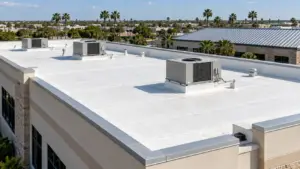
On low-slope roofs, drains and scuppers need attention too. Repeated standing water deserves an inspection to determine whether debris, drainage design, or another condition is responsible. Clean gutters help manage roof runoff; they cannot prevent neighborhood flooding or make a home floodproof.
5. Make a simple rain-response plan
Keep your roofer’s number, insurance contact information, flashlights, and a charged phone accessible. Save dated photos of your roof taken safely from the ground and of rooms with previous water damage. Put important documents where water cannot easily reach them.
If you already know the roof has an opening or active leak, schedule an assessment before the forecast deteriorates. Temporary protection may be appropriate while permanent repairs are arranged. Its suitability depends on the roof condition and safe access—not every roof can be protected in the same way.
What to do if your roof starts leaking during rain
Keep people away from the affected area first. Move belongings only when safe, and place a container under a small drip if there is no electrical or ceiling-collapse hazard. Stay away from sagging ceilings and water near light fixtures, outlets, or electrical equipment. Call emergency services if there is an immediate danger.
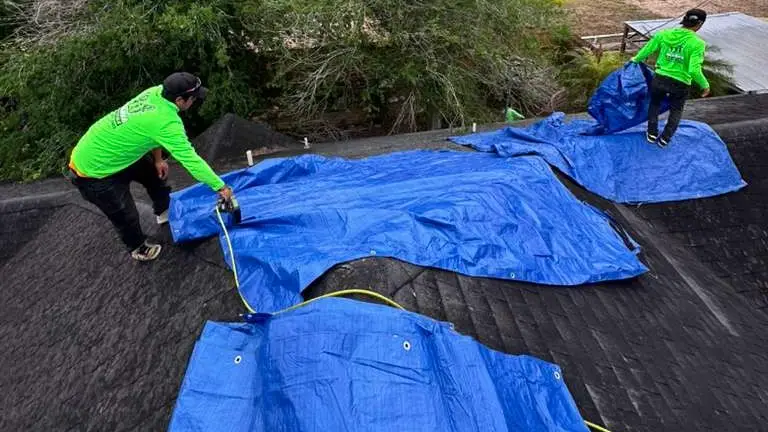
Do not climb onto the roof during a storm or attempt to install a tarp in rain, wind, or lightning. Contact a roofing professional to arrange safe assessment and temporary protection when conditions allow. A tarp is a temporary measure, not a permanent repair or a guarantee against further leaks.
Our featured photo shows Marva Roofing crew members placing blue tarps on a shingle roof. Temporary covering is one part of protecting a damaged roof while a repair plan is developed; it should be followed by identifying and addressing the underlying problem.
Document damage before repairs when it is safe
The Texas Department of Insurance recommends documenting storm damage, taking steps to prevent additional damage, and saving temporary-repair receipts. If you plan to file a claim, contact your insurer promptly and coordinate permanent repairs with the adjuster. Do not delay necessary safety measures.
Coverage depends on the cause of damage and your policy. A leak does not automatically mean insurance will pay for a new roof. TDI notes that an old or worn roof alone does not qualify for replacement coverage. Ask your insurer about your coverage and deductible, and keep the roofing assessment focused on documented conditions.
Do you need a repair or a full roof replacement?
One leak does not automatically mean the whole roof needs replacement. A localized flashing problem may call for a targeted repair, while widespread deterioration or extensive damage may require a larger scope. The right recommendation should follow an inspection and come with a clear explanation.
If you are comparing options, ask: Where is water entering? What evidence supports the recommendation? What work is temporary? What is included in the permanent repair? What warranty applies? These questions make it easier to compare proposals and avoid paying for a quick patch that leaves the original problem unresolved.
Frequently asked questions
Should I wait until my roof leaks to schedule an inspection?
No. If you have old stains, visible damage, loose roofing, or a history of leaks, an inspection before heavy rain gives you time to understand and address the issue. An inspection cannot guarantee that a future storm will cause no damage.
Can a roof leak only when the rain is heavy or wind-driven?
Yes. Some openings become noticeable only under certain rain or wind conditions. Record when the leak happens and share those details with your roofer.
Will cleaning gutters fix a roof leak?
It may help if restricted drainage contributes to the problem, but it will not repair damaged flashing, roofing, or other openings. Have the cause checked rather than assuming gutter cleaning solves it.
Is a blue tarp a permanent roof repair?
No. It is temporary protection. Have the underlying damage evaluated and arrange a permanent repair; ask when the temporary covering should be checked again.
Get your RGV roof ready before the next downpour
Marva Roofing is a family-owned, veteran-owned roofing company serving McAllen, Mission, Edinburg, Pharr, and the surrounding Rio Grande Valley. If your roof has an old leak, visible damage, or a drainage concern, let’s look at it before the next heavy rain.
Schedule your free roof inspection or call (956) 217-9989. Tell us whether water is currently entering your home so we can understand the situation when you call.