Ventilation Education for McAllen Homeowners
7 Signs Your Attic Ventilation Is Shortening Roof Life
Poor attic ventilation does not always announce itself with a giant leak. More often, it shows up as extra heat, aging shingles, moisture clues, comfort problems, or roofing decisions that arrive earlier than they should. In McAllen, where long heat cycles already pressure the roof system, ventilation can quietly shorten roof life from the inside out.
- Veteran-Owned
- Family-Owned
- Roofing Advice for RGV Homeowners
- Inspection-First Guidance
How this post helps you choose faster
We wrote this article for homeowners who suspect ventilation is part of the problem but do not want to jump straight into a full replacement conversation without evidence.
- Seven common warning signs
- What gets confused with ventilation problems
- Why intake and exhaust balance matters
- When a vent correction is enough
- When ventilation is part of a bigger roof issue
Start with facts, not pressure
Schedule an inspection before poor airflow turns into expensive roof work
If the attic is running hot, shingles seem to be aging early, or moisture keeps showing up where it should not, a documented inspection is the safest first move.
Ventilation warning-sign guide
Roof ventilation problems often get mistaken for “normal aging” until the roof is already paying the price
7 Signs Your Attic Ventilation Is Shortening Roof Life is not just an attic-comfort article. In South Texas, poor airflow can affect shingle performance, moisture control, attic conditions, indoor comfort, and the timing of larger repair or replacement decisions. That is why ventilation belongs in the same conversation as underlayment, flashing, soffits, gutters, and the visible roof surface—not as an afterthought.
This article walks through seven warning signs that airflow problems may be shortening roof life, plus what often gets confused with ventilation issues and how Marva Roofing evaluates whether the right answer is a vent correction, a repair, or a broader system-level fix.
You will also find links throughout this post to the deeper ventilation, inspection, repair, replacement, fascia/soffit, and related education pages so this article can guide you into the right next step with less guesswork.
Table of contents
Jump to the section you need
Why ventilation matters more here
McAllen heat makes ventilation mistakes show up faster
In a hot market like McAllen, the attic can become a punishing environment when airflow is weak or unbalanced. That extra heat and moisture stress does not stay politely contained in the attic. It can affect shingles, underlayment, roof decking, sealants, attic comfort, and even the speed at which minor roofing problems become bigger repair conversations.
That is why the real ventilation question is not “Do I have enough vents?” The better question is whether the house has balanced intake and exhaust, clear airflow paths, and a roof assembly that is working together the way it should. Some homes need targeted vent corrections. Others have blocked soffits, insulation problems, failing detail work, or aging roof systems that make ventilation part of a much bigger conversation.
Seven warning signs
7 signs your attic ventilation may be shortening roof life
1) The attic stays brutally hot late into the evening
If the attic still feels superheated long after sunset, trapped heat may be stressing the roof assembly and the rooms below it.
2) Shingles look older than they should
Curling, surface wear, fading, or early-looking age can be part of a poor ventilation conversation, especially when the roof is not that old.
3) Indoor comfort has changed
Uneven room temperatures, hotter upstairs spaces, or an HVAC system that seems to struggle can overlap with airflow problems in the attic.
4) Moisture or condensation clues keep showing up
Staining, dampness, musty attic air, or recurring condensation-like symptoms can all point to an attic that is not breathing well.
5) Rust, mold, or attic-side deterioration is visible
When fasteners, hardware, or attic framing start showing moisture-related wear, the problem may be bigger than one visible roof leak.
6) Soffits are blocked, damaged, or poorly functioning
A house cannot build balanced airflow if intake is blocked or compromised. This is why soffits matter as much as ridge vents.
7) You keep repairing symptoms without solving the cause
Repeated leak repairs, heat complaints, or roof-aging concerns that keep coming back may signal that ventilation is part of the root problem.
What gets confused with ventilation problems
Not every attic symptom is caused by poor airflow—but airflow often overlaps with the real issue
A conventional roof leak
Some attic moisture or staining is a straight leak problem. Some of it is ventilation. Some of it is both.
Insulation problems
Poor insulation and poor ventilation are different problems, but they can create similar comfort and attic-temperature complaints.
Storm damage
A recent storm may have disturbed vents, edges, flashing, or soffits and made an existing airflow problem worse.
Normal roof aging
Homeowners sometimes write off premature wear as “just age” when the roof is actually running too hot.
High utility bills only
Energy issues matter, but the roof-lifespan conversation matters too. Ventilation is not just an HVAC issue.
Minor soffit damage
Small-looking fascia or soffit defects can quietly choke intake airflow and affect the full roof system.
That is why diagnosis should not stop at “the attic is hot.” It should move into a broader inspection that includes the roof surface, attic conditions, soffits, roof edges, and probable moisture paths.
Why intake and exhaust balance matters
Good ventilation is a system, not a random collection of vents
One of the biggest misconceptions in roofing is that every hot attic needs “more vents.” In reality, good ventilation usually depends on balance: intake low, exhaust high, and a clear path for air to move through the attic. If a house has plenty of exhaust but weak soffit intake, or if insulation is blocking intake paths, the system may never really perform the way the homeowner expects.
That is why ventilation planning often overlaps with fascia and soffit repair, gutter and roof-edge work, and the larger residential roofing conversation. The right answer is not always bigger. It is usually better balanced.
How Marva Roofing inspects ventilation problems
Inspection tells you whether the issue is airflow, damage, or both
Attic heat and moisture review
We look for temperature clues, humidity symptoms, condensation, and overall attic conditions.
Soffit and intake check
We inspect whether intake is clear, blocked, undersized, or damaged.
Exhaust review
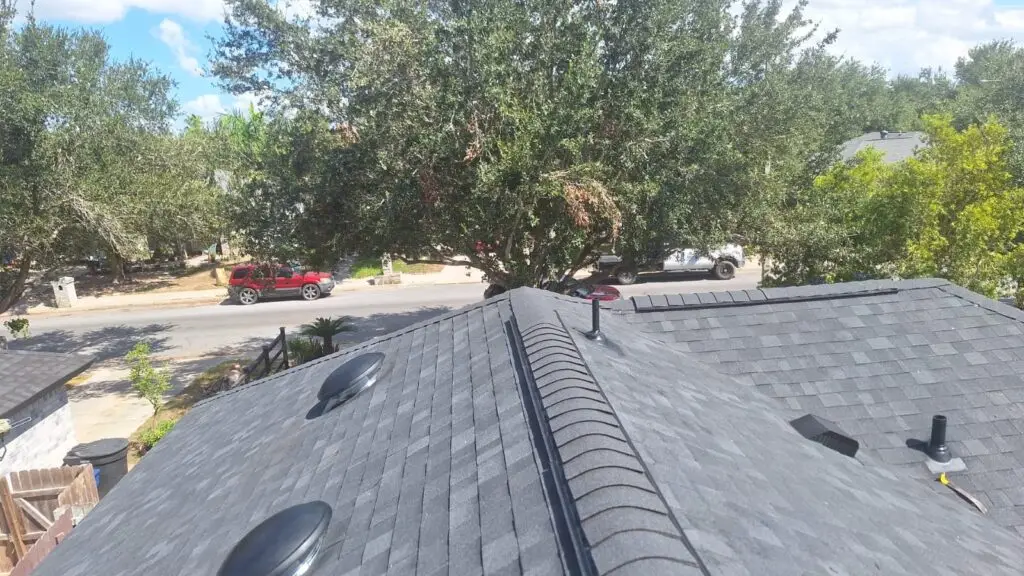
We look at ridge vents and other exhaust components to see whether the system is balanced or mismatched.
Roof-system clues
We check for signs that shingles, decking, flashing, or other components are already reacting to heat or moisture stress.
Exterior detail review
Fascia, soffits, gutters, and roof edges often affect how well the ventilation system can actually work.
Clear recommendation
We explain whether the right move is a targeted vent correction, a repair, or a broader replacement conversation.
Repair vs replacement timing
When ventilation work is enough and when bigger roof work becomes smarter
Targeted ventilation correction
Best for: homeowners whose roof still has strong remaining life
- Intake is blocked or undersized
- Exhaust setup is weak or mismatched
- Soffit or roof-edge conditions are limiting airflow
- The roof is otherwise still in workable condition
Ventilation + repair
Best for: homeowners whose roof has both airflow issues and localized roofing trouble
- Heat and moisture symptoms overlap with leak or flashing concerns
- Storm events disturbed vents, trim, or intake paths
- The roof still has useful life but needs multiple corrections
- The goal is protecting the current roof, not replacing it yet
Ventilation during replacement
Best for: homeowners whose roof is already moving toward larger work
- The roof is aging out across multiple areas
- Premature wear is widespread, not isolated
- You want the next roof built as a better-performing system
- Replacement already makes sense even before the vent conversation
If you already suspect ventilation is part of the issue, pair this article with Roof Ventilation McAllen and Roof Replacement McAllen so you can compare the likely paths more clearly.
Local homeowner situations
Who this post helps across the RGV
McAllen
Best fit for homeowners noticing attic heat, premature shingle wear, or moisture clues and trying to decide whether ventilation is part of the problem.
Mission
Useful for Mission homeowners who keep hearing the attic is too hot but are not sure whether that means a vent upgrade, roof repair, or replacement planning.
Edinburg
Helpful for Edinburg homeowners dealing with curling shingles, comfort problems, or attic moisture and wanting a documented inspection before they spend money.
Pharr
Useful for Pharr homeowners whose roof seems to be aging early and who want to know whether poor airflow is part of the reason.
Donna
Applies to Donna homeowners trying to sort out whether the issue is ventilation, a leak, insulation, or a broader system-level problem.
Internal link hub / resource center
Keep exploring the ventilation education cluster
Ventilation & system pages
Inspect & protect
Related education
Trust & next steps
Frequently asked questions
Attic ventilation FAQs for McAllen homeowners
Can poor attic ventilation really shorten roof life?
Yes. Trapped heat and moisture can add stress to the roof assembly, especially in hot climates like McAllen where attic temperatures can stay elevated for long stretches.
Does a hotter attic always mean I need more roof vents?
Not automatically. The issue may be blocked intake, unbalanced airflow, insulation problems, or a broader roof-system issue. The right answer starts with inspection.
Can ventilation problems look like roof leaks?
Sometimes yes. Moisture, condensation, and heat-related roof stress can create symptoms that homeowners mistake for a standard leak problem.
Should ventilation be corrected during roof replacement?
Often yes. Replacement is one of the best times to improve airflow because the roof system is already being rebuilt.
What is the safest first step if I think ventilation is aging the roof early?
Schedule a documented roof inspection. That gives you a clearer answer than guessing based on attic temperature or online symptom lists.
Your next step
Schedule Your Free Inspection
If you think attic ventilation may be shortening roof life, start with a professional inspection instead of guessing from a hot attic or a few online symptoms. Marva Roofing will help you understand whether the right next move is a ventilation correction, a repair, or a bigger roof conversation.
Marva Roofing | info@marvaroofing.com | Serving McAllen, Mission, Edinburg, Donna, Pharr & the Rio Grande Valley