
Many asphalt shingle roofs have a general service-life expectation of about 20–30 years. Metal and tile can last substantially longer. But there is no single expiration date for a Texas roof. A roof in Dallas, a coastal home, and a house in the Rio Grande Valley can face different weather exposure even when they use the same material.
Use this guide to plan maintenance and replacement conversations. The figures below are broad manufacturer estimates, not measured Texas averages, guaranteed minimums, or an inspection of your home.
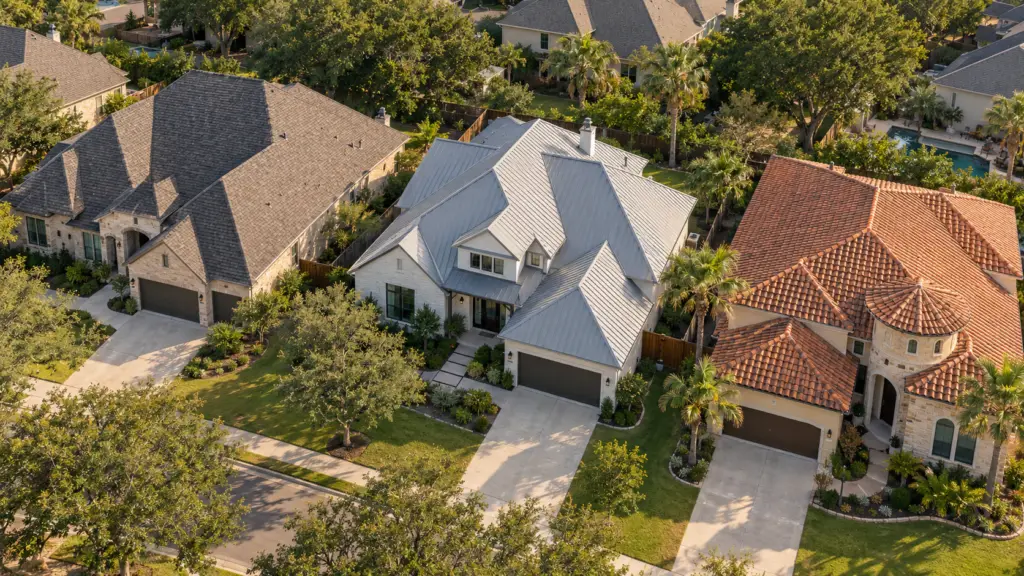
Typical roof lifespan by material
| Material | General lifespan | Important distinction |
|---|---|---|
| Asphalt shingles | About 20–30 years | Product, installation, weather, and maintenance affect the result. |
| Metal | 50+ years is possible | Long panel life does not eliminate maintenance of attachments and flashing. |
| Clay or concrete tile | About 50–100 years for the covering | The layers underneath can need renewal before the tile wears out. |
| TPO | About 20–30 years | Low-slope assembly design and drainage matter. |
| Modified bitumen | APP: 10–20 years; SBS: 10–30 years | Identify the system before comparing estimates. |
The ranges come from GAF’s residential roofing overview and GAF’s commercial roof lifespan guidance. Membrane figures describe properly designed roof systems and do not establish suitability for every home.
Why “Texas roof lifespan” needs a regional answer
NOAA’s Texas climate summary describes substantial differences in rainfall from west to east and exposure to heatwaves, cold waves, hurricanes, and extreme rain. That makes a single statewide replacement age a weak basis for a homeowner’s decision.
- North Texas: The National Weather Service’s Dallas/Fort Worth climate overview identifies recurring regional risks from large hail and damaging winds. It also makes clear that an individual property does not necessarily experience every hazard each year. Check the history of your particular roof.
- Gulf Coast: Tropical weather preparation belongs in the maintenance plan. Ask how the roof’s attachment and water-shedding details suit its location rather than relying only on material longevity.
- South Texas and the RGV: Heat and tropical weather are important planning considerations. The NWS Rio Grande Valley preparedness guide also cautions against assuming infrequent severe weather means preparation is unnecessary.
- West Texas and the Panhandle: Use the property’s local weather history and exposure when choosing a system. Statewide averages can hide major differences in rainfall and winter conditions.
These are planning priorities, not formulas for subtracting years from a roof. A documented inspection is more useful than a claim that every roof in a particular region fails at the same age.
Three different timelines homeowners should understand
1. The roof covering’s useful life
Shingles, panels, and tiles are the visible surface. Their condition matters, but they are only part of the assembly. Ask the inspector to distinguish normal appearance changes from damage that affects water shedding or repairability.
2. The life of the details underneath and around it
Flashing, underlayment, fasteners, sealants, and penetrations may need attention on a different schedule. For tile, TRI expert guidance published by Eagle Roofing explains why underlayment condition matters even when the tile remains usable. Reusing sound tile may be an option during an appropriately scoped renewal; it is not something to assume without assessment.
3. The warranty period
Warranty coverage is a contractual promise with terms and limitations. It is not an exact forecast of service life. For example, GAF’s shingle and accessory limited warranty addresses manufacturing defects and describes coverage conditions and reductions over time. Read the actual warranty supplied with your roof and keep it separate from your contractor’s workmanship warranty.
How to assess an older roof without guessing
Start with records. Find the installation invoice, material name, warranty documents, prior repairs, and any inspection photographs. A home’s construction date is not necessarily the roof’s age, and an addition may have a separate roofing system.
Then ask for an inspection that answers these questions:
- Is there an active leak, and what evidence identifies its source?
- Is deterioration isolated or spread across several roof areas?
- Can the affected area be repaired without leaving unresolved problems nearby?
- Is there evidence that decking or insulation below the surface is wet or damaged?
- What maintenance is needed now, and what should trigger another inspection?
- If replacement is recommended, what findings support it besides age?
Request photographs and a written scope. If the recommendation is to wait, ask what will be monitored and how you should respond if new stains, missing materials, or recurring leaks appear.
When repair makes sense—and when to budget for replacement
A focused repair may be reasonable when a specific defect can be corrected and the surrounding assembly remains serviceable. An isolated flashing problem should be evaluated on its own facts.
Replacement deserves a serious comparison when deterioration is widespread, repairs keep returning, or the proposed repair leaves major problems unresolved. Compare the complete scope, not just the price of the roof covering. Include removal, decking allowances, flashing, ventilation needs, disposal, and cleanup in the discussion.
Age alone is not enough. A newer roof can be damaged by a storm or poor installation. An older roof can still be functioning. For an example of how this decision is approached, read whether a roof leak can be repaired without replacing the whole roof.
Maintenance that supports a longer service life
Use the manufacturer’s maintenance instructions for your specific roof. Arrange periodic professional inspections, investigate changes after significant storms, keep drainage paths clear, and address leaks promptly. GAF’s roof-care guidance also emphasizes ventilation and timely repairs.
Keep dated photographs and repair invoices. If equipment is installed or serviced on the roof, ask who is responsible for protecting and restoring the roof details. Avoid walking on the roof to investigate; a ground-level observation and professional assessment are safer starting points.
Frequently asked questions
Does a “30-year roof” always last 30 years in Texas?
No. Product descriptions and warranty periods do not establish the remaining life of an individual roof. Actual condition and exposure need to be assessed.
Should I replace shingles at 15 or 20 years?
Those ages can be useful reminders to review condition and future costs, but they are not automatic replacement deadlines. Ask for evidence supporting the recommended work.
Does metal roofing mean I will never need roof repairs?
No. Identify whether the system uses concealed or exposed fasteners and obtain its maintenance instructions. Long-lived panels still depend on correctly functioning roof details.
Can a tile roof leak even when the tiles look good?
Yes. Underlayment, flashing, and other details can be involved. The visible tile does not reveal the condition of every layer below it.
Can an inspector guarantee exactly how many years are left?
No. An inspection can document visible condition and recommend next steps, but future storms and concealed conditions make an exact remaining-life guarantee unrealistic.
Roof lifespan guidance for Rio Grande Valley homeowners
For a local material comparison, read how long a roof lasts in McAllen by material type. Owners of business properties can use our commercial roof lifespan guide for Texas.
Marva Roofing is a family-owned, veteran-owned company serving McAllen and the Rio Grande Valley. If you need help deciding what your roof needs now, schedule a roof inspection. We can discuss current condition, repair options, and what to plan for next.