Commercial Roofing Cluster • McAllen TX
What Property Owners Should Know After Storm Damage
Commercial Storm Damage Repair McAllen is one of the most important services a property owner or manager may need after hail, wind, heavy rain, ponding water, or sudden roof leaks begin affecting a commercial building. When storm damage is not documented and addressed quickly, a small roof problem can turn into insulation saturation, tenant complaints, interior damage, business interruption, and a much larger repair scope.
At Marva Roofing, we help commercial property owners, multi-family operators, apartment managers, facility managers, warehouse owners, and retail property decision-makers respond to storm-related roof damage with a contractor-first process built around inspection clarity, urgent leak control, documentation, and long-term asset protection.
Schedule Free Roof Inspection Explore Commercial Roof RepairTable of Contents
- What Causes Commercial Storm Damage in McAllen
- Key Damage Types and Service Triggers
- Why Commercial & Multi-Family Properties Face Higher Risk
- Inspection & Diagnostic Process
- Emergency Response for Active Leaks and Storm Events
- Insurance Claims & Documentation
- Repair vs Replacement Decision Guide
- Cost, Scope, and Risk Factors
- Preventative Maintenance & Asset Protection
- Why Choose Marva Roofing
- FAQ
What Causes the Need
What Causes Commercial Storm Damage in McAllen
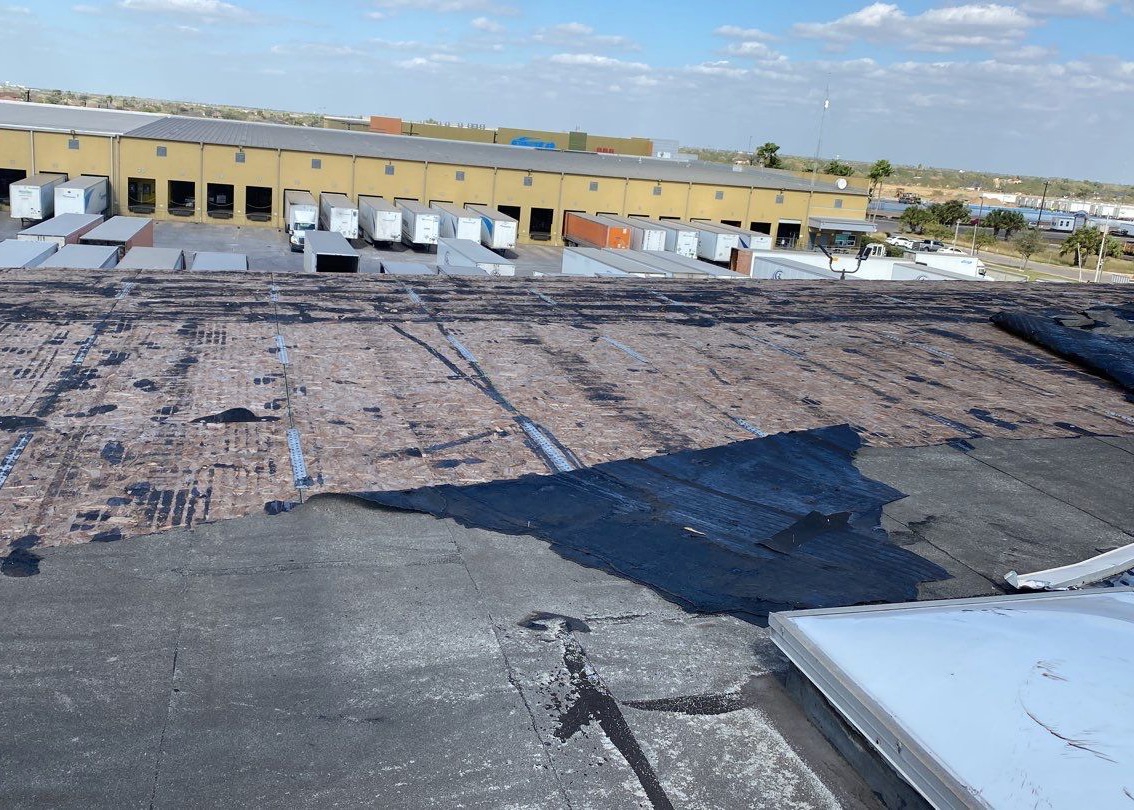
Commercial storm damage in McAllen usually comes from a combination of weather exposure and existing roof vulnerabilities. A building may already have weak seams, aging flashings, open penetrations, ponding areas, or prior repairs that hold up under normal conditions but fail once a strong storm pushes the roof system harder.
For flat roofs and low-slope systems, severe rain and drainage overload can be just as damaging as hail. For metal and shingle commercial buildings, wind uplift, flashing separation, exposed fasteners, and edge damage can quickly create leak paths.
- Hail impact damaging membranes, flashings, and rooftop accessories
- Wind uplift affecting seams, panels, shingles, and perimeter details
- Heavy rainfall exposing drainage problems and weak transitions
- Debris impact creating punctures or surface damage
- Repeated storm cycles worsening pre-existing roof fatigue
Service Triggers
Key Damage Types and Service Triggers
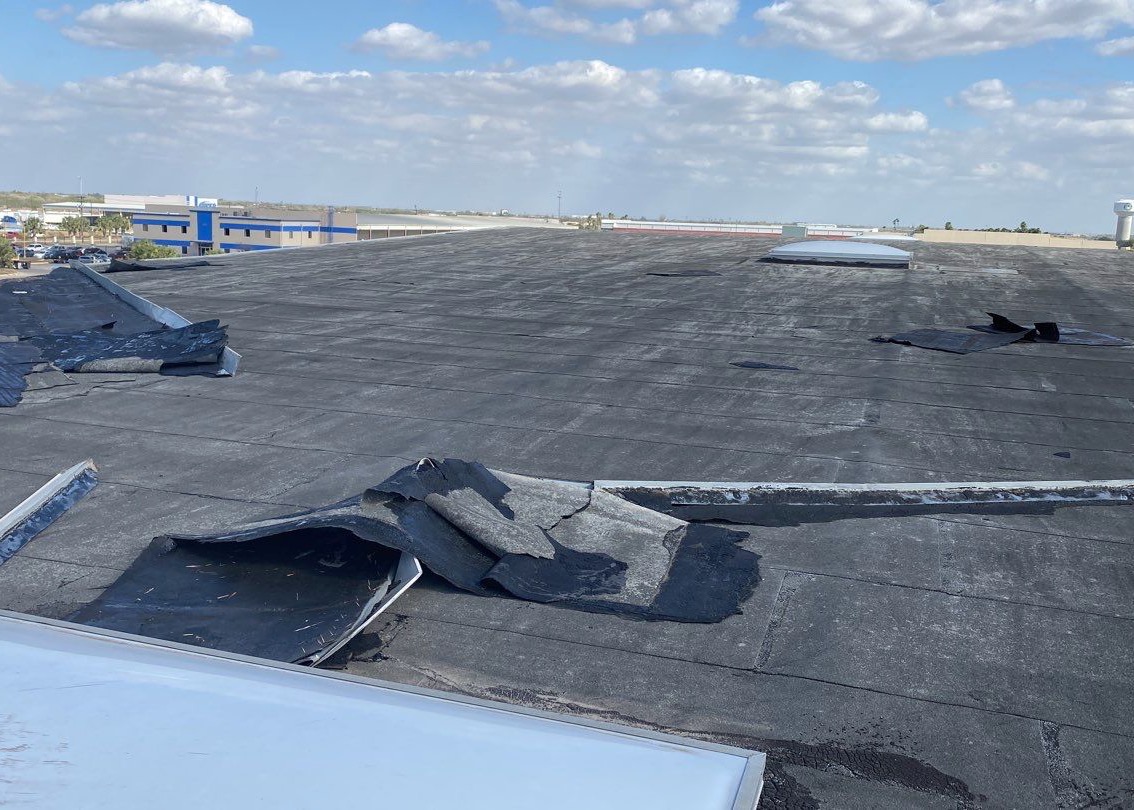
Commercial Storm Damage Repair McAllen should never be handled with a one-size-fits-all approach. Different roof systems fail in different ways, and the true scope of repair depends on where the damage is, how widespread it is, and whether moisture has already entered the assembly.
Hail Damage
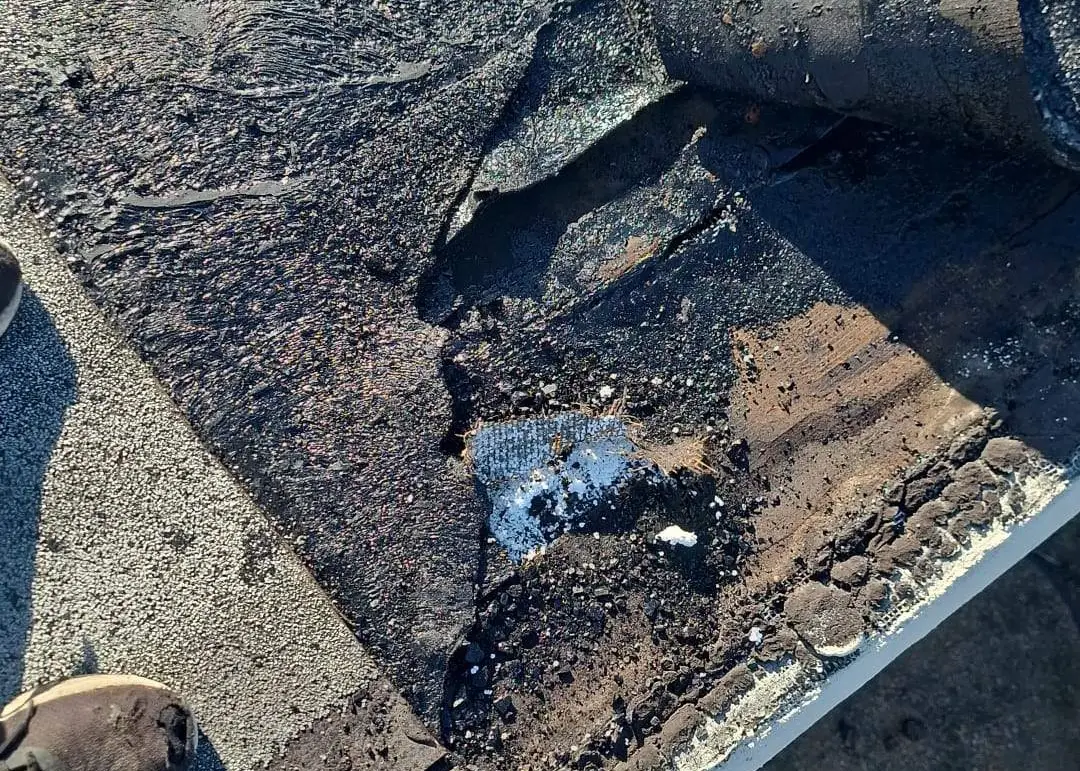
Hail can bruise membranes, damage coatings, dent metal components, affect flashing details, and weaken soft accessories long before the building shows a visible leak.
Wind Damage
Wind can stress edge metal, lift seams, loosen fasteners, displace panels, and separate flashings around curbs, transitions, and penetrations.
Pooling Water
On flat roofs, ponding after a storm can intensify seam stress, cause prolonged moisture exposure, and reveal low-slope drainage design issues that were already developing.
Membrane and Transition Failure
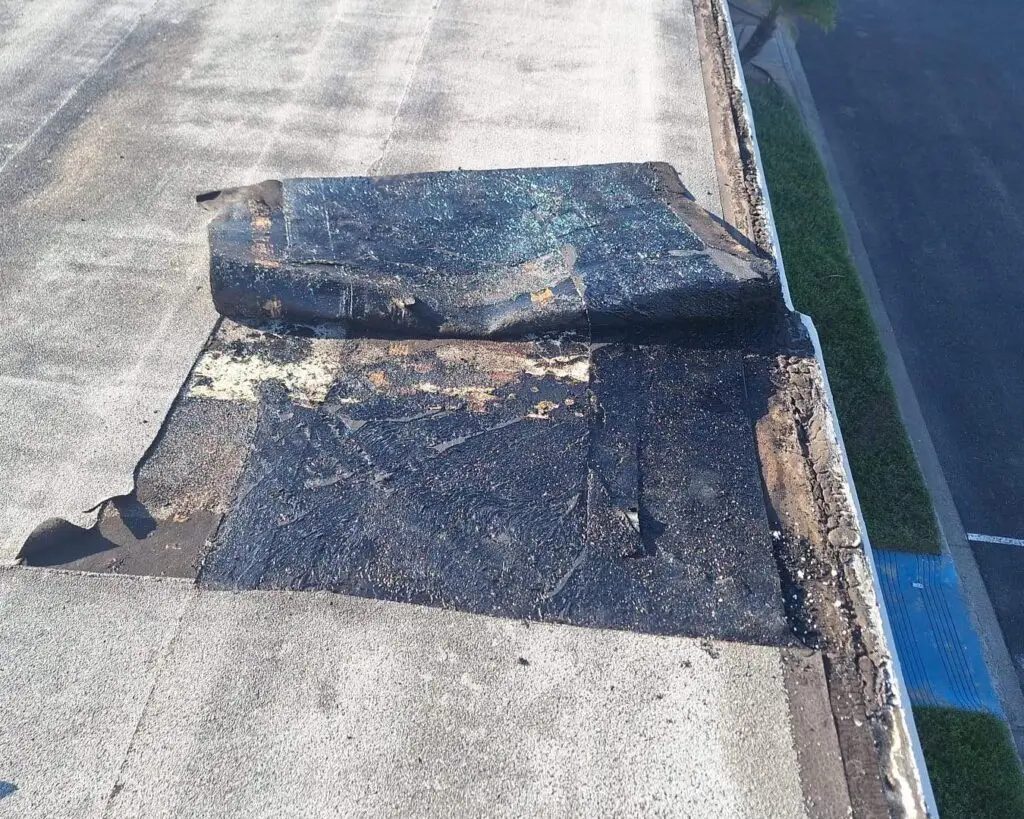
TPO and other low-slope systems may show punctures, weld issues, flashing separation, or transition failures around penetrations and rooftop equipment.
System-specific resources: Commercial TPO Roofing McAllen, Commercial Metal Roofing McAllen, Commercial Asphalt Shingle Roofing McAllen, Commercial Roof Coatings McAllen, and Commercial Modified Bitumen Roofing McAllen.
Higher-Risk Properties
Why Commercial & Multi-Family Properties Face Higher Risk
Multi-family and commercial properties carry more roof-related operational risk because a leak does not just affect one area. It may affect tenant units, shared spaces, inventory, business operations, maintenance scheduling, and liability exposure across multiple sections of the property.
- More roof area means more opportunities for hidden damage
- More penetrations, curbs, and transitions increase failure points
- Occupied spaces make response time more critical
- Managers must coordinate documentation and communication carefully
- Ownership groups often require clearer reporting and scope planning
Diagnostic Process
Inspection & Diagnostic Process
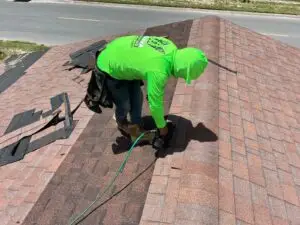
A strong storm damage repair plan starts with inspection quality. Commercial Storm Damage Repair McAllen should begin with a roof-level evaluation that looks beyond visible symptoms and identifies what the weather event actually did to the roofing system.
- Field condition review across the roof surface
- Flashing, seam, edge metal, and penetration assessment
- Drainage-path review and ponding identification
- Leak-source investigation tied to roof details
- Damage mapping for repair scope or broader decision planning
When conditions call for deeper evaluation, inspection findings can help determine whether the roof is still a repair candidate or whether replacement planning may be more responsible. Related pages: Commercial Roof Inspection and Commercial Roof Maintenance.
Emergency Response
Emergency Response for Active Leaks and Storm Events
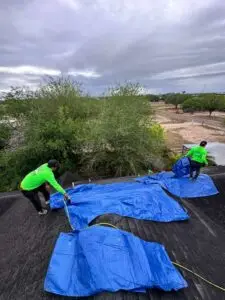
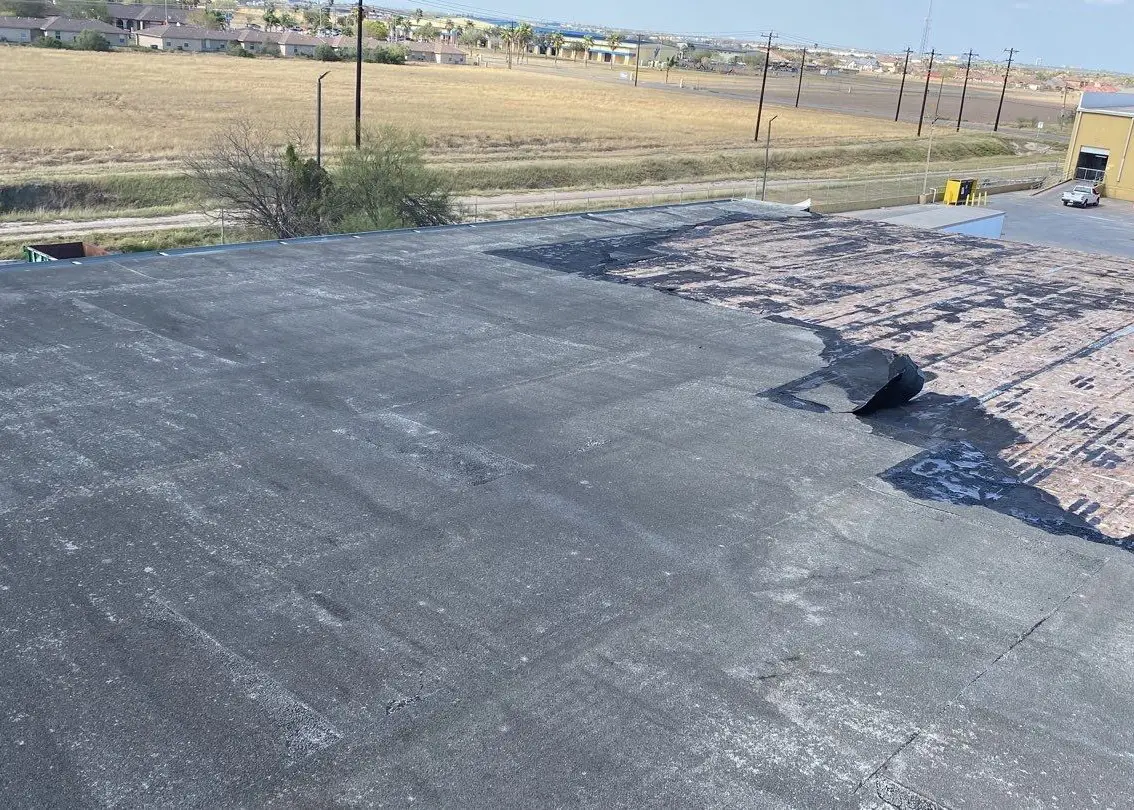
When a storm causes active leaks, Commercial Storm Damage Repair McAllen becomes a time-sensitive issue. The first priority is protecting the building and reducing further damage, not guessing at a permanent solution too early. Fast response helps minimize damage spread, protect interiors, and preserve clearer documentation.
On commercial and multi-family properties, the response should prioritize safety, leak isolation, documentation, and stabilization. Temporary measures may help protect the property while the full inspection determines whether the roof needs localized repair, broader restoration, or a larger corrective scope.
- Identify active water intrusion areas
- Document visible roof and exterior storm conditions
- Protect vulnerable interior areas where possible
- Review drainage, penetrations, and perimeter details
- Build a repair plan around actual findings, not assumptions
If the issue is already presenting as an active leak, visit Commercial Leak Repair McAllen. If ponding is part of the problem, see Commercial Ponding Water Repair McAllen.
Insurance-Aware Guidance
Insurance Claims & Documentation
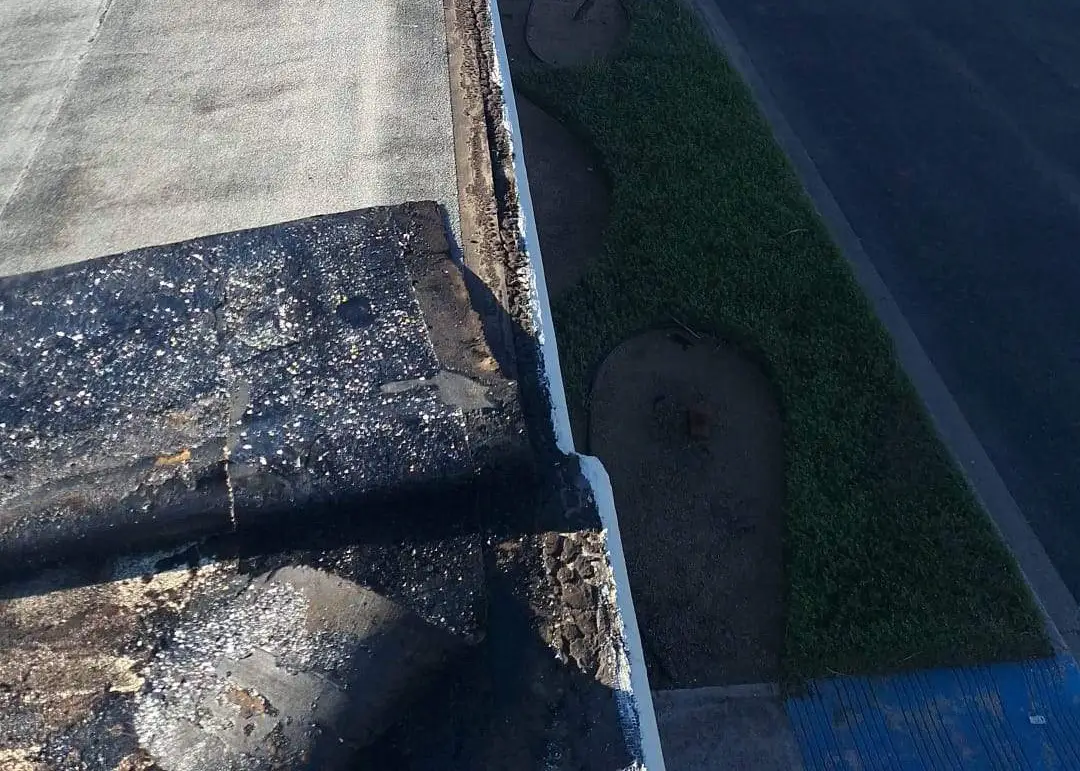
Commercial Storm Damage Repair McAllen often intersects with insurance, but the best contractor role is not making unrealistic promises. It is helping owners and managers document what is visible, what is storm-related, and what the roof needs from a repair or replacement standpoint.
- Photo documentation tied to roof conditions
- Identification of affected areas and components
- Organized scope language for repair planning
- Clear separation between storm-related issues and older wear
Documentation matters more on larger properties because the roofing conversation may involve owners, boards, management teams, adjusters, and budget decision-makers. A more organized file helps everyone move faster with better clarity.
Authority resources can be linked where useful for readers: NRCA and selected manufacturer guidance from Owens Corning.
Decision Guide
Repair vs Replacement or Short-Term vs Long-Term Strategy
Some commercial roofs are strong candidates for targeted repair after a storm. Others show enough widespread deterioration that repeated patching becomes the more expensive long-term choice. Commercial Storm Damage Repair McAllen should always include a practical decision framework.
Repair May Make Sense When
- Damage is isolated and clearly repairable
- The roof still has good remaining service life
- Moisture spread is limited
- The repair restores reliable performance
Replacement May Make Sense When
- Storm damage is widespread across the system
- Leaks recur in several areas
- Insulation or substrate conditions are compromised
- Repair frequency is becoming a capital drain
Supporting internal pages: Commercial Roof Replacement and Commercial Roofing Cost.
Scope + Risk Factors
Cost, Scope, and Risk Factors
Commercial Storm Damage Repair McAllen pricing depends on the roof type, extent of damage, access, building use, urgency, and whether the issue is truly localized or already tied to deeper moisture problems. Commercial properties should not be priced by surface appearance alone.
- Roof type and system compatibility
- Damage spread across field areas, seams, flashings, or edges
- Height, access, and staging conditions
- Occupied-building logistics and tenant sensitivity
- Need for emergency stabilization before permanent repair
- Whether repairs escalate into broader restoration or replacement
Owners who want better decision clarity should also review Best Roof Systems for Texas Heat and Commercial Roof Lifespan Texas.
Asset Protection
Preventative Maintenance & Asset Protection
The best way to reduce future storm-related repair costs is to maintain the roof before the next weather event. Preventative maintenance helps managers identify weak seams, edge vulnerabilities, drainage trouble, and detail-level wear before a storm turns those weak points into active leaks.
- Routine inspections before and after severe weather periods
- Drain, scupper, and overflow review
- Seam, flashing, and penetration checks
- Photo-based condition tracking over time
- Early correction of small issues before they spread
Preventative maintenance supports better budgeting, better documentation, and better capital planning for commercial assets.
Trust + Authority
Why Choose Marva Roofing
Marva Roofing approaches Commercial Storm Damage Repair McAllen with a commercial-first mindset built around clarity, urgency, and long-term property protection. We understand that commercial and multi-family roofing issues are not just repair issues. They are management issues, budget issues, tenant issues, and asset-protection issues.
- Family-owned company serving the Rio Grande Valley
- Commercial-focused understanding of flat, metal, and sloped systems
- Strong fit for multi-family and managed properties
- Insurance-aware documentation mindset
- Inspection-driven recommendations over guesswork
For educational support and roofing insight, visit the Marva Roofing YouTube Channel.
Internal Link Cluster
Explore Related Commercial Roofing Resources
FAQ
Frequently Asked Questions
How soon should a commercial roof be inspected after a storm?
As soon as it is safe. Fast inspection helps identify hidden damage, active leaks, drainage problems, and documentation needs before conditions worsen.
Can storm damage exist even if there is no leak inside yet?
Yes. Hail, wind, flashing separation, and membrane damage may weaken the system before interior water becomes visible.
Why are multi-family properties more complicated after storm damage?
Because they often involve larger roof areas, more penetrations, occupied units, and more communication requirements between managers, owners, and residents.
Is a storm-damaged commercial roof always a replacement?
No. Some roofs can be successfully repaired if the damage is isolated and the system remains serviceable. Others require a broader long-term strategy.
What is the first step if my building has active roof leaks after a storm?
Start with professional inspection and documentation so the leak source, urgency, and repair scope can be identified correctly.
Protect Your Property with Commercial Storm Damage Repair McAllen
If your office building, retail property, warehouse, apartment complex, or managed facility has been affected by hail, wind, or severe weather, do not wait for hidden roof damage to spread. Start with a professional commercial roof inspection and get clear guidance on repair scope, leak response, and next steps.