Commercial Roofing Cluster • McAllen TX
Commercial Ponding Water Repair McAllen
Commercial Ponding Water Repair McAllen is one of the most important flat-roof services for property owners and managers dealing with standing water, slow drainage, repeated leaks, membrane stress, or signs that a low-slope roof is no longer shedding water properly. On commercial and multi-family buildings, ponding water is more than a cosmetic issue. It can increase roof-system stress, accelerate deterioration, raise leak risk, and create bigger long-term repair or replacement costs if it is ignored.
At Marva Roofing, we help commercial property owners, apartment managers, facility teams, warehouse operators, and retail property decision-makers diagnose why water is holding on the roof, what that standing water is doing to the system, and what repair path makes the most sense for long-term protection.
- Commercial Flat Roofs
- Multi-Family Properties
- Drainage Diagnosis
- Leak Risk Documentation
- McAllen & RGV
Clear guidance when water is staying on your commercial roof
This page explains what causes ponding water, how it affects commercial roof systems, when it becomes urgent, and how owners and property managers can choose between targeted repair, drainage correction, broader restoration, or replacement planning.
- What causes ponding water on commercial roofs
- Damage types and service triggers
- Higher risk on commercial and multi-family properties
- Inspection, documentation, and insurance-aware guidance
- Repair versus replacement decision logic
Start with diagnosis
Ponding water is usually a symptom of a bigger roof-performance problem
It may point to poor slope, blocked drains, deck deflection, membrane settlement, insulation compression, or drainage design that is no longer working as intended. On a commercial property, that means more than surface water. It can mean hidden moisture, tenant disruption, documentation issues, and a roof that is getting weaker with every storm cycle.
Commercial ponding water guide
Standing water should be treated as a roof-system warning sign
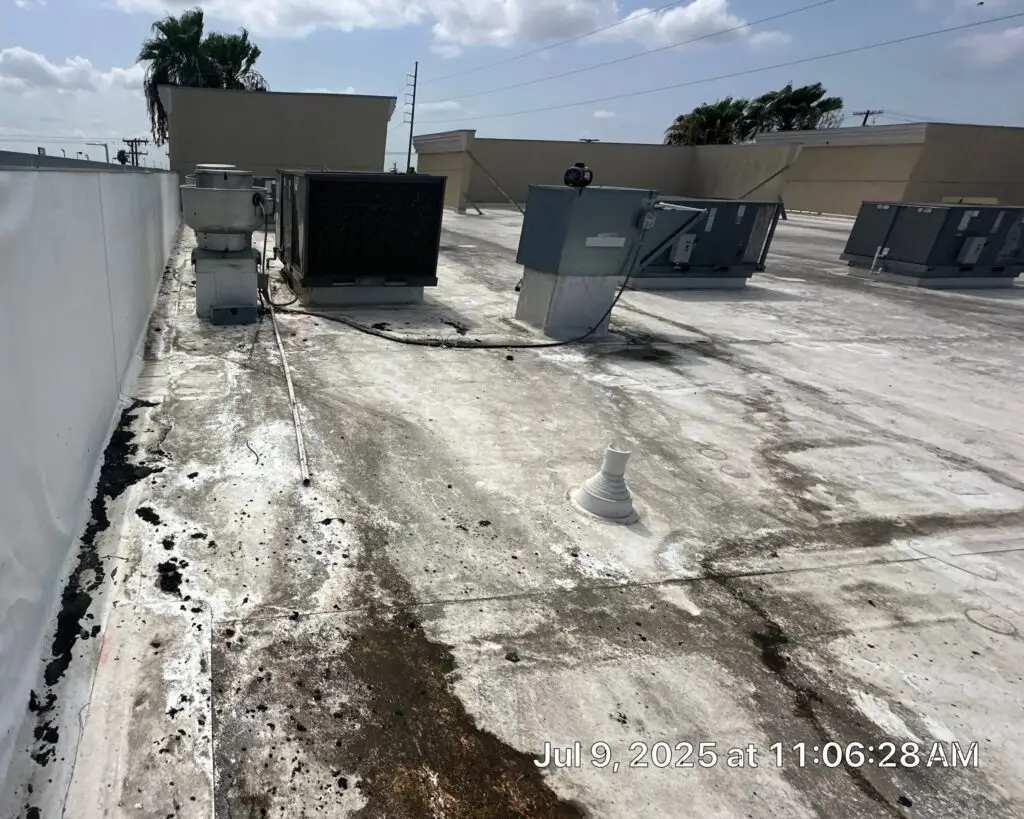
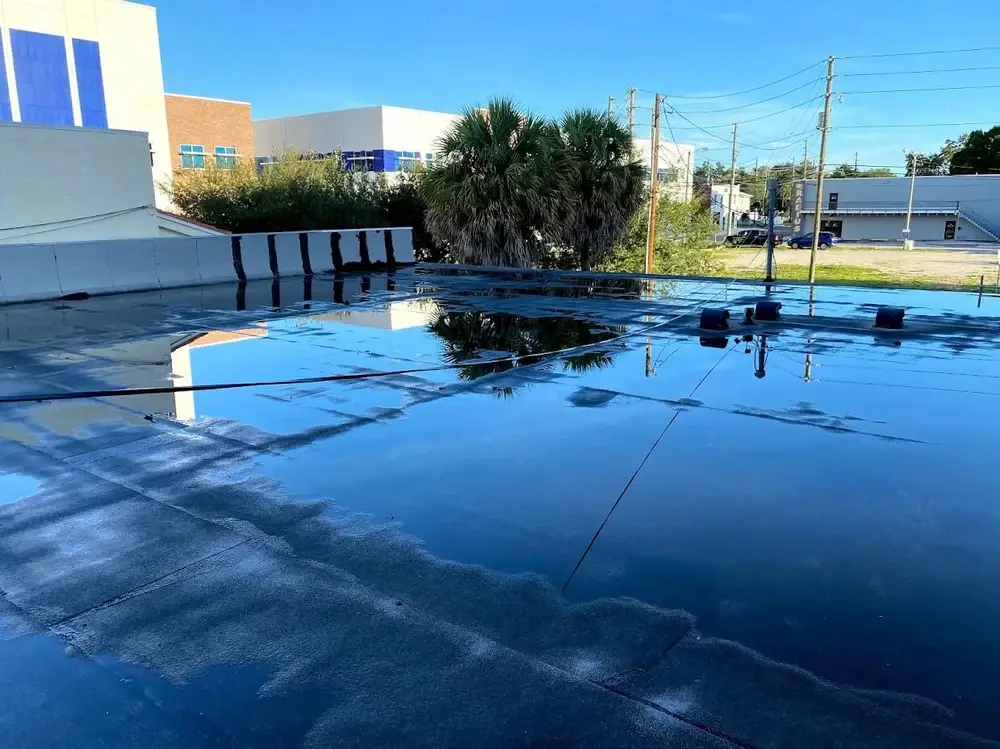
Commercial Ponding Water Repair McAllen usually begins with a flat or low-slope roof that is no longer draining the way it should. In South Texas, intense rain events can expose small drainage weaknesses quickly. Water may hold because the roof was built with minimal slope, because drains or scuppers are blocked, because the deck has settled, or because the insulation profile has compressed over time.
On older buildings, prior repairs may also contribute to the problem. A patch that solves one leak without correcting drainage can leave water trapped in the same area, which increases strain on the membrane and nearby details. Even newer systems can develop ponding if the drainage path is undersized, debris builds up, or a low spot forms around rooftop equipment and penetrations.
The goal is not only to remove water. The goal is to understand why the roof is holding water and what that means for leaks, membrane stress, insulation, drainage, tenant disruption, and long-term roof planning.
Table of contents
Jump to the section you need
What Causes the Need
What Causes Ponding Water on Commercial Roofs in McAllen
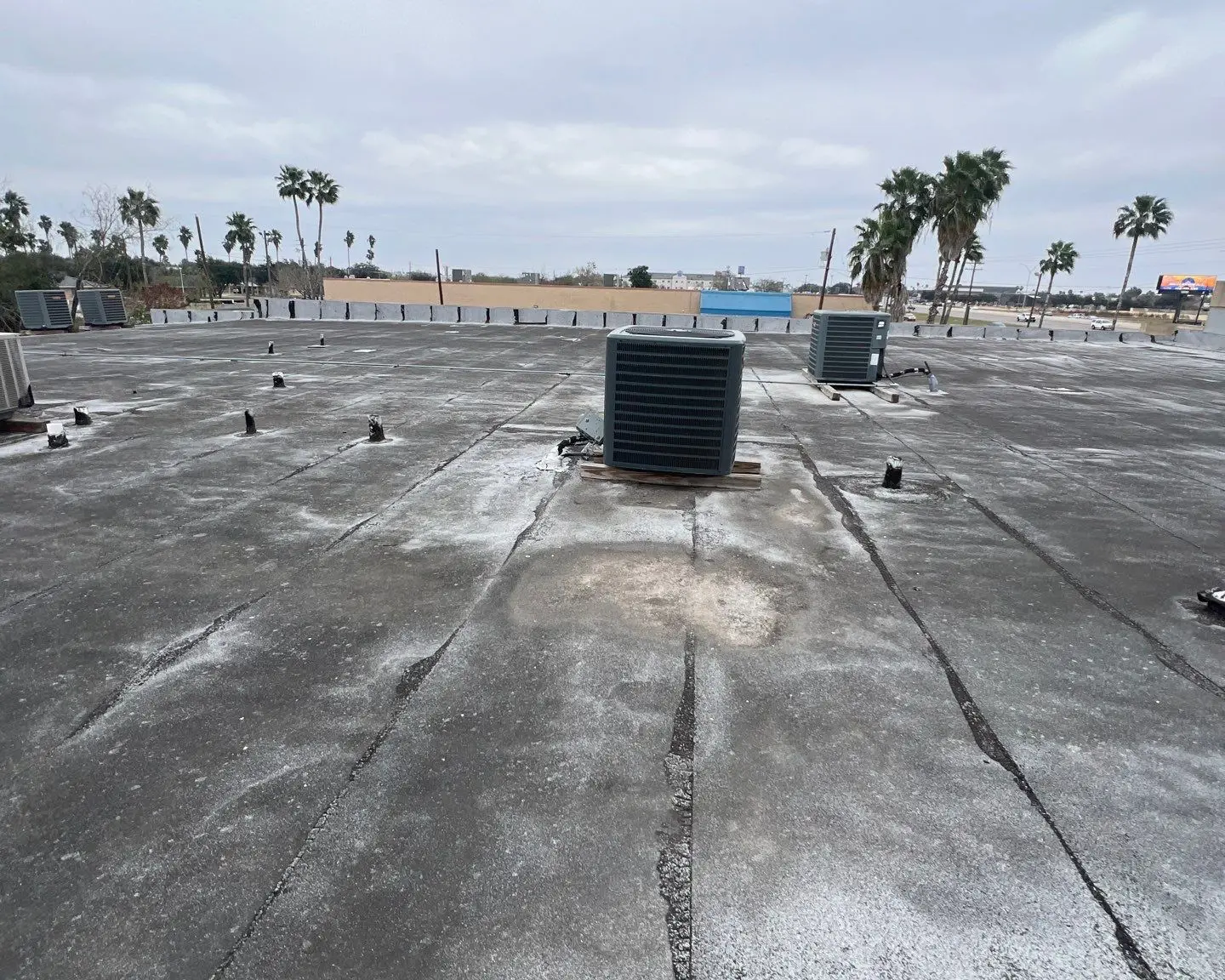
Commercial Ponding Water Repair McAllen usually begins with a flat or low-slope roof that is no longer draining the way it should. In South Texas, intense rain events can expose small drainage weaknesses quickly. Water may hold because the roof was built with minimal slope, because drains or scuppers are blocked, because the deck has settled, or because the insulation profile has compressed over time.
On older buildings, prior repairs may also contribute to the problem. A patch that solves one leak without correcting drainage can leave water trapped in the same area, which increases strain on the membrane and nearby details. Even newer systems can develop ponding if the drainage path is undersized, debris builds up, or a low spot forms around rooftop equipment and penetrations.
- Insufficient slope or drainage design limitations
- Blocked drains, scuppers, gutters, or overflow paths
- Deck deflection or structural settlement
- Insulation compression or low-area formation
- Membrane aging, seam stress, or prior repair buildup
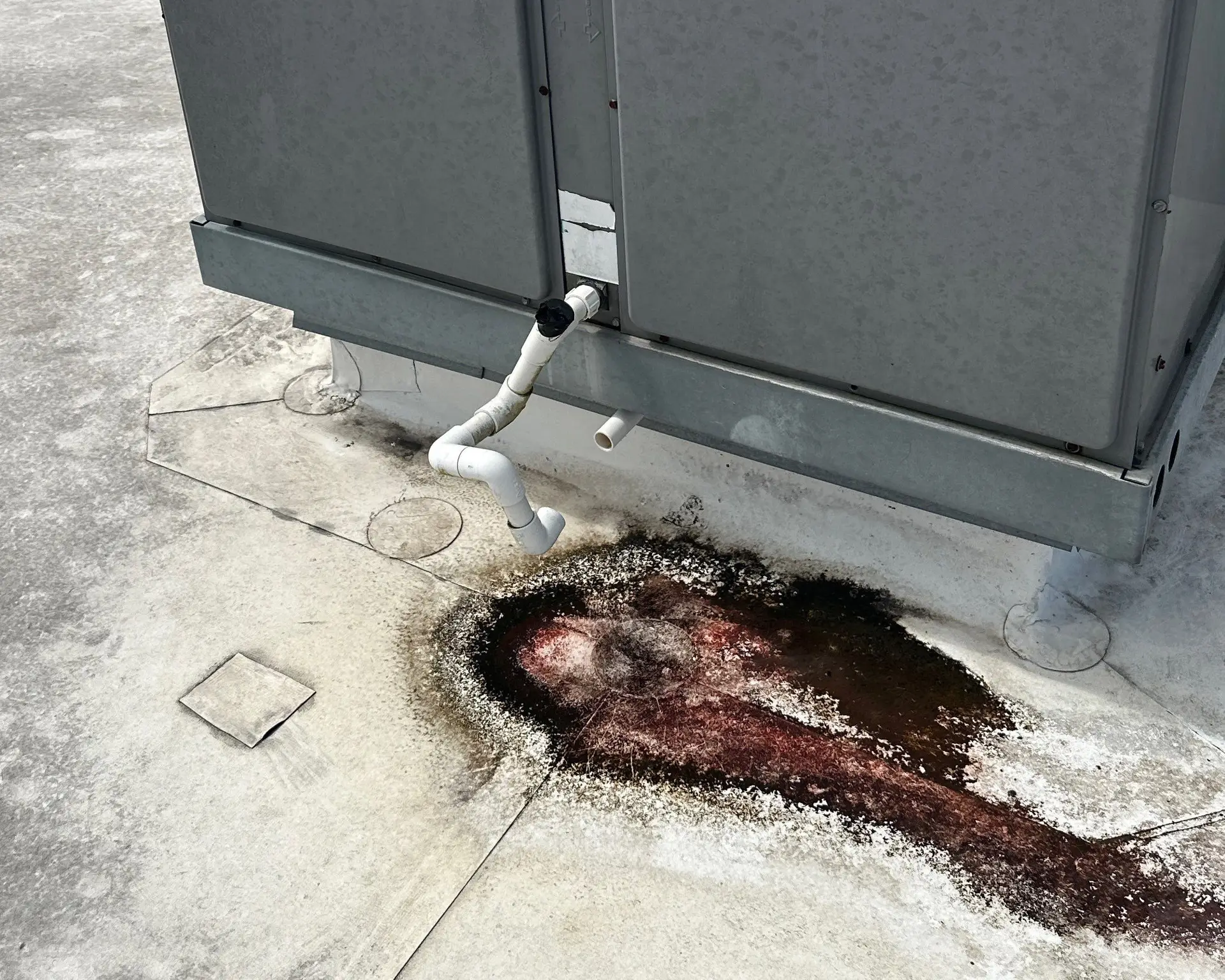
Service Triggers
Key Damage Types and Service Triggers
Commercial Ponding Water Repair McAllen is not only about removing water. It is about identifying what the water is already doing to the roofing system and what it is likely to do next if left untreated.
Membrane Stress
Standing water can put long-duration stress on seams, surface coatings, and field membrane areas, especially where the roof already has age-related wear.
Leak Development
Water that sits in one place repeatedly increases the odds that weak seams, flashing details, or punctures will begin allowing moisture into the assembly.
Flashing and Penetration Weakness
Where low areas form near penetrations, parapet transitions, curbs, and rooftop units, ponding water can expose weak details faster than normal drainage conditions would.
Insulation and Substrate Concerns
Once water enters the system, trapped moisture can expand the real repair scope well beyond what is visible on the surface.
Related system pages: Commercial TPO Roofing McAllen, Commercial Metal Roofing McAllen, Commercial Roof Coatings McAllen, Commercial Modified Bitumen Roofing McAllen, and Commercial Asphalt Shingle Roofing McAllen.
Higher-Risk Properties
Why Commercial & Multi-Family Properties Face Higher Risk
Multi-family and commercial properties face more operational exposure when ponding water is allowed to continue. A single low area may affect multiple units or adjacent occupied spaces if the roof begins leaking laterally. For property managers, that means the issue can quickly become a tenant experience problem, a maintenance escalation problem, and a budget planning problem all at once.
- Larger roof footprints create more low-slope drainage risk
- Repeated building sections make water patterns harder to track
- Occupied units increase urgency when leaks develop
- Documentation matters more for owners, boards, and investors
- Deferred correction often turns a localized issue into a larger capital issue
Diagnostic Process
Inspection & Diagnostic Process
A good Commercial Ponding Water Repair McAllen plan starts with understanding why the water is staying on the roof. Inspection should not stop at “there is standing water here.” It should identify what is causing the low area, whether the drainage path is blocked or undersized, whether the membrane has been stressed, and whether moisture may already be inside the system.
In some cases, the right solution may be localized drainage correction. In others, the ponding is only one symptom of broader roof fatigue. Supporting internal pages: Commercial Roof Inspection and Commercial Roof Maintenance.
- Low-area mapping and water-holding pattern review
- Drain, scupper, overflow, and gutter assessment
- Membrane seam, flashing, and penetration inspection
- Condition review around rooftop units and traffic zones
- Repairability evaluation tied to roof-wide condition
Emergency Response
Emergency Response When Ponding Turns Into Active Leaks
Commercial Ponding Water Repair McAllen becomes urgent when standing water turns into interior leaks, ceiling staining, saturated insulation, or repeated moisture intrusion after each storm. At that point, the issue is no longer just drainage inefficiency. It is an active asset-protection issue.
The first response should focus on safety, leak documentation, immediate protection where possible, and a professional roof assessment. On commercial buildings and apartment properties, delayed response can increase interior damage and make it harder to contain the problem to a smaller repair area.
- Document active water intrusion and visible roof conditions
- Check drains, scuppers, overflow routes, and nearby transitions
- Identify whether the leak source is within the ponding area or adjacent detail
- Stabilize the building while the permanent scope is evaluated
- Determine whether drainage correction alone is enough
If the roof is already leaking, visit Commercial Leak Repair McAllen. If ponding developed after severe weather, see Commercial Storm Damage Repair McAllen.
Insurance-Aware Guidance
Insurance Claims & Documentation
Commercial Ponding Water Repair McAllen does not always begin as an insurance conversation, but documentation still matters. If ponding worsened after a storm, or if a weather event exposed drainage or leak conditions that were not previously active, organized roof documentation can help owners understand what happened and when it became visible.
On larger properties, documentation also supports internal decision-making by owners, boards, management firms, and maintenance teams. It helps move the discussion from guesswork to evidence.
Helpful authority resources for owner education can include NRCA and selected manufacturer guidance from Owens Corning.
- Photo documentation of water-holding areas and related roof details
- Notes showing where drains, seams, and penetrations are involved
- Condition records that separate existing wear from newer storm-related impact
- Repair recommendations tied to observed roof performance
Decision Guide
Repair vs Replacement or Short-Term vs Long-Term Strategy
Not every ponding-water issue requires full roof replacement. But not every low area can be solved with a surface patch either. Commercial Ponding Water Repair McAllen should always include a decision framework that separates a correctable drainage issue from a broader roof-system problem.
Targeted Repair May Make Sense When
- The ponding is localized and the system is otherwise sound
- Drain blockages or detail-level issues can be corrected directly
- Seams and field membrane still have good remaining life
- The correction restores dependable drainage performance
Broader Repair or Replacement May Make Sense When
- Multiple low areas exist across the roof
- Leaks recur after each major rain event
- Membrane fatigue and moisture spread are already present
- The roof is aging out and ponding is one of several major symptoms
Supporting internal pages: Commercial Roof Repair, Commercial Roof Replacement, and Commercial Roofing Cost.
Scope + Risk Factors
Cost, Scope, and Risk Factors
Commercial Ponding Water Repair McAllen pricing depends on why the water is holding, how large the affected area is, whether the issue is isolated or roof-wide, and whether moisture has already compromised the system. A drain cleaning visit is not the same as correcting a low-slope design issue or repairing a roof that has already developed leak-related damage.
For long-term planning, owners should also compare flat-roof performance and climate fit by reviewing Best Roof Systems for Texas Heat and Commercial Roof Lifespan Texas.
- Size and depth of the ponding area
- Roof type and compatibility of repair methods
- Drainage correction needs versus membrane repair needs
- Evidence of wet insulation or substrate involvement
- Access, staging, and occupied-building logistics
- Whether the issue connects to broader system aging
Asset Protection
Preventative Maintenance & Asset Protection
The best long-term defense against Commercial Ponding Water Repair McAllen is proactive roof maintenance. Routine inspection and drainage maintenance help owners catch small drainage problems before they create repeated standing water and leak escalation.
Maintenance supports better budgeting, fewer emergencies, and more reliable service-life planning on commercial assets.
- Drain and scupper cleaning before and after storm periods
- Review of low areas, seams, and perimeter details
- Inspection around curbs, penetrations, and rooftop equipment
- Photo-based condition tracking across the roof lifecycle
- Early correction of small issues before they become broad moisture problems
Trust + Authority
Why Choose Marva Roofing
Marva Roofing approaches Commercial Ponding Water Repair McAllen with a commercial-first mindset built around diagnosis, not assumptions. We understand that standing water on a commercial roof often points to a bigger system conversation involving drainage, membrane condition, long-term leak risk, and asset planning.
For educational roofing content and project insight, visit the Marva Roofing YouTube Channel.
- Family-owned company serving the Rio Grande Valley
- Commercial-focused understanding of flat and low-slope systems
- Strong fit for multi-family and managed properties
- Inspection-driven recommendations over guesswork
- Clear documentation to support better decision-making
Internal Link Cluster
Explore Related Commercial Roofing Resources
FAQ
Frequently Asked Questions
Is ponding water always a serious problem on a commercial roof?
Not every short-term water hold means immediate failure, but repeated standing water usually signals a drainage or roof-performance issue that should be professionally evaluated before it turns into leaks or broader damage.
Can ponding water cause commercial roof leaks?
Yes. Ponding increases long-duration stress on seams, flashing details, penetrations, and low areas, which can raise the chance of leaks over time.
What causes ponding on flat roofs in McAllen?
Common causes include low slope, blocked drains, deck settlement, insulation compression, and drainage paths that are no longer working properly after storms or aging.
Should I repair the low area or replace the whole roof?
That depends on whether the ponding is localized and repairable or part of a broader roof-system problem involving multiple low areas, recurring leaks, or wider membrane fatigue.
What is the best first step if I see standing water after rain?
Start with a professional commercial roof inspection so the cause, risk level, and best correction strategy can be identified clearly.

Your next step
Protect Your Roof with Commercial Ponding Water Repair McAllen
If your office building, apartment property, warehouse, retail center, or managed facility is holding water after rain, do not assume it is harmless. Start with a professional commercial roof inspection and get clear guidance on drainage correction, membrane repair, and next steps for long-term asset protection.
Marva Roofing | info@marvaroofing.com | Serving McAllen, Mission, Edinburg, Pharr & the Rio Grande Valley