If a roof leak stops before the inspection, keep a dated record of where moisture appeared, what was happening at the time, and how the area changed. A few clear photos and a short timeline can help your roofer investigate an intermittent problem. They do not prove where water entered or whether the roof caused it.
For McAllen and Rio Grande Valley homeowners, the goal is to give the inspector useful observations without taking risks or turning a guess into a diagnosis. You do not need to climb a ladder, lift shingles, or recreate a leak to prepare.
Start with safety, then the record
Keep people away from a sagging ceiling, falling material, or water near electrical fixtures. Do not enter an unsafe attic or touch wet electrical equipment. Seek appropriate emergency help when there is an immediate hazard. If you can safely move belongings away from the affected area, do so; photographs are secondary to safety.
Do not wait for another storm before reporting active water entry. Tell the contractor whether water is still coming in and whether any temporary protection has already been arranged.
Record these six details for each occurrence
1. Date and time: Write down when you first noticed moisture, whether it was actively dripping or only stained, and when it appeared to stop. Distinguish what you saw from what you think happened earlier.
2. Exact interior location: Name the room and a fixed reference, such as “bedroom ceiling near the window facing the driveway.” If there are several spots, label them A, B, and C so photos and notes match.
3. Conditions you observed: Note rain before or during the event, noticeable wind, or dry weather. If you do not know the wind direction or when rain started, say so. A remembered weather detail is a clue, not proof of storm damage.
4. What the moisture looked like: Describe an active drip, a new ring, bubbling paint, or a change in the size of an existing stain. Do not assume a darker mark means a larger roof opening.
5. Relevant activity: Note plumbing use, air-conditioning operation, recent exterior work, or a previous repair when those details are known. The inspector may need another trade to evaluate a non-roof source.
6. Photos and actions: Record photo filenames, who you contacted, and any temporary work performed. Keep invoices and the earlier repair scope together with the log.
Take a wide view and a close view
From a safe floor-level position, take one photograph showing where the spot sits in the room and another showing the visible detail. Use the same viewpoint for later photos when practical. Keep the original files and dates, and avoid filters that change colors or hide edges.
A close-up without context can be difficult to locate later. A wide picture alone may hide the change you noticed. The two views answer different questions. Do not remove ceiling material or enter a roof space solely to improve a photograph.
Copy this simple leak-log entry
Date/time noticed: ___
Room and reference point: ___
Active drip, damp patch, or old stain: ___
Rain/wind or dry conditions observed: ___
Related plumbing/HVAC activity, if known: ___
Photos: ___
Change since last observation: ___
Temporary work and person contacted: ___
For example: “Tuesday, 7:15 a.m.; hallway beside attic access; small damp patch, no active drip; rain heard overnight; photo A-wide and A-close; first time noticed; called for inspection.” This is an example of a useful note, not a Marva project report.
What the log can—and cannot—tell you
Rain timing may help direct an investigation, but the visible ceiling mark is not a reliable map of the exterior entry point. Moisture symptoms can also overlap with condensation. GAF’s condensation guidance explains that condensation and roof leaks can show similar signs. The appropriate repair depends on identifying the source.
A dry inspection day does not erase the concern, and a stopped drip does not establish that a repair worked. Share the timeline and let the professional explain what was observed, what remains uncertain, and whether follow-up investigation is needed. Our roof leak repair guide explains the broader inspection and repair process.
Questions to ask before approving the repair
Ask: What evidence points to the proposed source? Which findings were directly observed, and which are still suspected? Does the written scope address the exterior entry point, affected materials, and any interior work—or are those separate? How will the repair be checked, and who should I contact if the same spot changes again?
If the inspection identifies a flashing issue, our flashing repair guide provides background. Avoid choosing a repair simply because it is directly above the stain.
Bring your notes to a Marva Roofing inspection
Marva Roofing is family-owned and veteran-owned, serving McAllen and the RGV. Bring your leak log, original photos, and previous repair paperwork to the conversation so the inspection starts with a clear history. Request a roof inspection or call (956) 217-9989. Tell us promptly if water is actively entering your home.
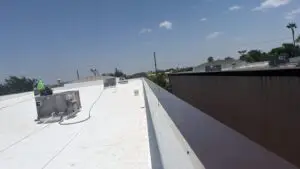
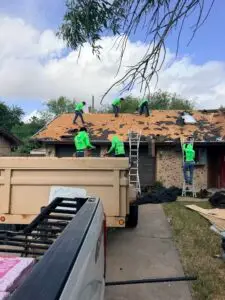
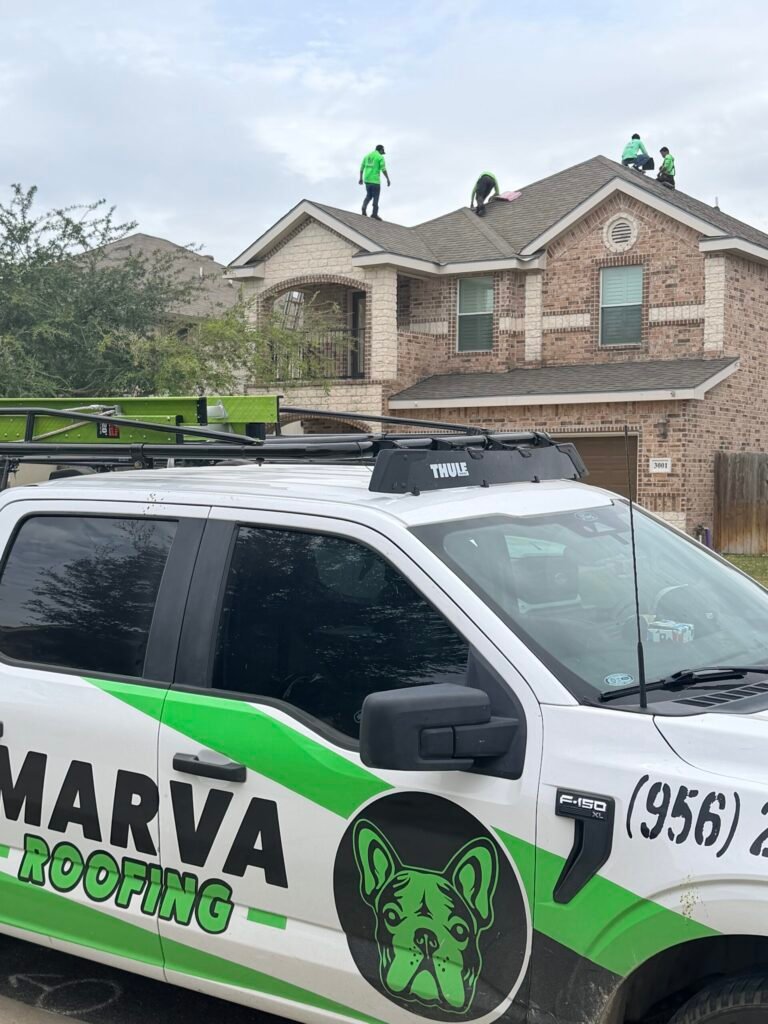
Project photography shown with this guide depicts roofing work in progress. It is illustrative and does not establish a diagnosed leak or a completed repair.