Before approving a commercial roof coating, ask for two separate answers: will the proposed system bond to the existing surface, and is the roof assembly beneath it suitable to keep? An adhesion test addresses the bond. A moisture assessment addresses a different concern. One favorable result does not replace the other.
For McAllen and Rio Grande Valley building owners, this distinction can make a coating proposal easier to evaluate. Instead of comparing only a coating name and a total price, ask what evidence supports the recommendation and what the contractor plans to do with unfavorable findings.
What an adhesion test tells you
An adhesion test evaluates how a proposed coating system bonds to a prepared substrate at the tested locations. Preparation, primer, existing materials, and the selected product matter. The contractor should use the applicable manufacturer’s procedure and acceptance criteria. A patch that looks satisfactory is not a substitute for a documented result.
Ask the contractor to identify the proposed product, the surface being tested, the preparation used, the test locations, and the result. If different existing surfaces or repairs are present, ask how those differences were addressed. Request an explanation of any limitations rather than assuming one test represents every part of the building.
What a moisture assessment tells you
A moisture assessment investigates moisture within the existing roof assembly. It does not measure coating adhesion. A roof can look dry at the surface while conditions below need investigation. The assessment method and any confirmation work should be appropriate to the assembly and project.
Ask for a roof plan or marked photographs showing the areas evaluated and the findings. If the proposal mentions a scan, ask what the scan indicates, how suspect areas will be checked, and which parts of the roof were not evaluated. Do not treat a colorful image without an explanation as a complete repair plan.
Why both questions belong in the proposal
GAF’s Liquid-Applied Roofing Manual treats adhesion testing and moisture surveying separately when evaluating existing roofs. It also calls for addressing existing leaks and unsuitable wet materials before coating. Requirements depend on the chosen system; a single manufacturer’s threshold should not be presented as a universal rule for every roof.
Our commercial roof coatings guide covers the broader repair, coating, and replacement decision. This checklist focuses on the evidence you should ask to see before authorizing the coating scope.
Ask for a written decision record
A useful owner-facing summary should connect the inspection findings to the recommendation. Ask your contractor to answer these questions in plain language:
What roof are we keeping? Identify the existing membrane or surface, known prior coatings, and the areas included in the proposal. If something is unknown, record it as unknown and explain how it will be resolved.
What was tested, and where? Ask for dates, locations, photographs, and the criteria used to interpret the results. Keep this information with the estimate so a later discussion does not depend on someone’s memory.
What needs repair first? Request a map or description of the areas included, the materials to be removed or repaired, and how the contractor will document the work before it is covered.
What is excluded? Clarify whether drainage changes, deck repairs, rooftop equipment work, interior damage, and follow-up investigation are included, excluded, or handled by another party.
What changes the recommendation? Agree on the next step if testing or opening an area reveals a different condition. Ask who authorizes a revised scope, how it will be priced, and whether additional investigation is a separate charge.
Three results worth discussing
The proposed coating does not meet the adhesion criteria: Ask what the contractor proposes next and what evidence will support that change. Do not accept a different product name as the whole explanation.
The moisture review identifies suspect areas: Ask what is confirmed, what is still uncertain, and how the findings affect the written scope. Request a revised proposal when the original assumptions no longer match the roof.
Both reviews support moving forward: Ask for the remaining project requirements and the final scope. Testing is part of the decision; it is not a blanket promise about all future roof performance.
Keep the inspection separate from the sales headline
A coating warranty headline, a bright white finish, or a before-and-after photograph cannot answer every suitability question. Ask to review the actual proposed system documents and the project-specific findings together. You should be able to understand why the recommended work fits this roof—not just why coatings can be useful in general.
If you are still gathering information, start with a commercial roof inspection. When the investigation points toward a different scope, compare it with the questions in our commercial roof replacement guide.
Talk through the evidence with Marva Roofing
Marva Roofing is family-owned and veteran-owned, serving McAllen and the RGV. Bring your roof’s repair history, available plans, and any existing coating proposal to the conversation. Call (956) 217-9989 to discuss an inspection and the information needed for an informed next step.
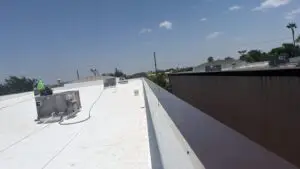
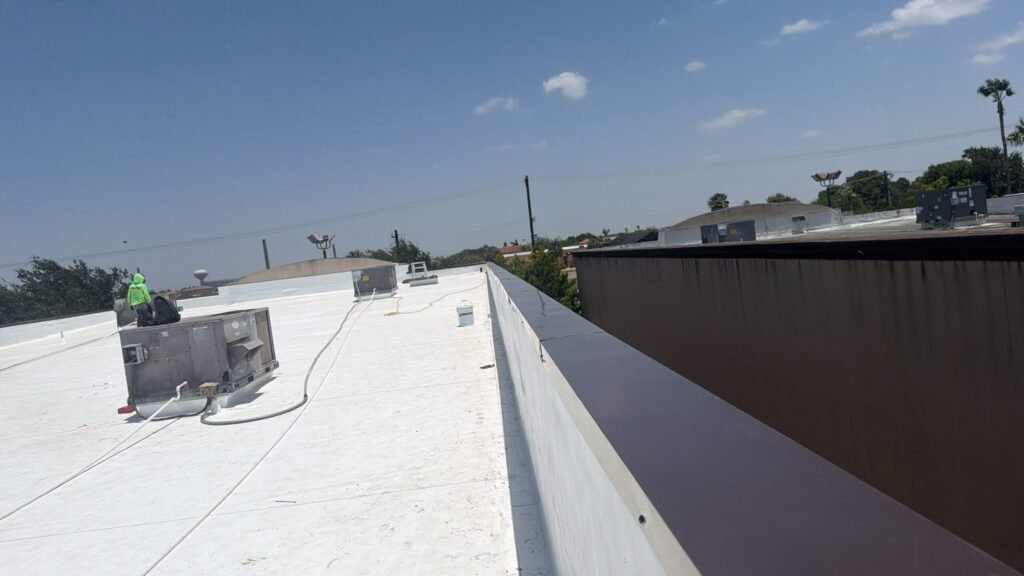
The project imagery accompanying this guide shows commercial membrane roofing work. It does not depict adhesion testing or a moisture survey, and it is not proof that the pictured roof qualifies for coating.